
Redesigning the digital experience of residential living in high-standard condominiums


Alian Medina
Software Engineer
Rancés Sánchez
Founder at Prometeux &
Lead Product Designer

Disclaimer
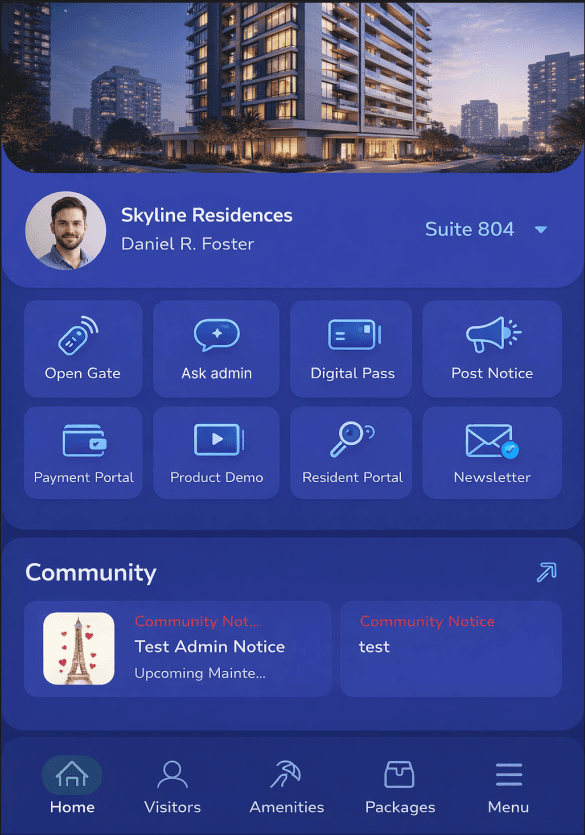
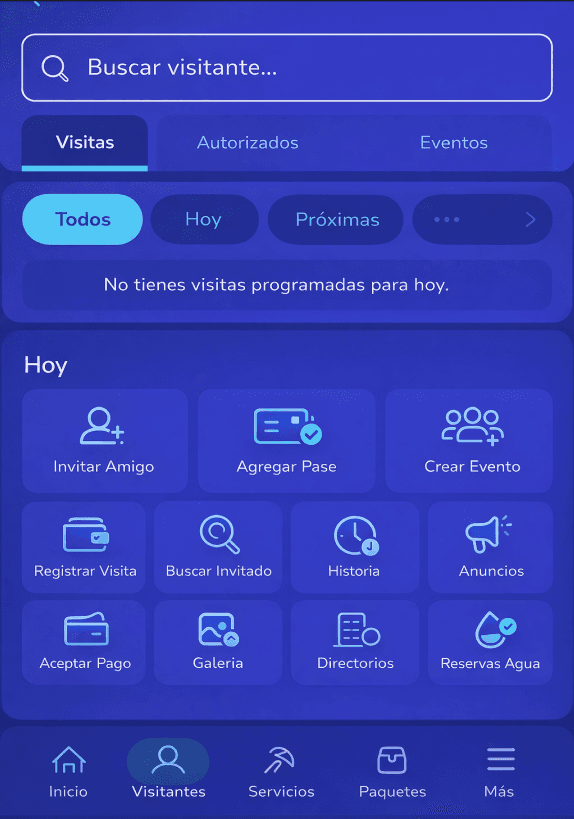
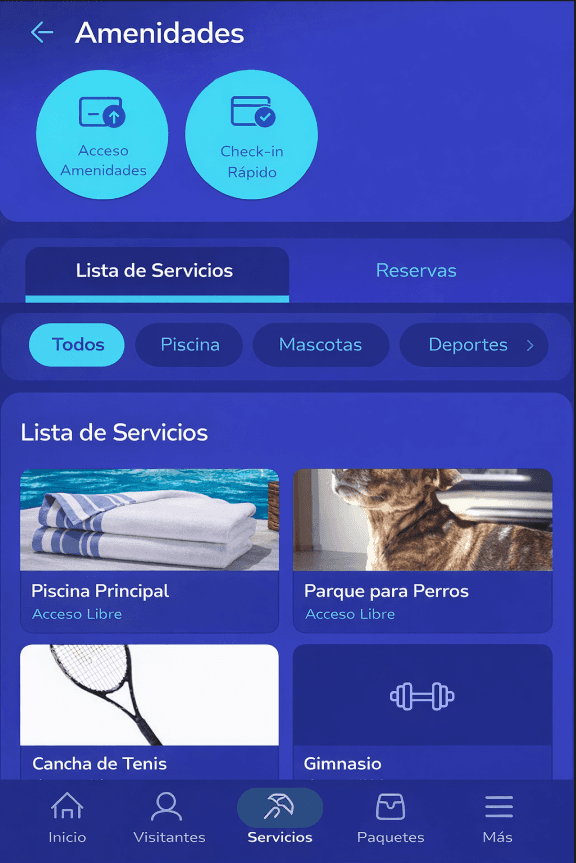
To respect the integrity of the original product and avoid exposing proprietary interfaces, the screen presented below is a simulated recreation of the platform's visual structure. While the interface is not the exact original screen, it accurately reflects the layout, components, and interaction patterns that were present in the product at the time of the analysis.
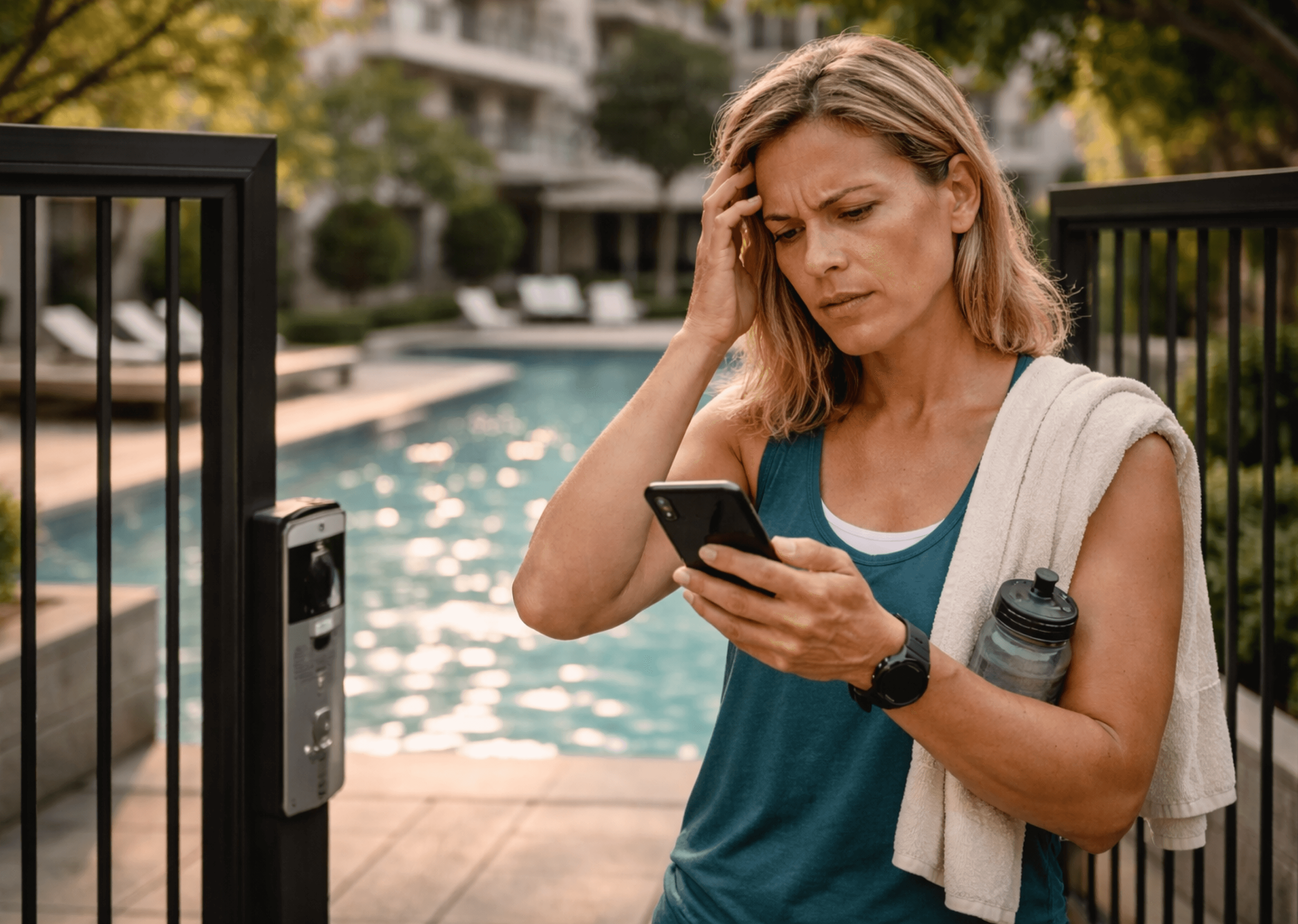
User Frustration
When actions such as authorizing a visitor or checking a delivery require more effort than expected, residents begin to experience friction during routine interactions.


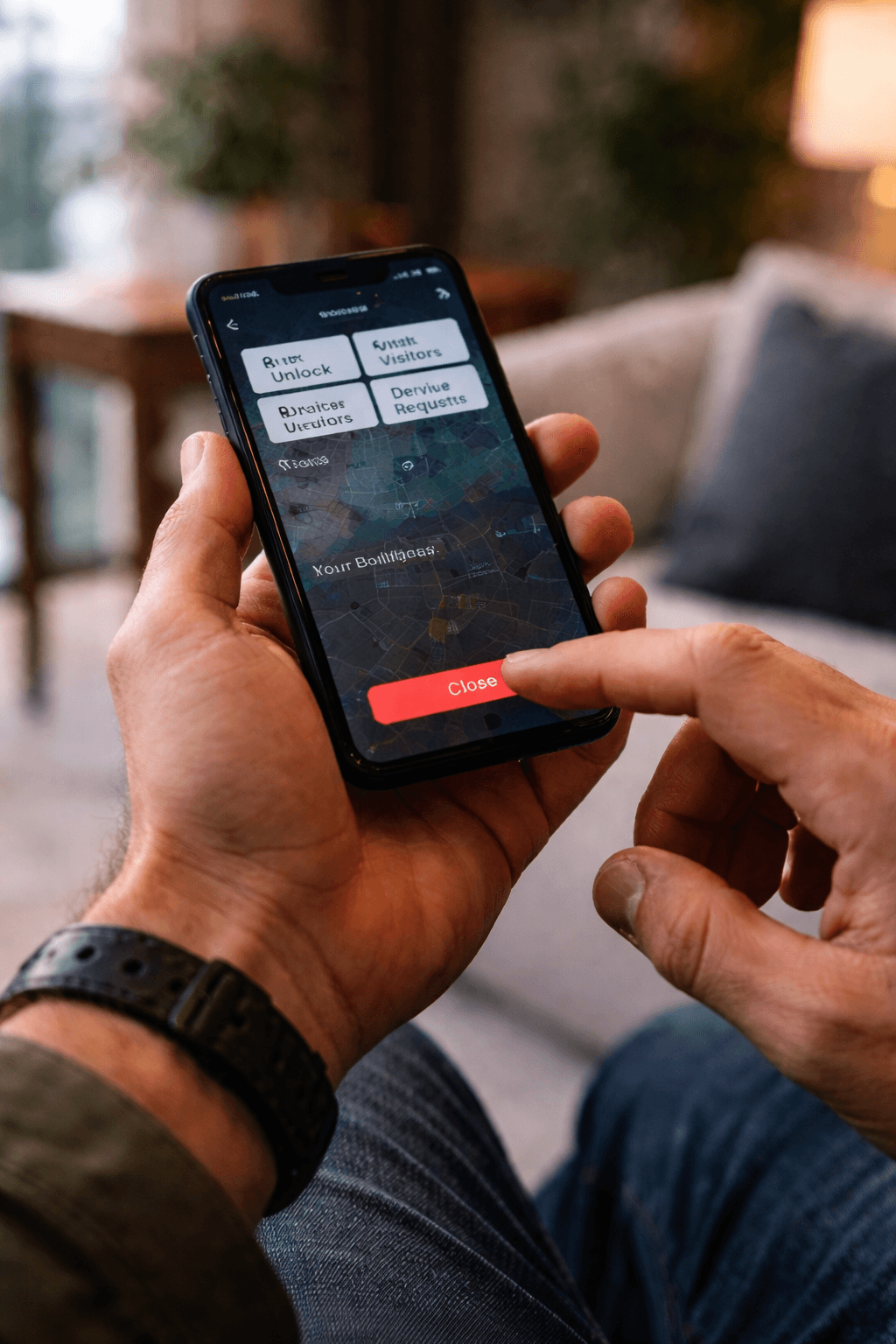
Reduced Engagement
As friction increases, residents interact with the platform only when absolutely necessary.
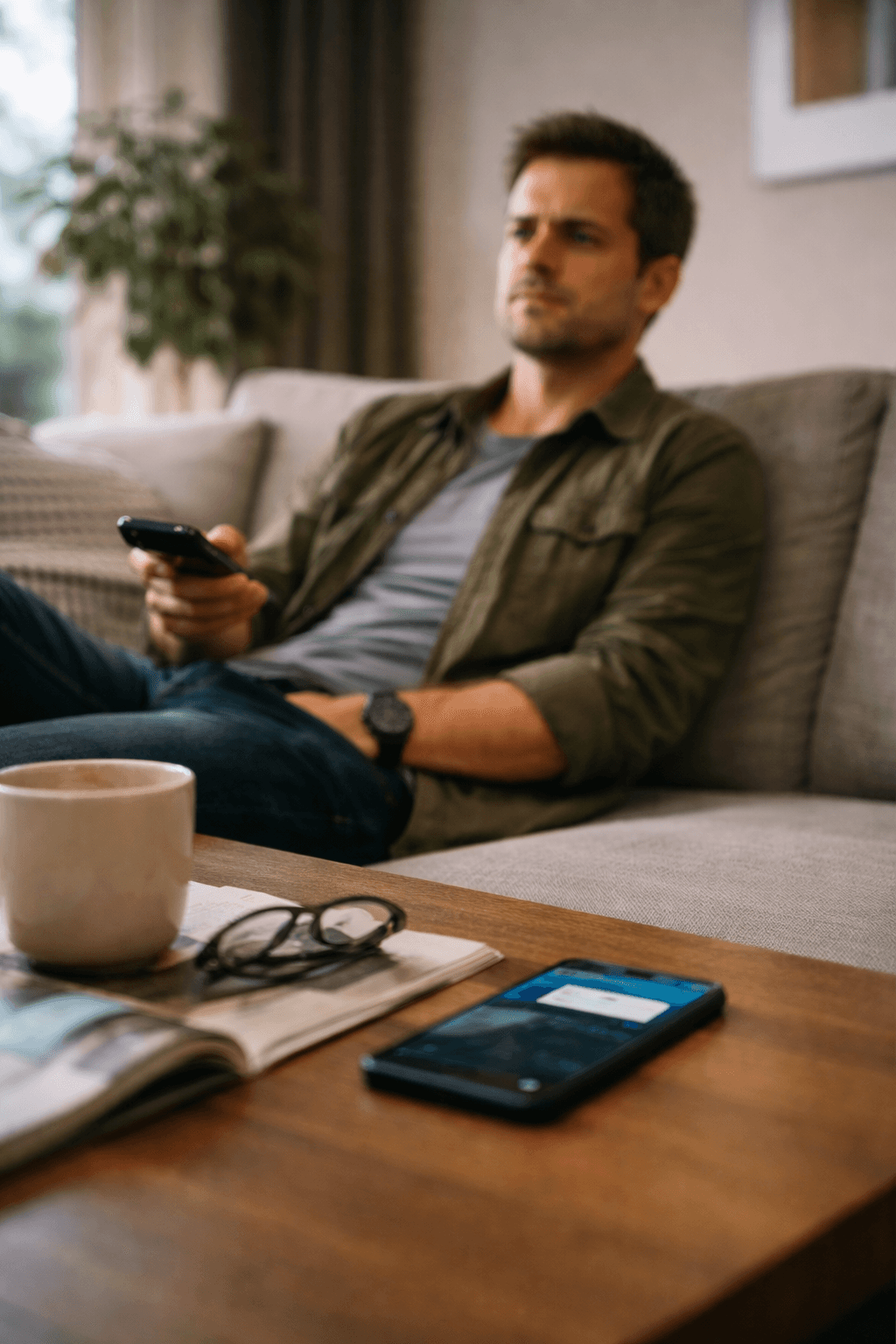
Feature Abandonment
When key capabilities are difficult to locate or understand, users tend to avoid them entirely.
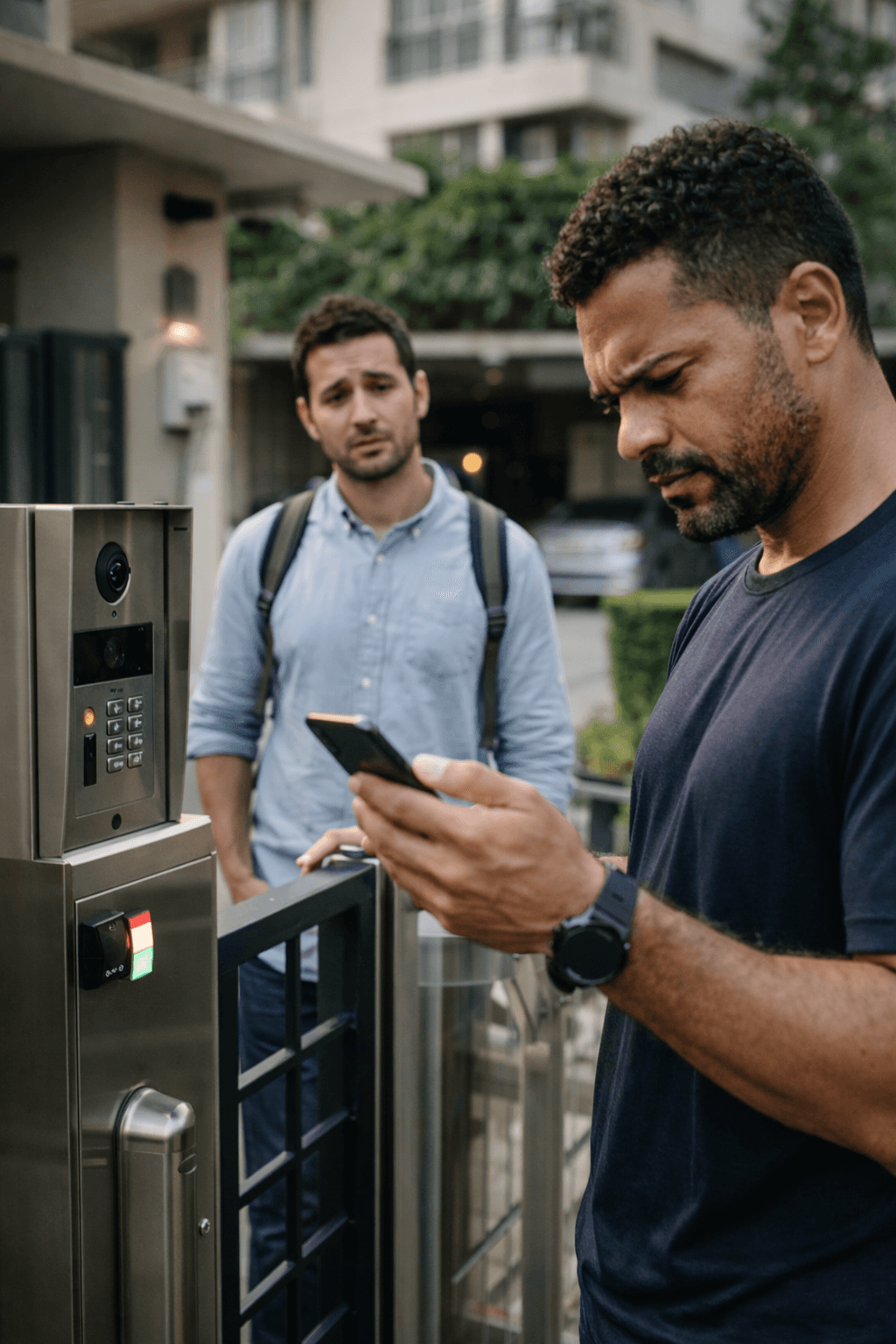
Slower Task Completion
Complex flows increase the time required to complete simple actions.


Structure Around Real-Life Tasks
Residential platforms support a wide variety of interactions: receiving visitors, managing deliveries, booking shared spaces, and staying informed about community updates.
Rather than presenting features as isolated modules, the redesign organizes the product around the actual activities residents perform in their everyday lives.
This shift helps users locate actions based on intention rather than memorizing where features are placed.
Reduce Cognitive Load
The original experience often exposed too many options at once, forcing residents to scan the interface repeatedly before completing a task.
The redesign introduces clearer hierarchy, progressive disclosure, and simplified flows, allowing users to focus only on the decisions that matter at each step.
The goal is to make everyday interactions feel immediate and effortless.
Separate Operational Layers
The platform manages different types of interactions:
• Operational actions: access, reservations
• Informational content: community news, notifications
• Logistical processes: packages
Mixing these layers in the same interface increases mental effort.
The redesign separates them into distinct spaces so users can quickly understand whether they are reading information or performing an action.
Design for Everyday Frequency
Unlike many consumer apps that are used occasionally, residential platforms support frequent daily interactions.
Authorizing visitors, checking notifications, or retrieving deliveries are small tasks repeated many times.
For this reason, the redesign prioritizes speed, clarity, and predictable interaction patterns that reduce the effort required during repeated use.
Designing a frictionless first interaction
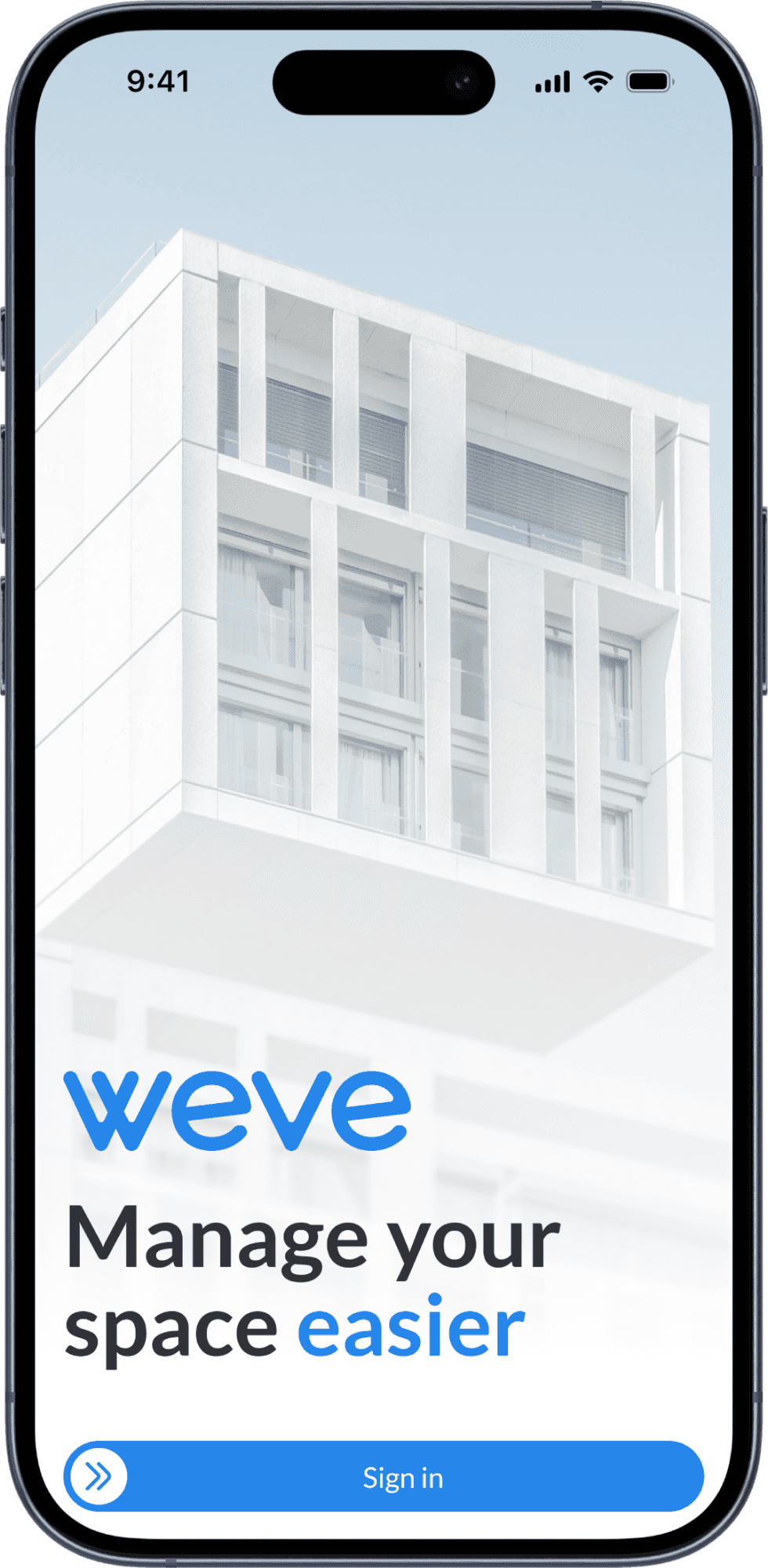
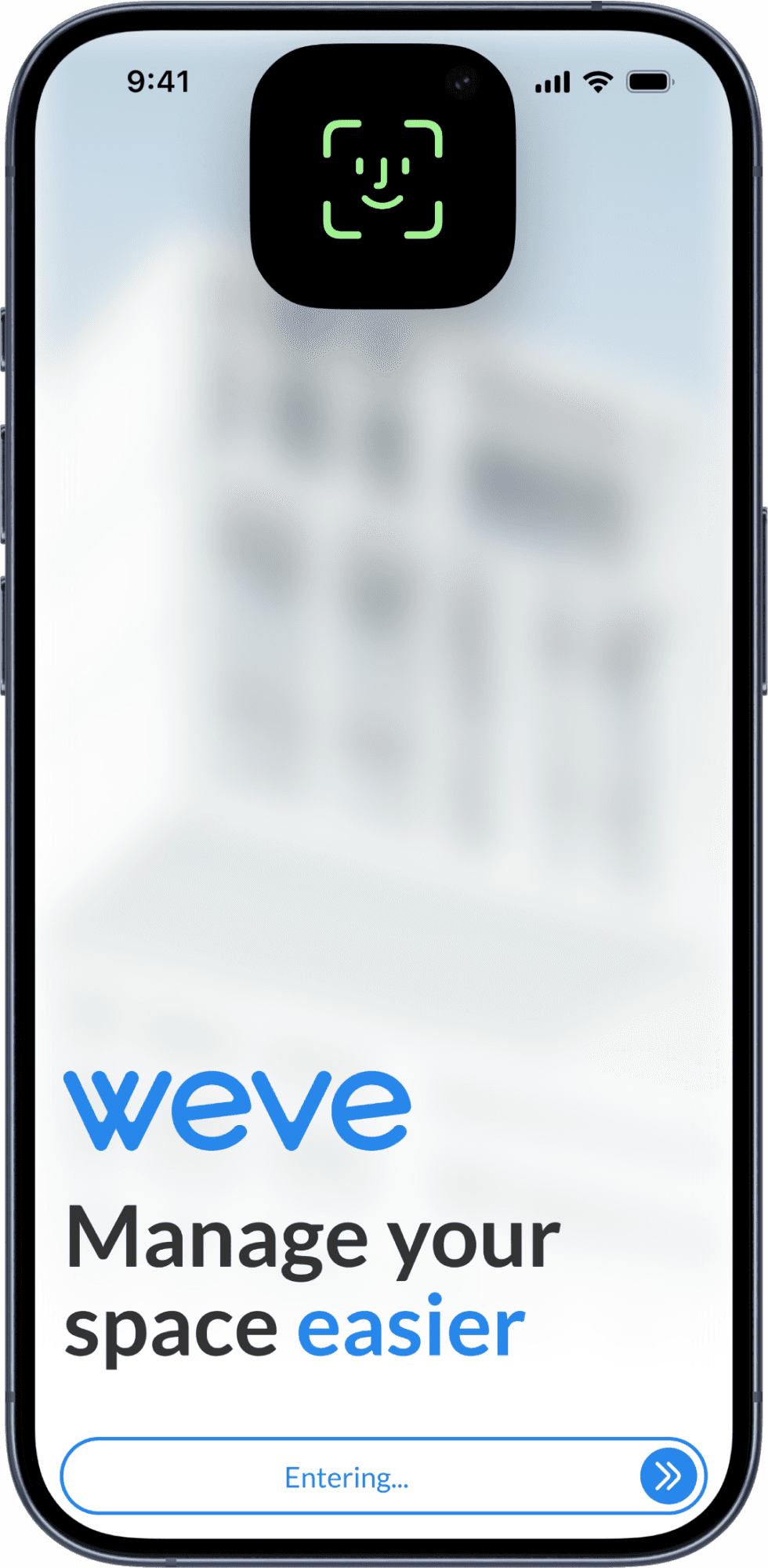
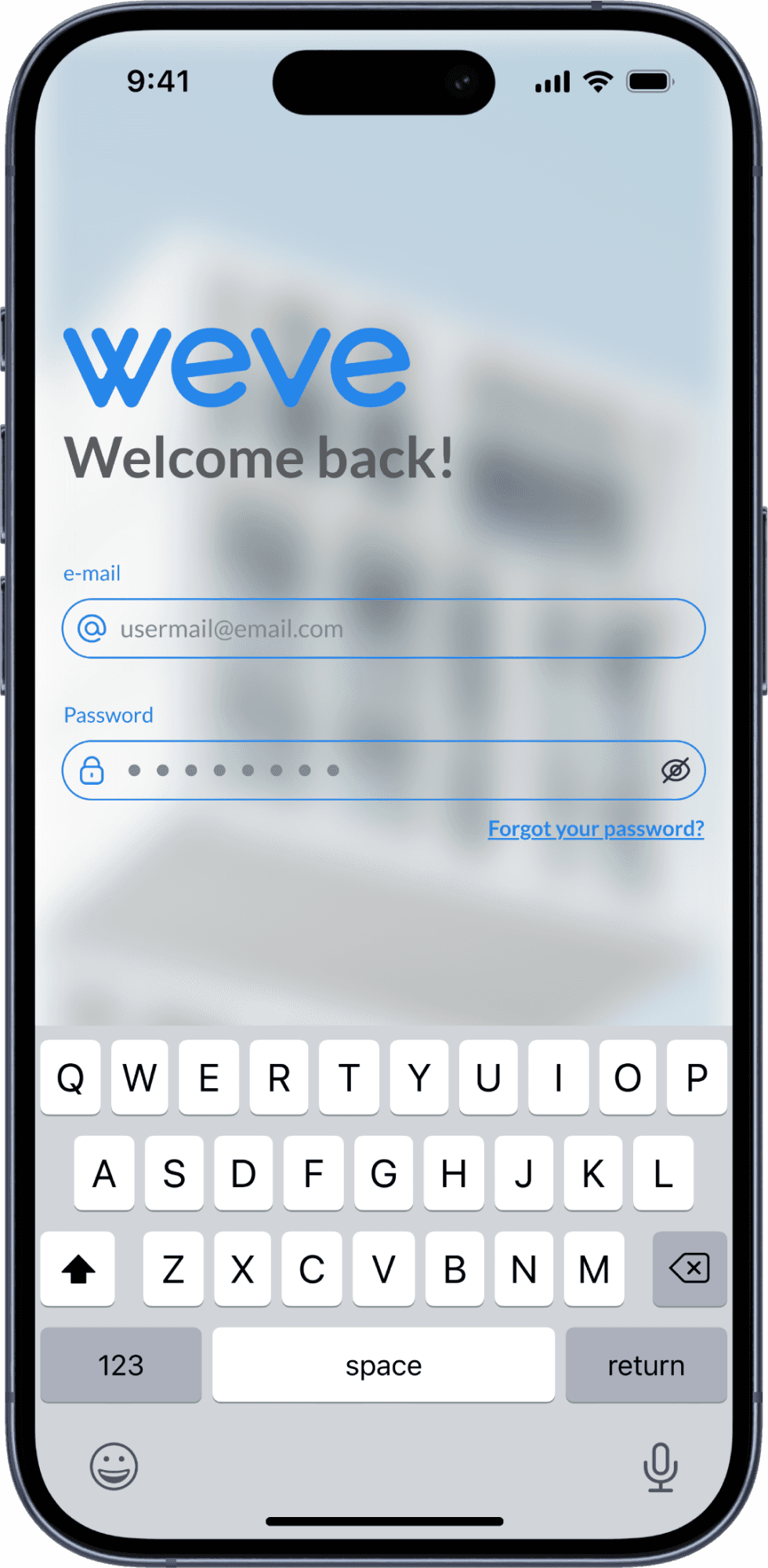
The entry point of a digital product defines the tone of the entire experience. For a residential platform used in everyday situations, the authentication process must feel fast, intuitive, and effortless.
Clear and Focused Entry Point
Seamless Biometric Authentication
Familiar and Predictable Login Structure
A Contextual Home Experience
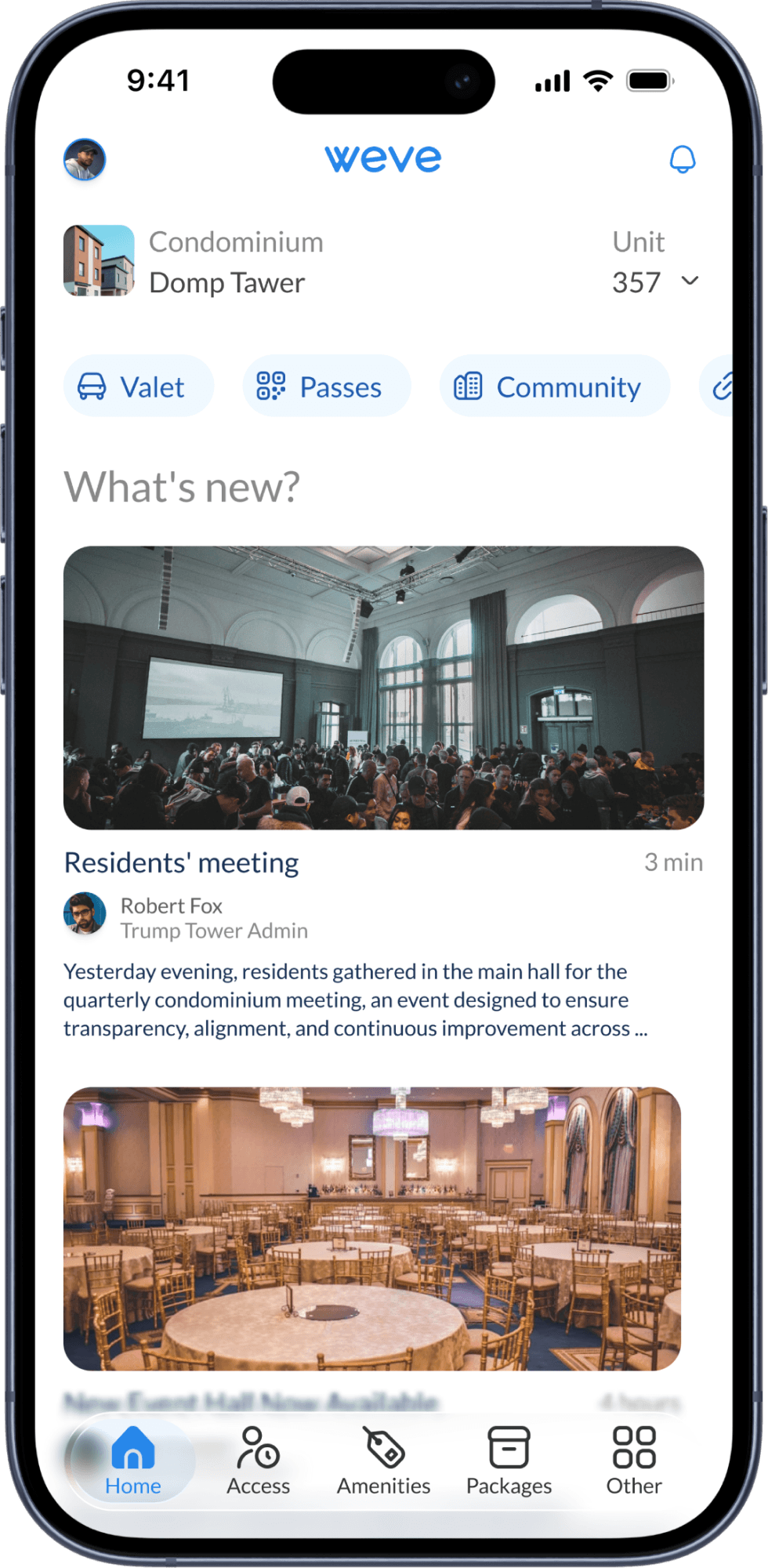
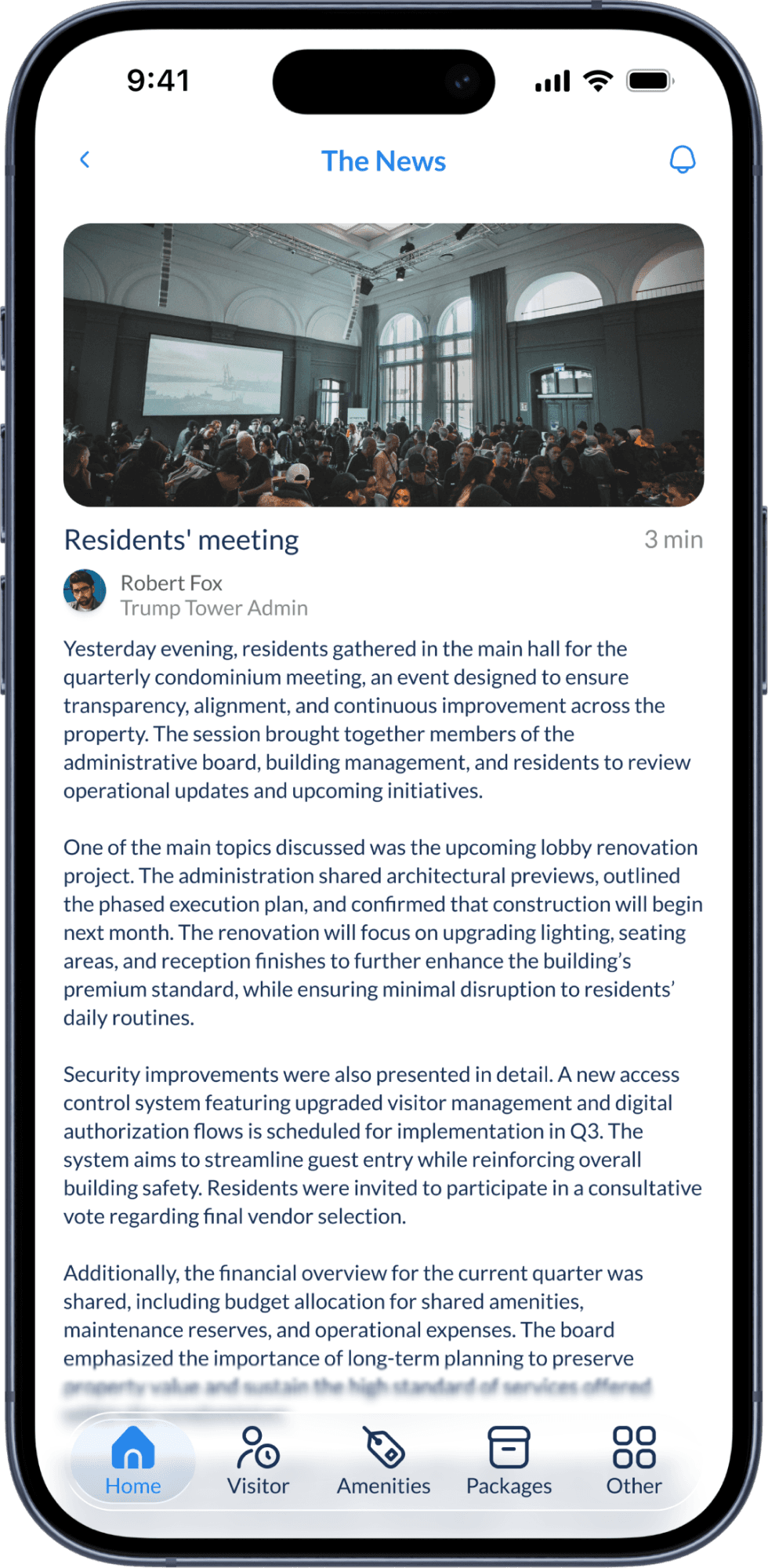
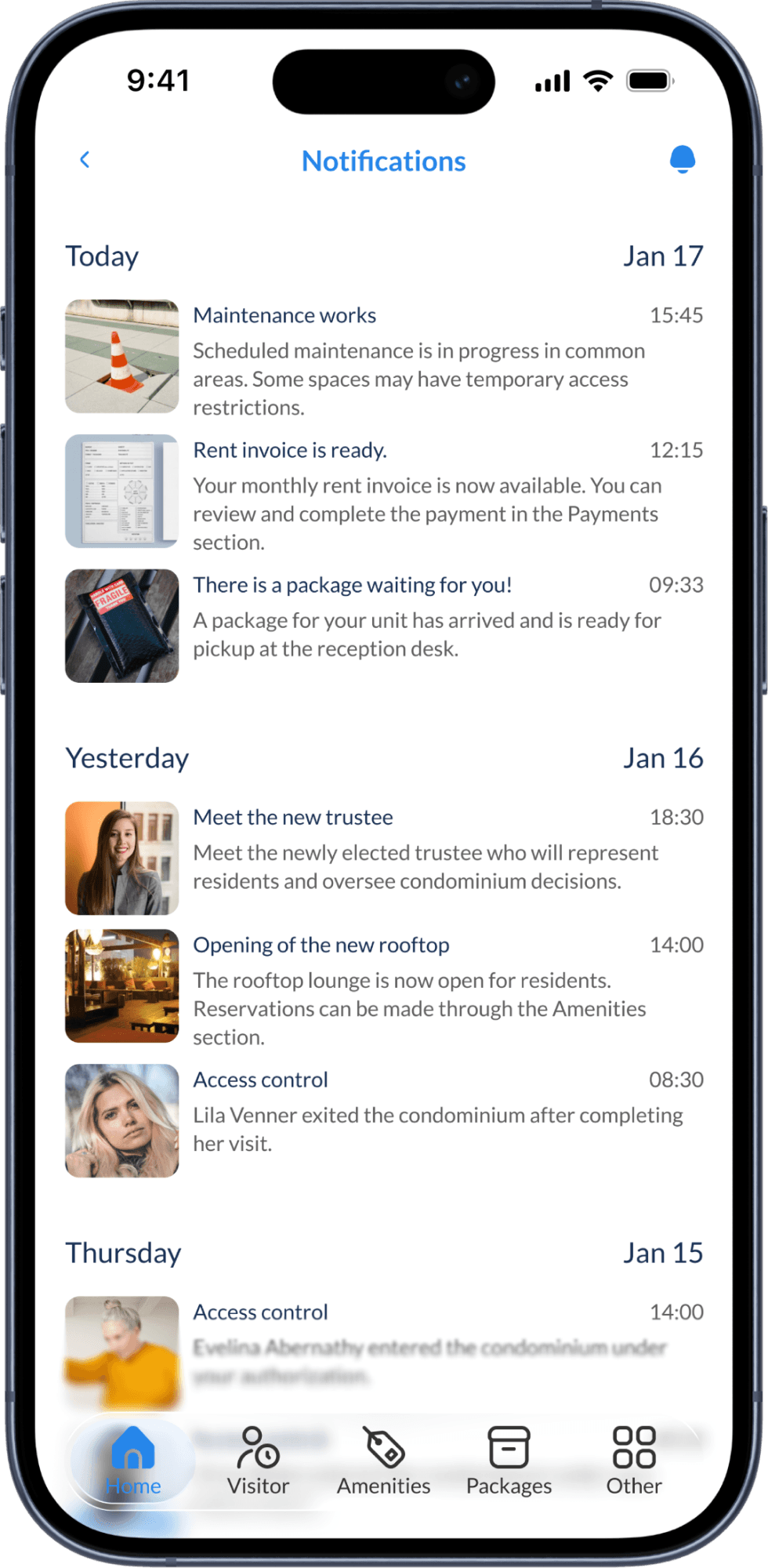
The Home screen now functions as a central hub that combines key contextual elements. This structure provides immediate orientation, helping residents understand where they are and what is happening in their building.
Community Updates at a Glance
Dedicated Space for Detailed Information
Real-Time Notifications
Making visitor activity clear and manageable
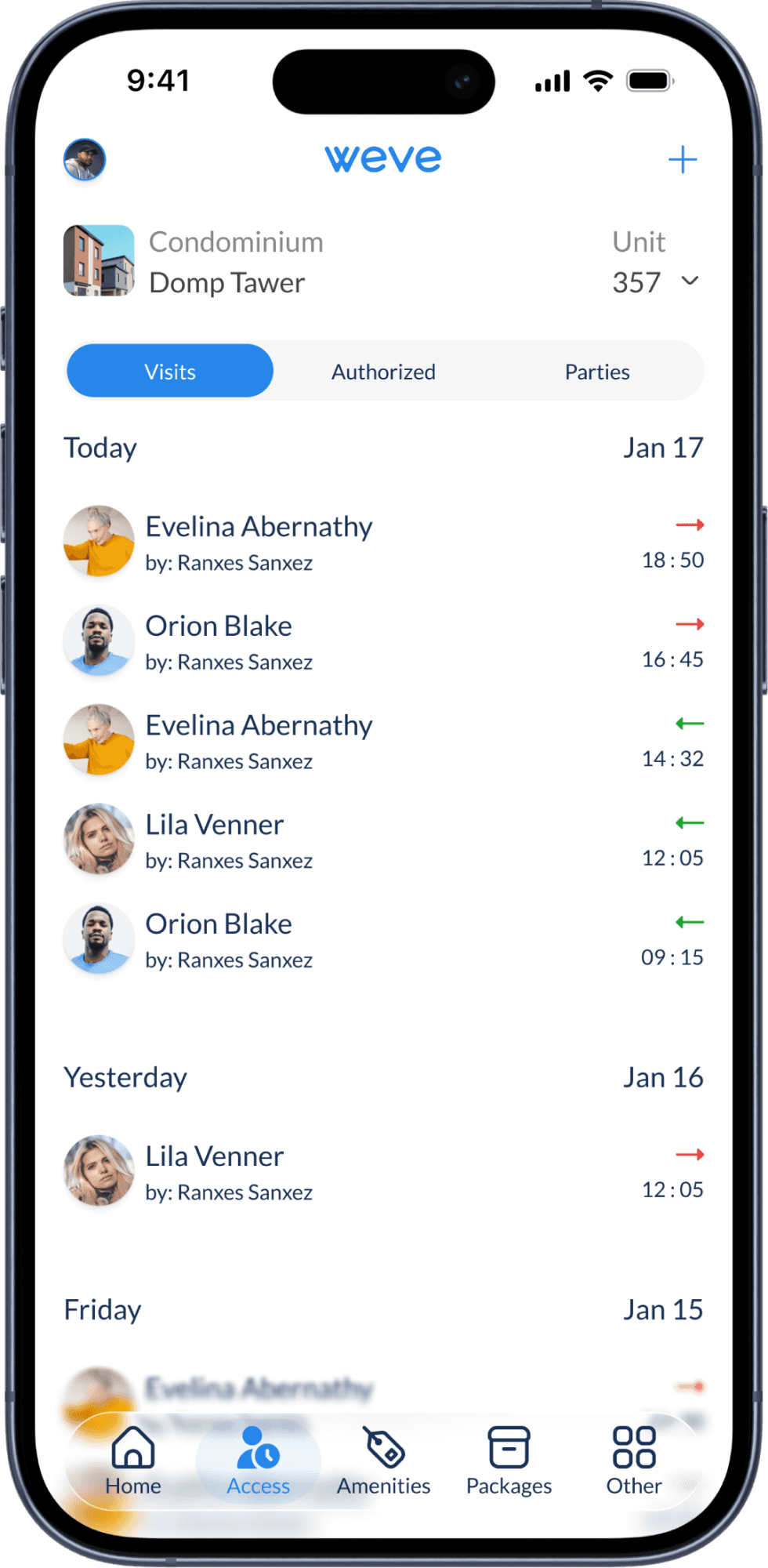
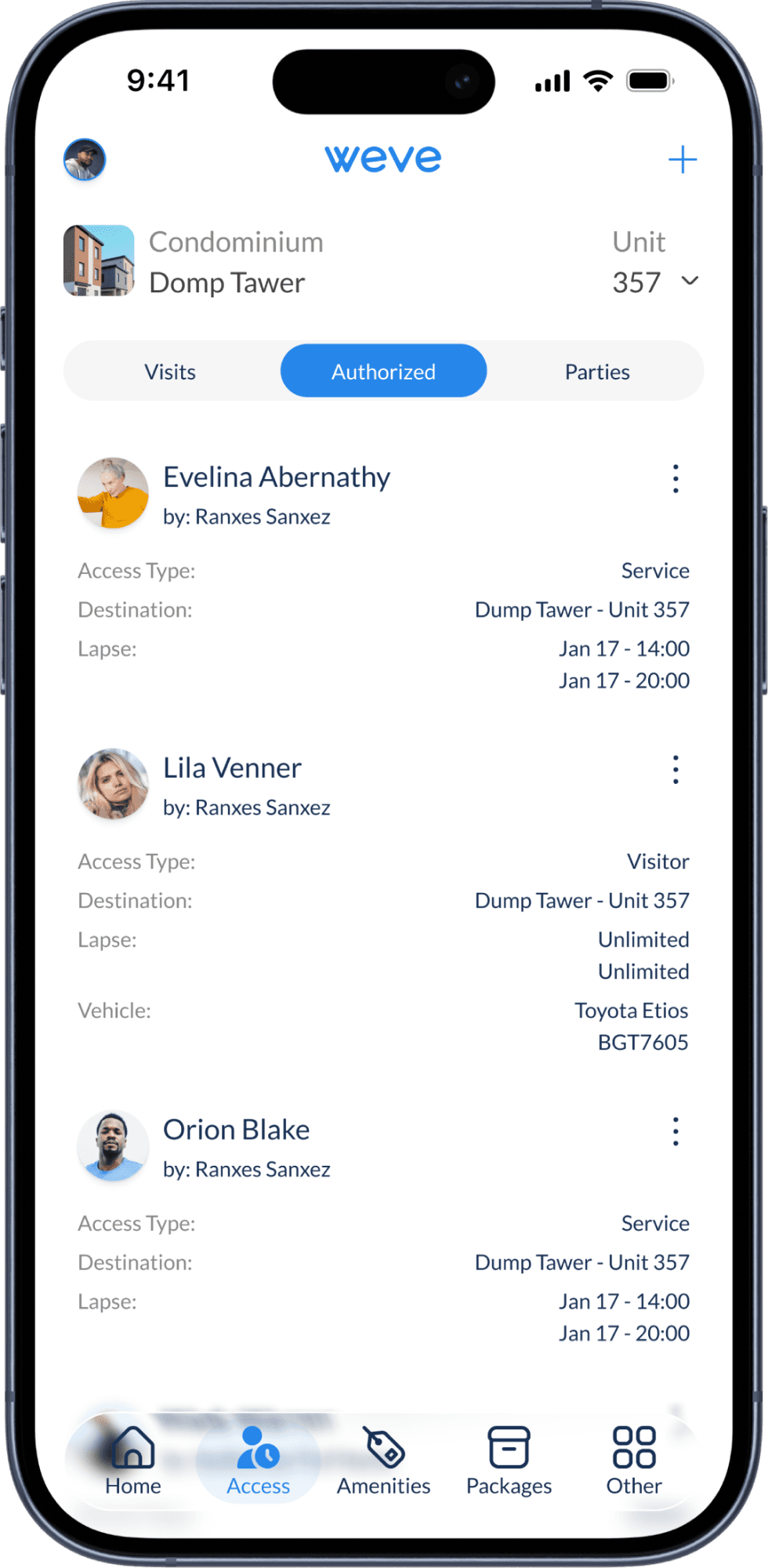
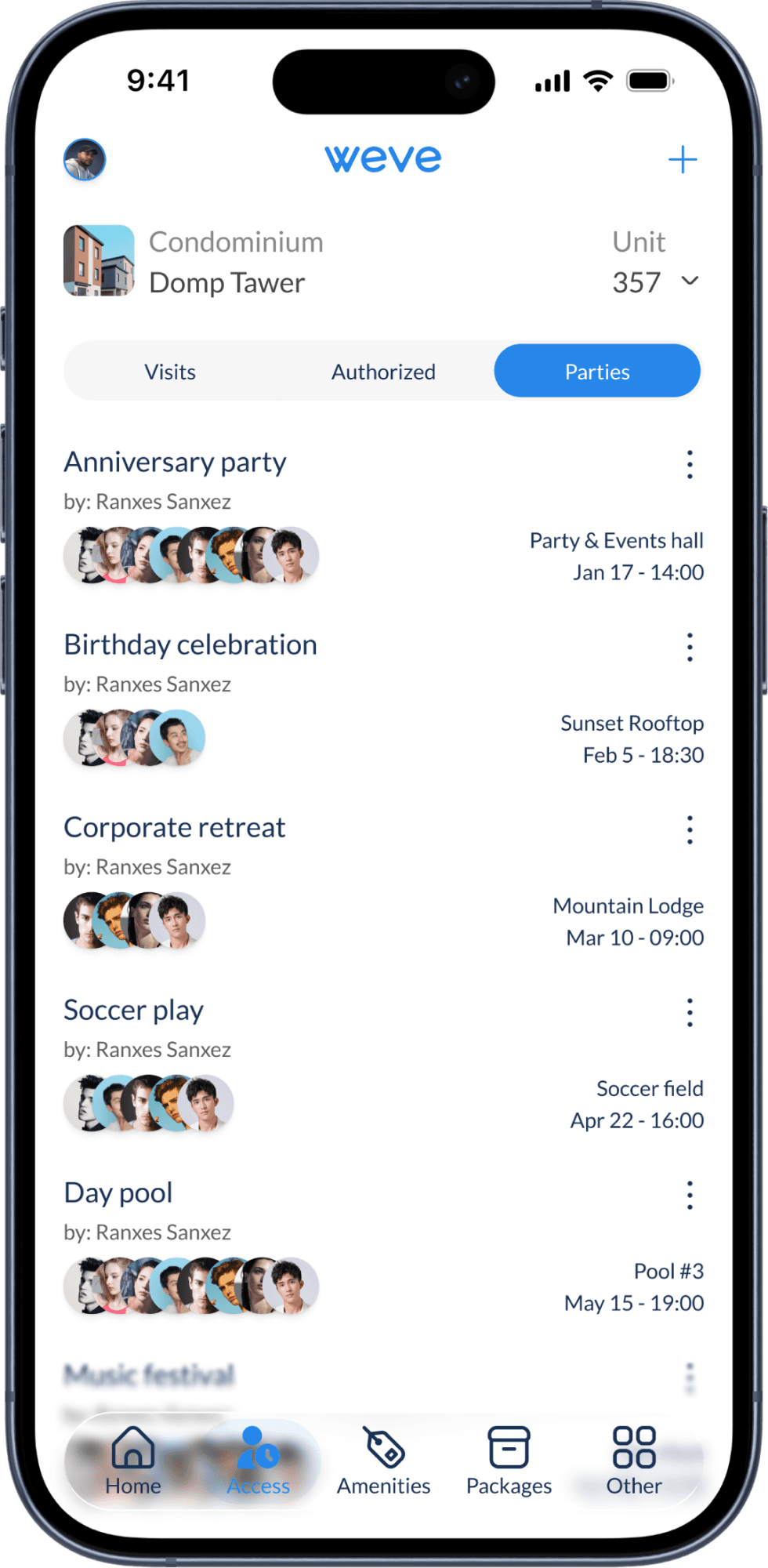
Managing visitor access is one of the most critical functions in a residential platform. Residents need to quickly understand who is entering the building, who has been authorized, and what events are scheduled.
Real-Time Visitor Activity
Authorized Access at a Glance
Managing Social Events
Creating a New Visitor Authorization (I)
Authorizing a visitor requires collecting several pieces of information while maintaining clarity and speed.
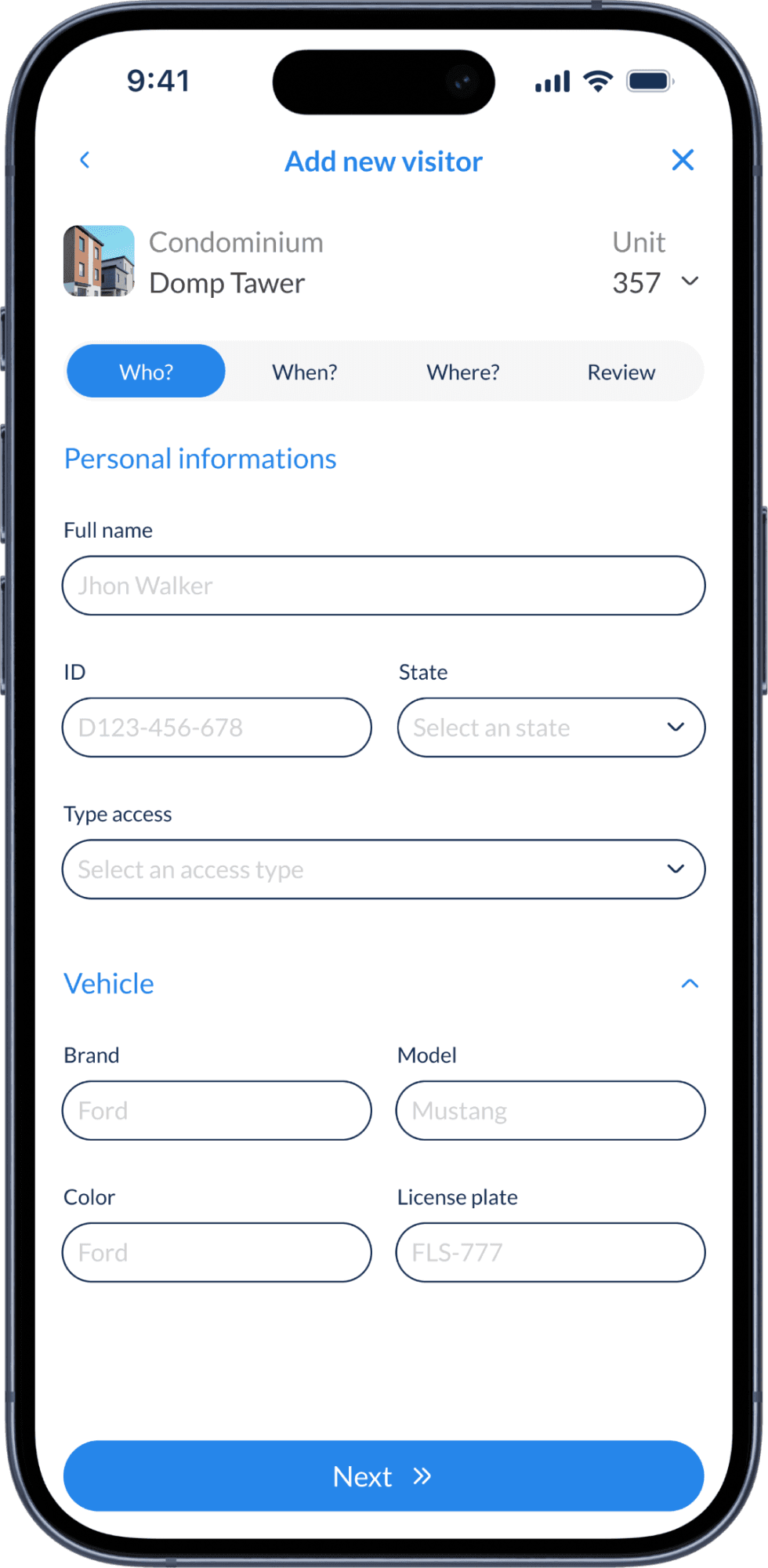
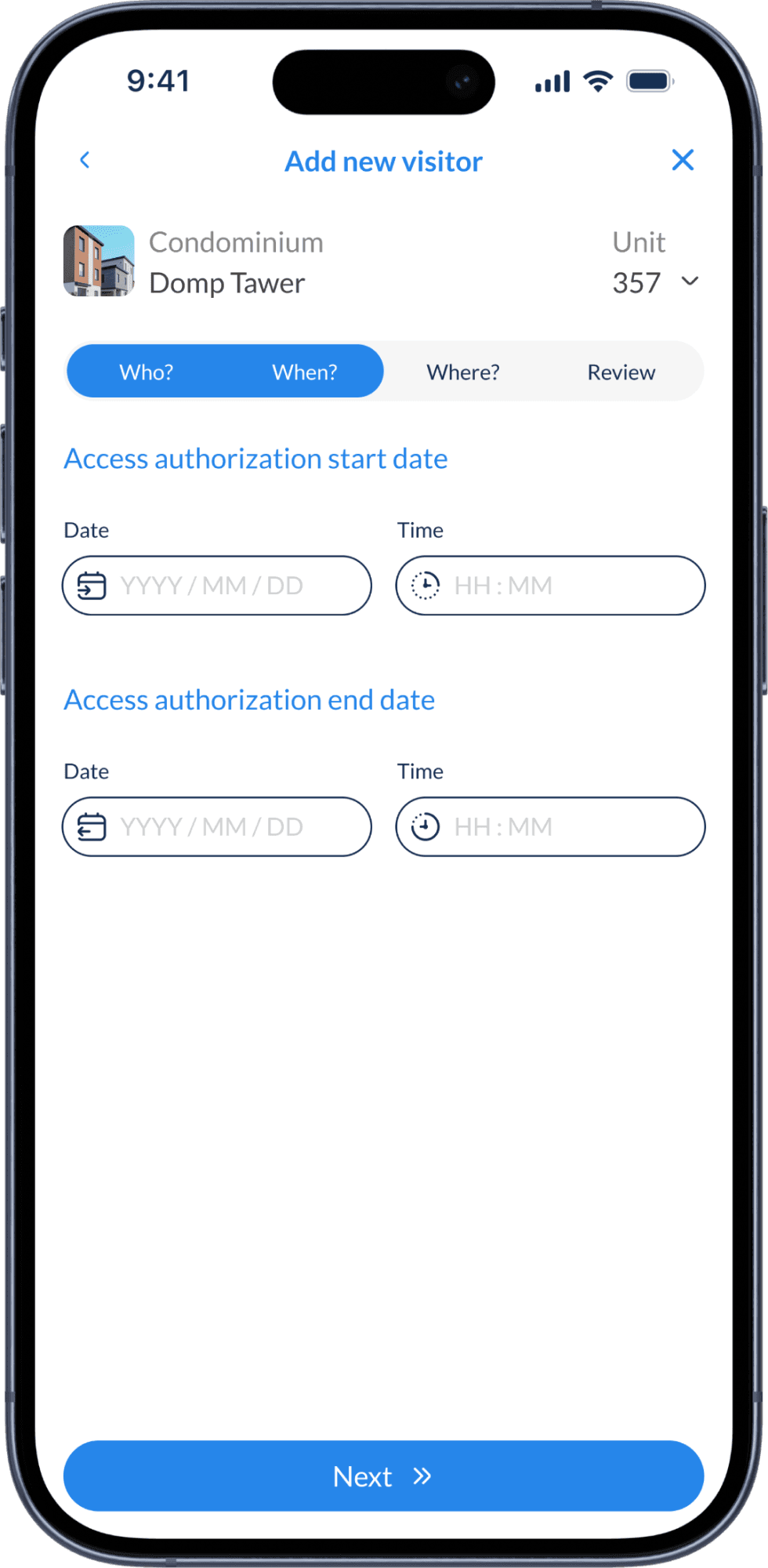
The redesigned flow introduces a step-by-step structure that guides residents through the process while reducing cognitive load. Instead of presenting a long form, the interface focuses on two essential decisions first: identifying the visitor and defining the access window.
Visitor Identification
Vehicle information if applicable
Access Timing
Creating a New Visitor Authorization (II)
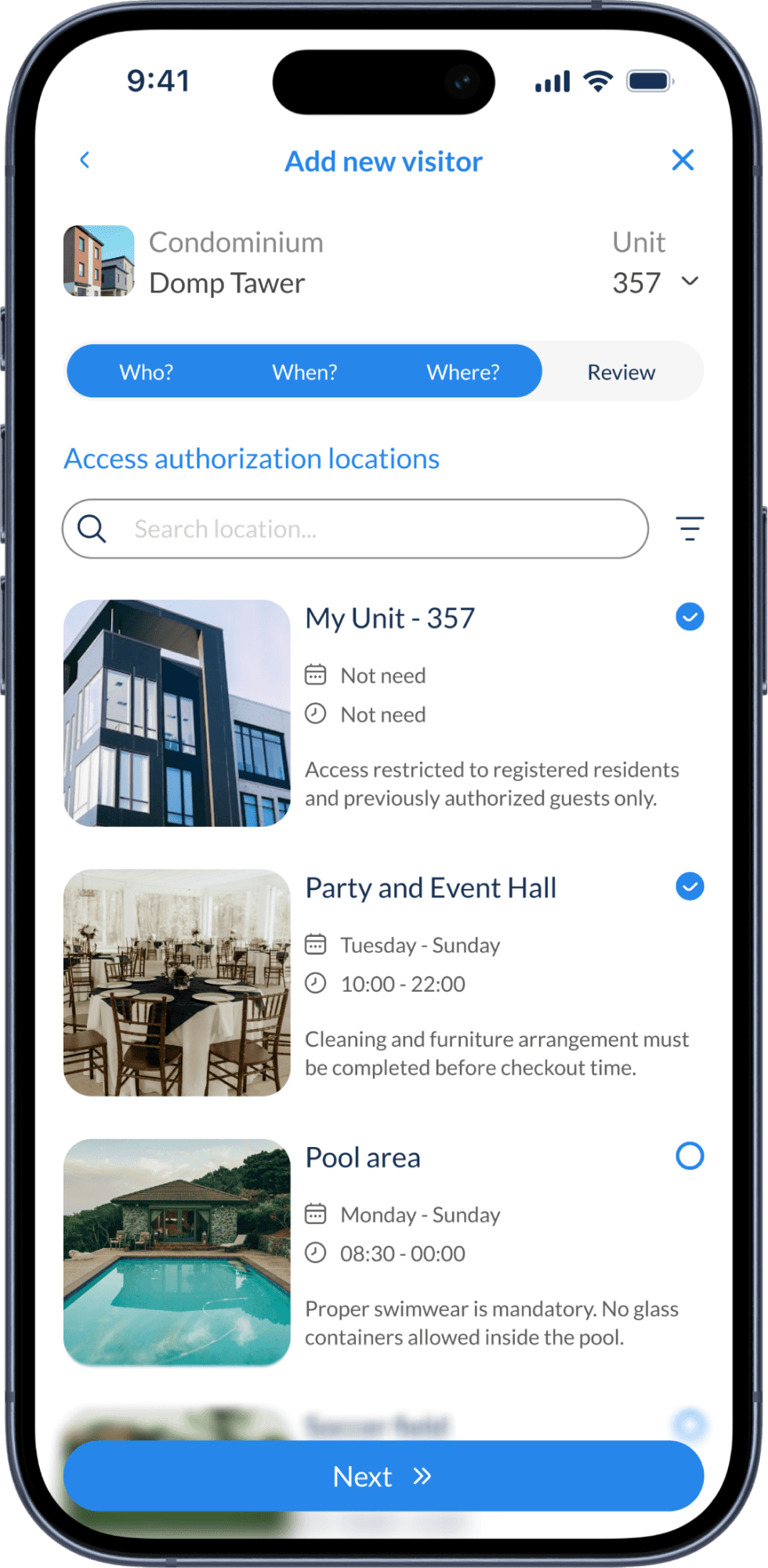
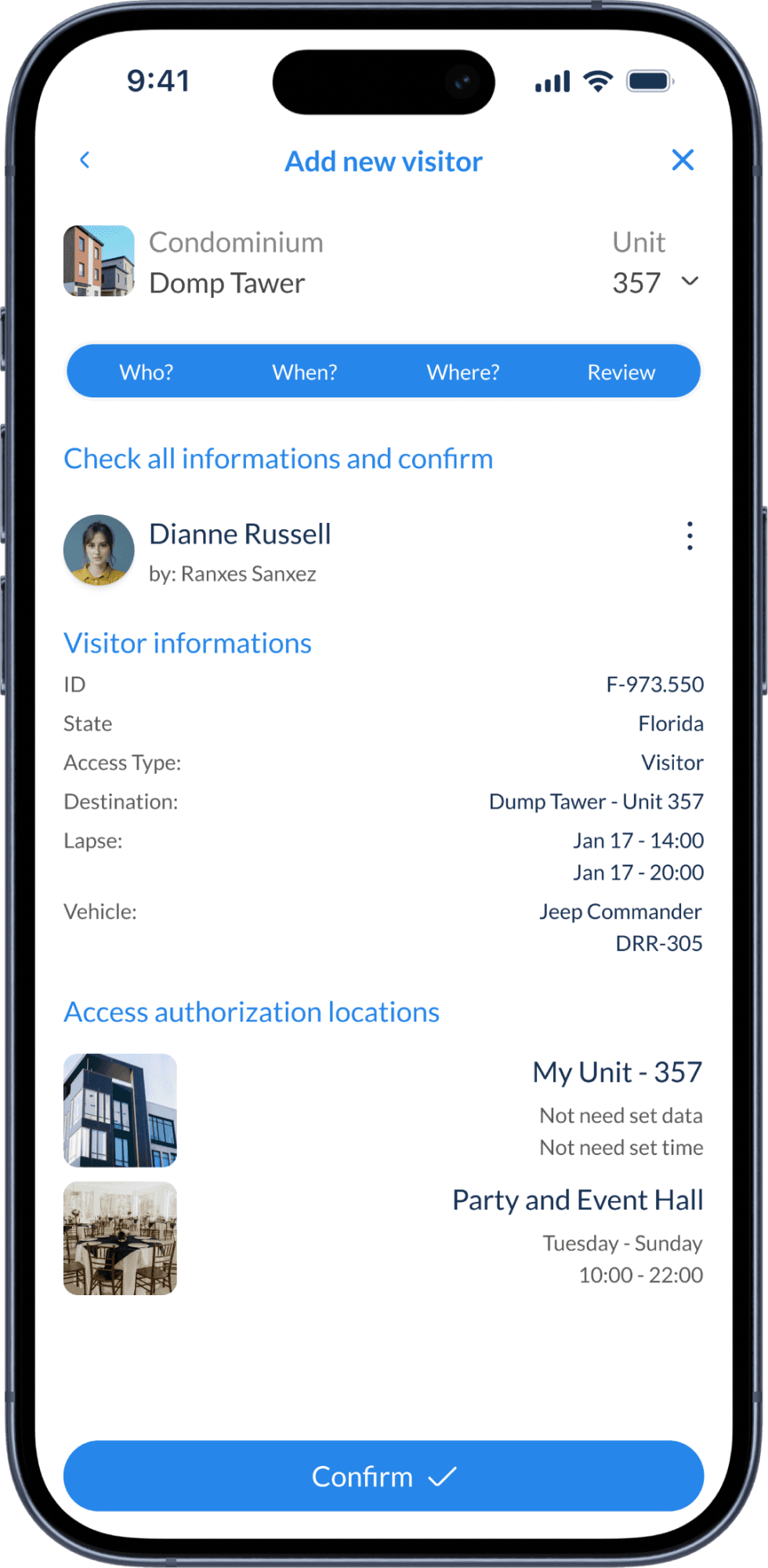
Once the visitor identity and access timing have been defined, the next step is to determine where the visitor will be allowed to go within the building.
In residential environments, visitors may require access to different locations, such as a private unit or shared amenities. The redesigned flow introduces a visual selection system that helps residents clearly understand the scope of the authorization.
Selecting Access Locations
Reviewing the Authorization
Precise and secure, not complicated
Making shared spaces easy to discover and book
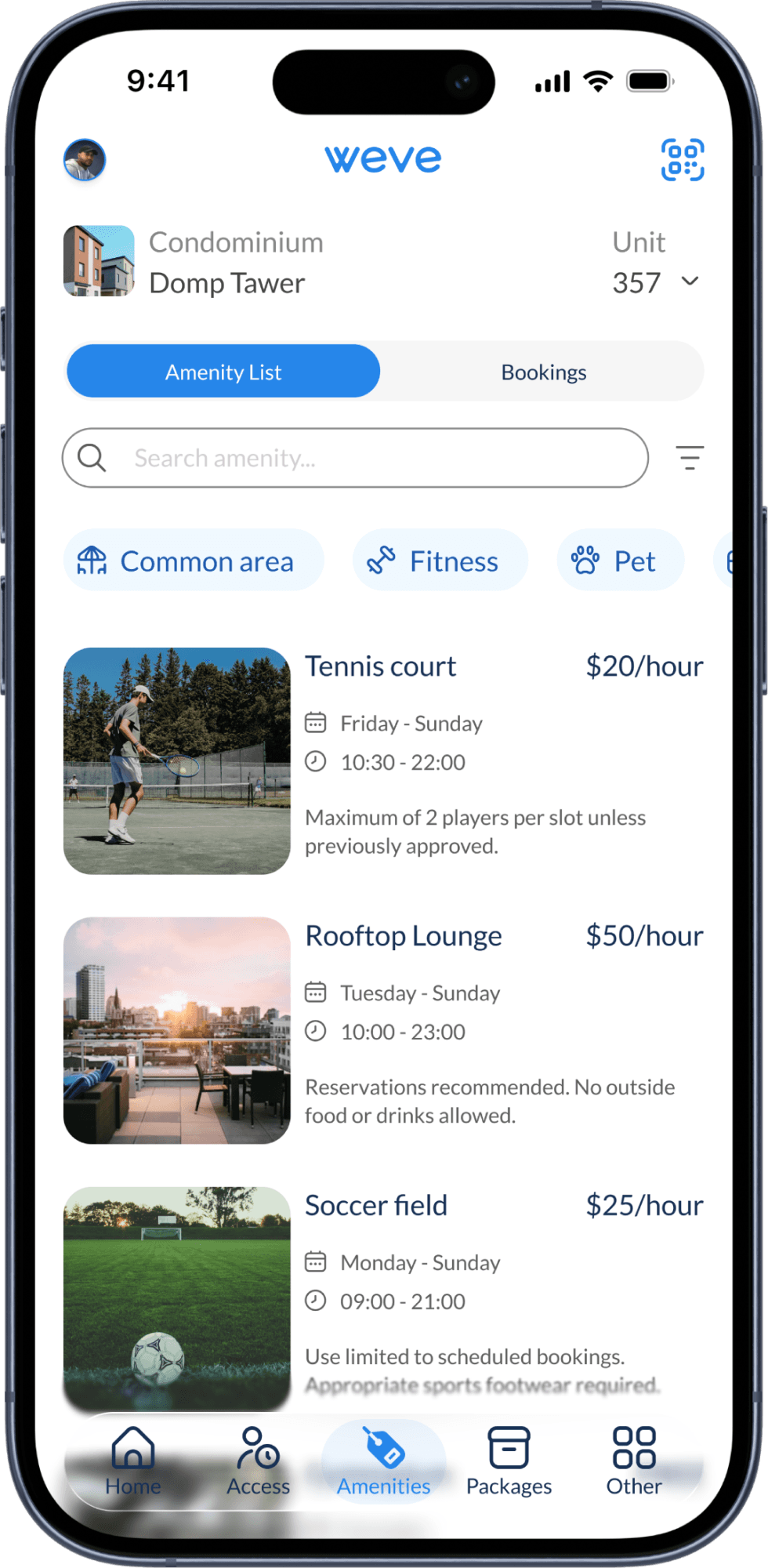
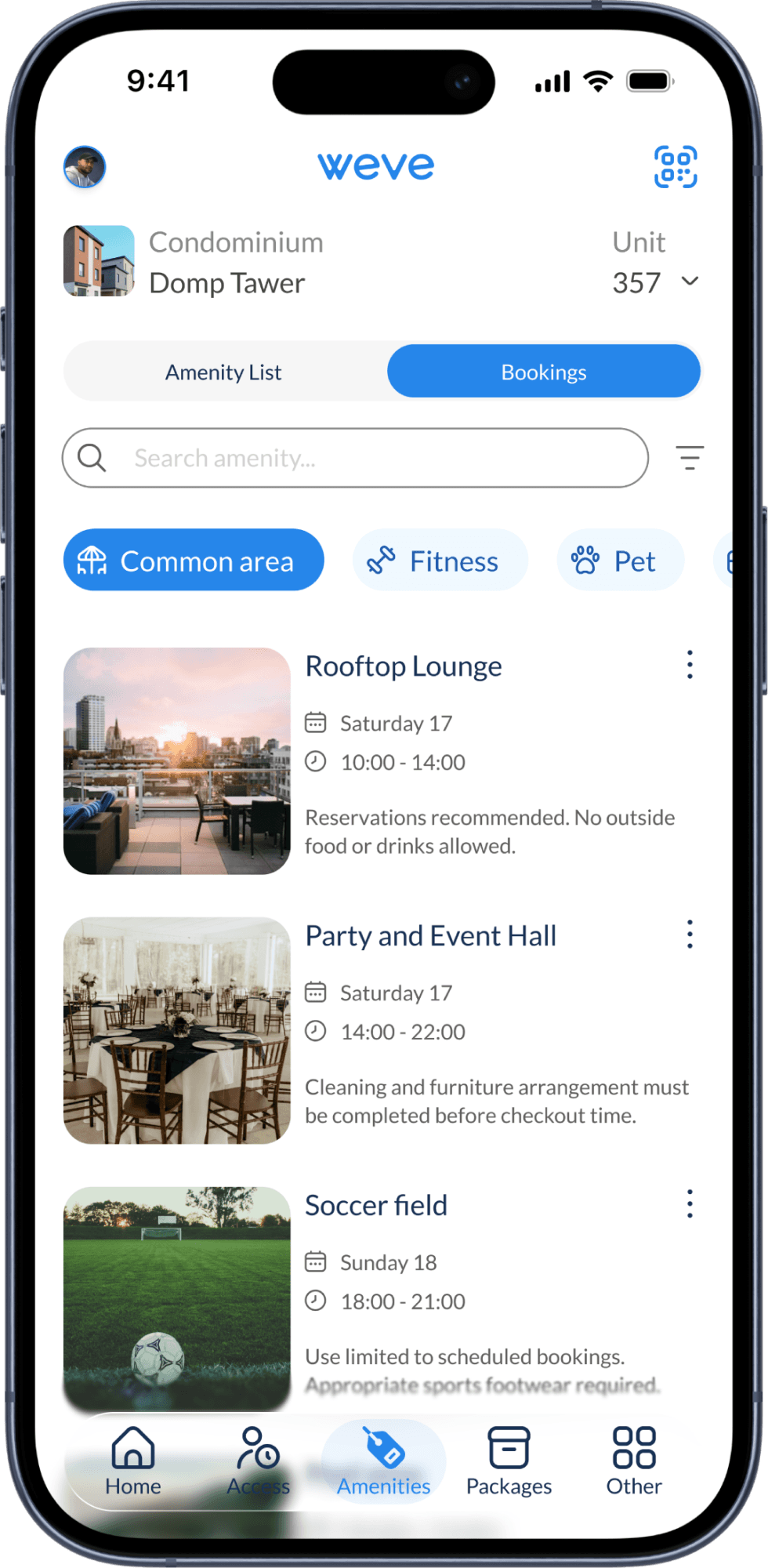
Shared amenities are an essential part of residential life. Spaces like rooftop lounges, sports courts, and event halls are frequently used by residents and require a reservation system that is both clear and efficient.
Visual Discovery of Shared Spaces
Category-Based Navigation
Dual View: Discovery and Reservations
Quick Access to Key Information
Turning space reservations into a simple and transparent process
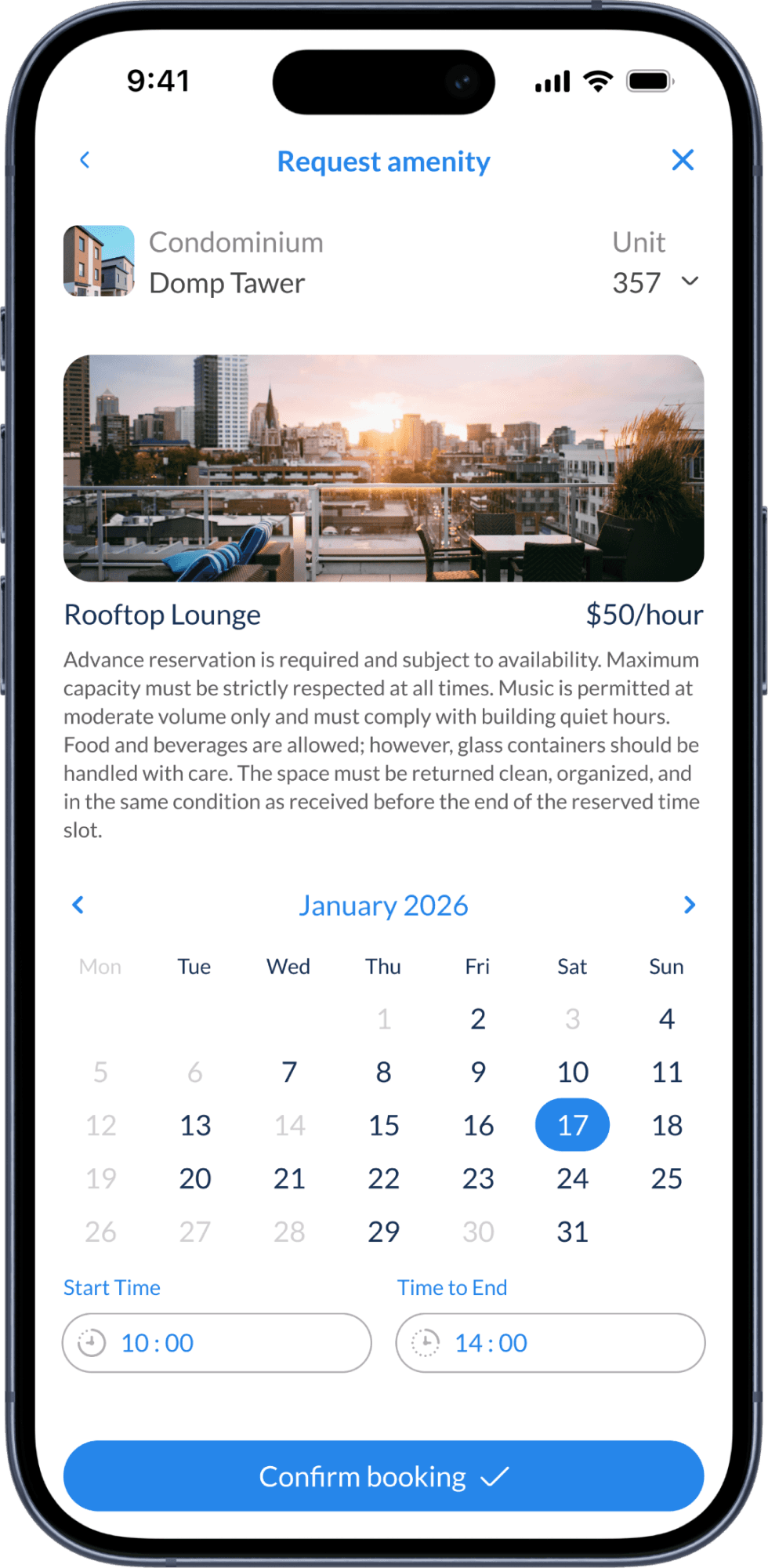
Once residents discover an amenity they want to use, the next step is to reserve it. In residential environments, booking shared spaces must be both precise and easy to complete, ensuring that schedules remain organized while minimizing friction for residents.
Clear Context Before Booking
Intuitive Date and Time Selection
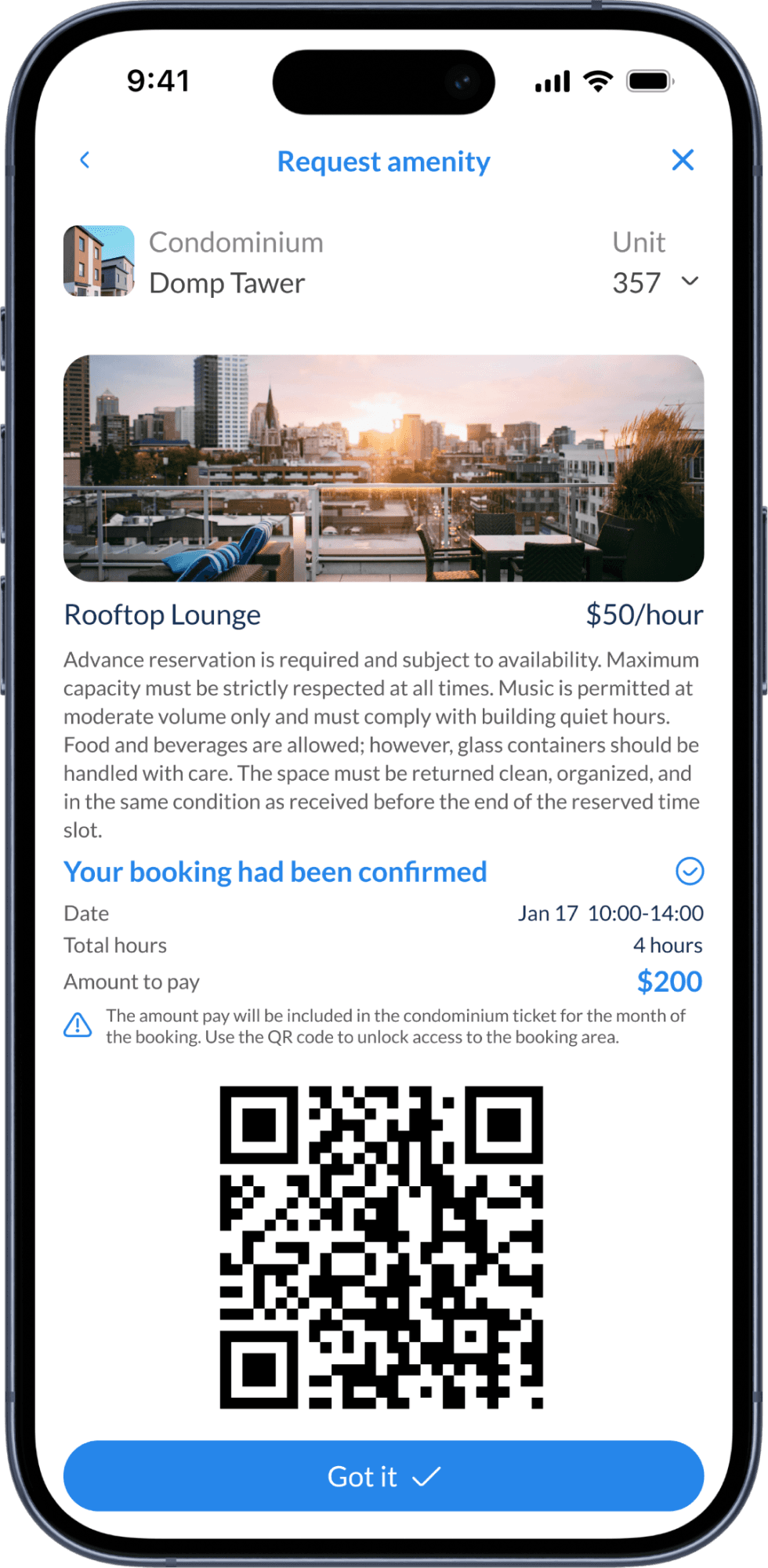
Transparent Booking Confirmation
QR-Based Access
Bringing clarity to residential package logistics
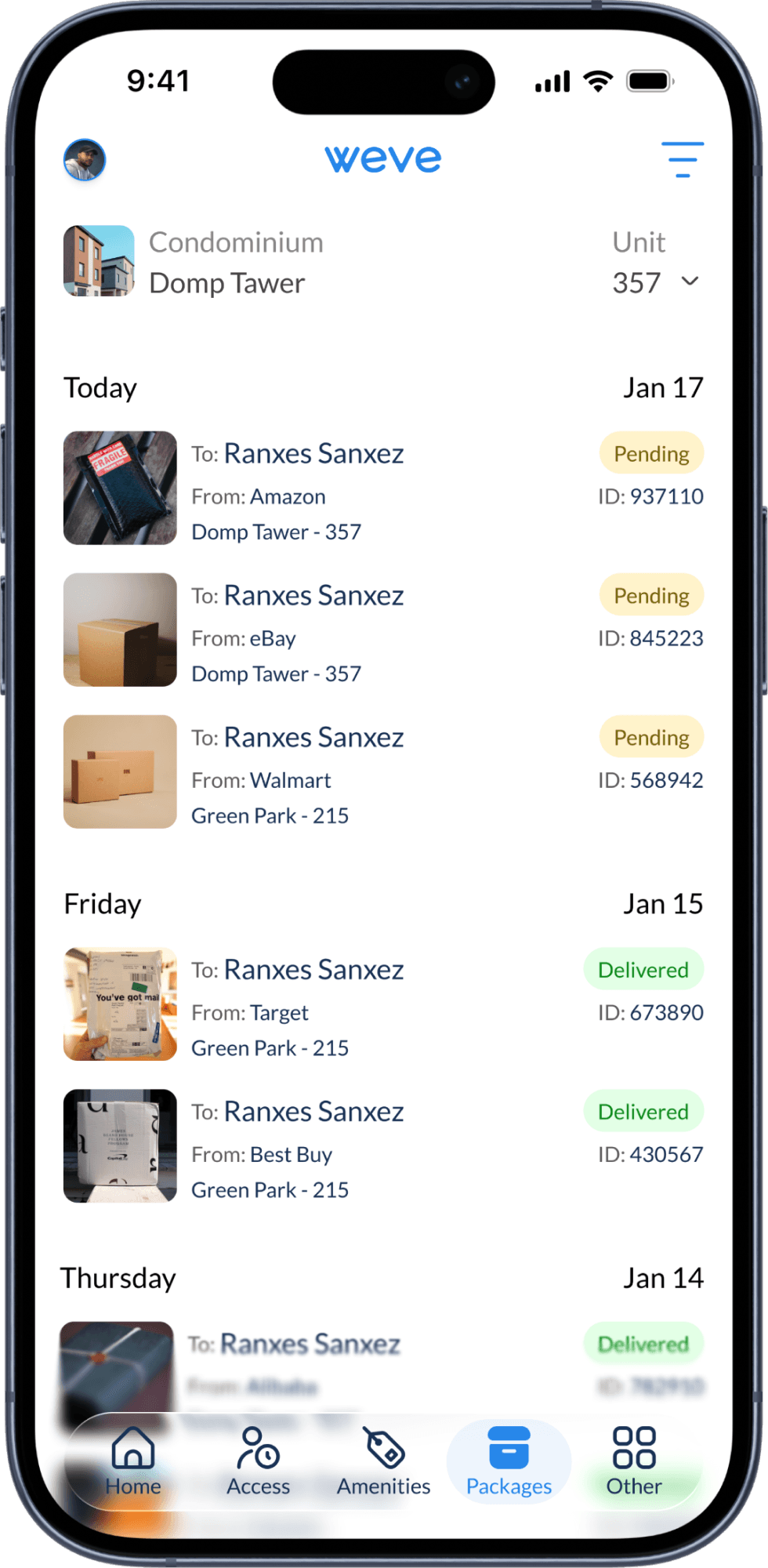
Online deliveries have become part of everyday residential life. Condominium buildings receive packages constantly, and residents need a reliable way to know when their deliveries arrive and how to retrieve them.
A Chronological Delivery Timeline
Clear Delivery Status
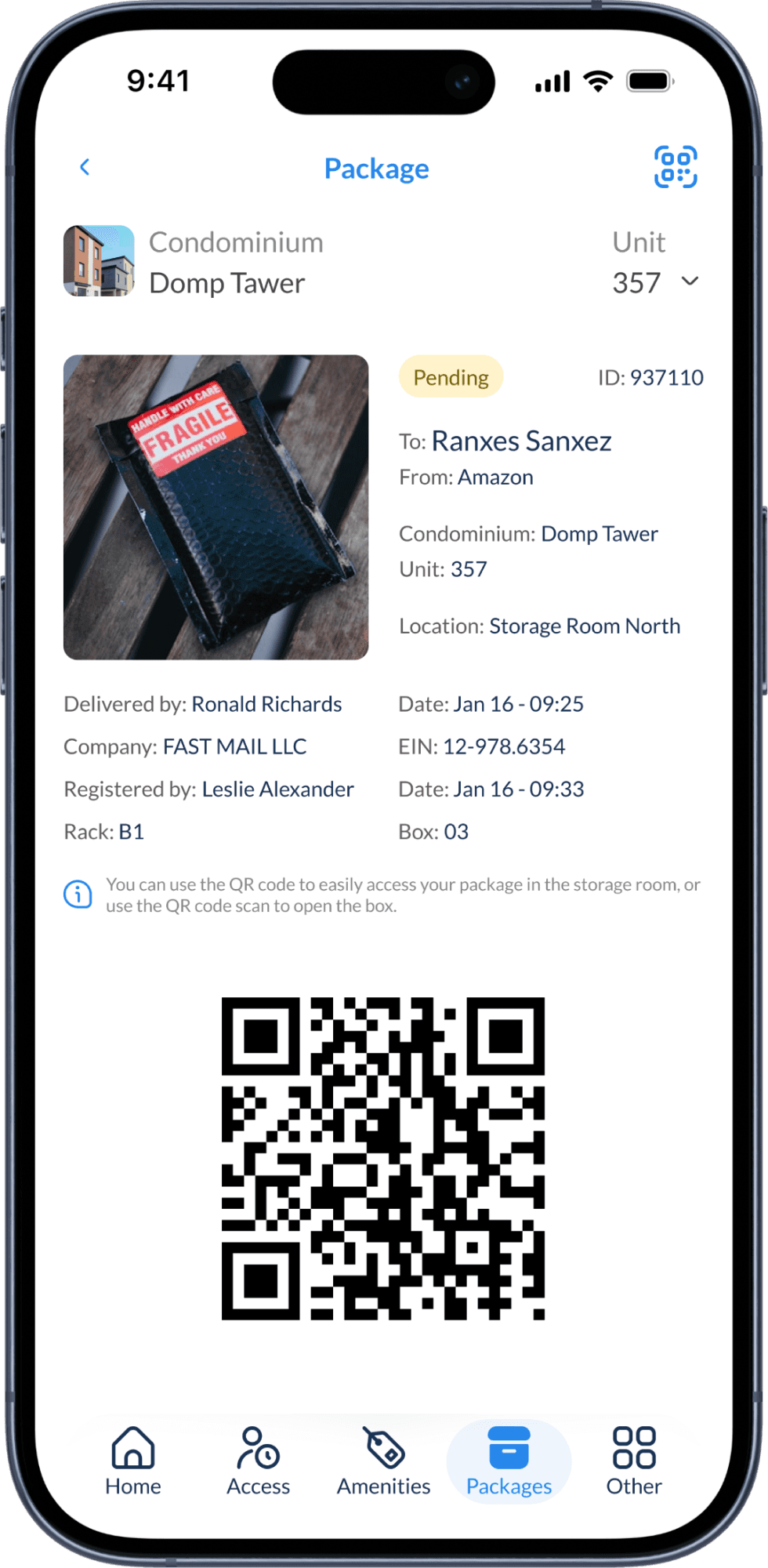
Detailed Package Information
QR-Based Package Retrieval
Connected with Notifications

Rancés Sánchez
Founder at Prometeux &
Lead Product Designer