spaceX aPP
Designing real-time complexity into coherent systems
Kickoff Thread
When growth exposed the cracks in the system


Darrell Steward
@steward
It would be amazing if the mission architecture was explained before the launch, not just during it.
321
54K
7.1M
96K

Alian Medina
@alian_amc
A single experience that connects mission goals, live data, and outcomes would be incredibly valuable.
842
37K
9.6K
7.1M

Felipe Brunheroto
@phel_brunherot
I follow every launch, but I still feel I’m missing part of the story behind what I’m watching.
872
9K
2.9M
1.1M

Damien Olazabal
@the_damien
All the technical depth is there, I just wish it were accessible in a single place.
524
54K
7.3k
3.2M

Edwin Fields
@edufields
SpaceX missions are fascinating, having a clearer narrative during the launch would make them even more engaging.
321
54K
7.1M
96K

Albert Flores
@alflowers
Integrating user feedback directly into the launch process could enhance overall satisfaction.
321
54K
5.3M
78K
Rancés Sánchez
@sanxezco

This wasn’t a UI problem. It was a fragmentation problem.
Critical mission context, real-time data, and narrative explanation exist, but never converge into a single experience. As a result, users oscillate between confusion and passive consumption, especially during moments of deviation, precisely when clarity matters most.
The opportunity wasn’t to simplify SpaceX’s engineering, but to design a system that translates complexity into understanding, in real time, without breaking immersion.
What This Really Meant
Translating signals into a system-level opportunity
This wasn’t dissatisfaction.
It was unfulfilled potential.
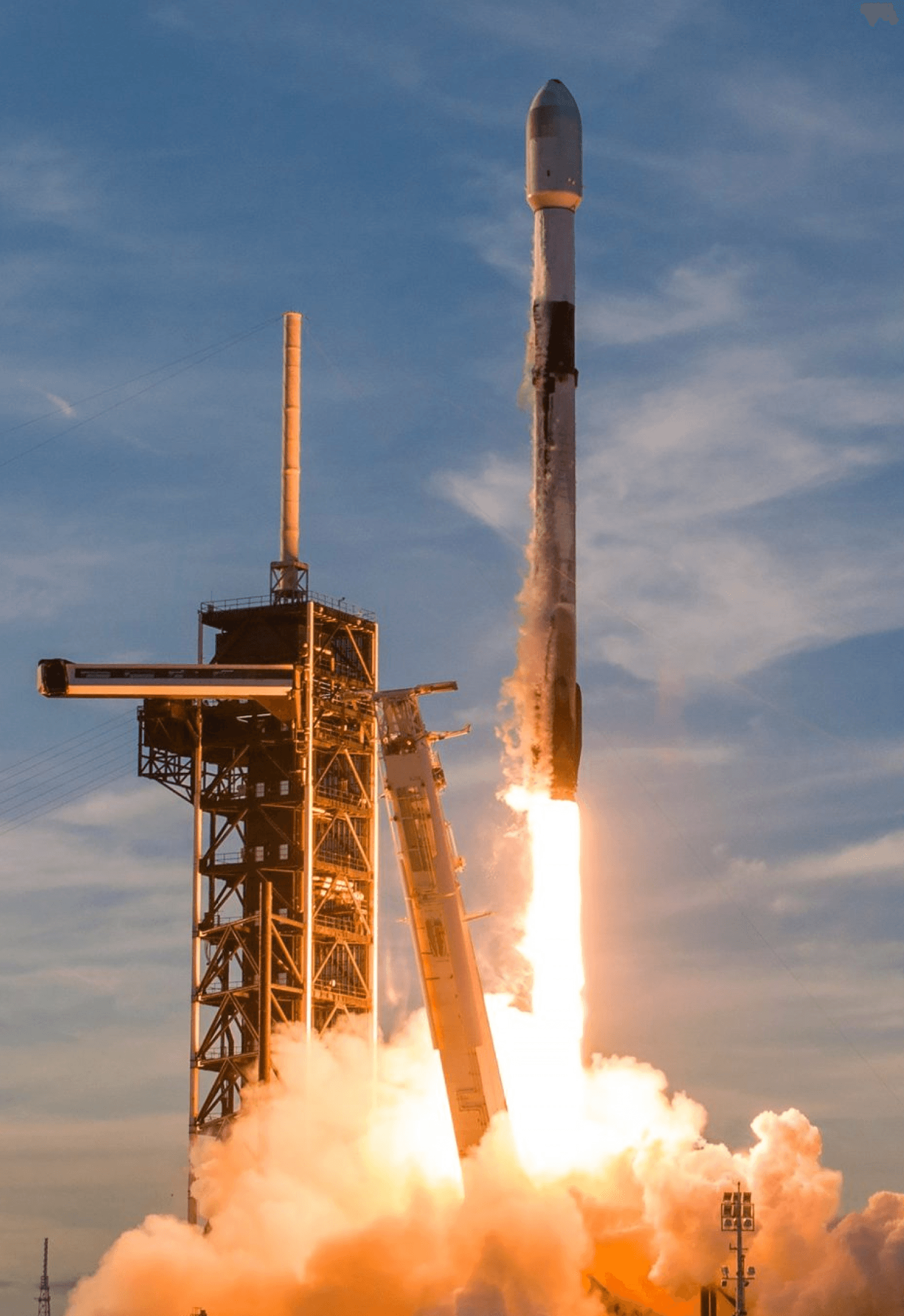
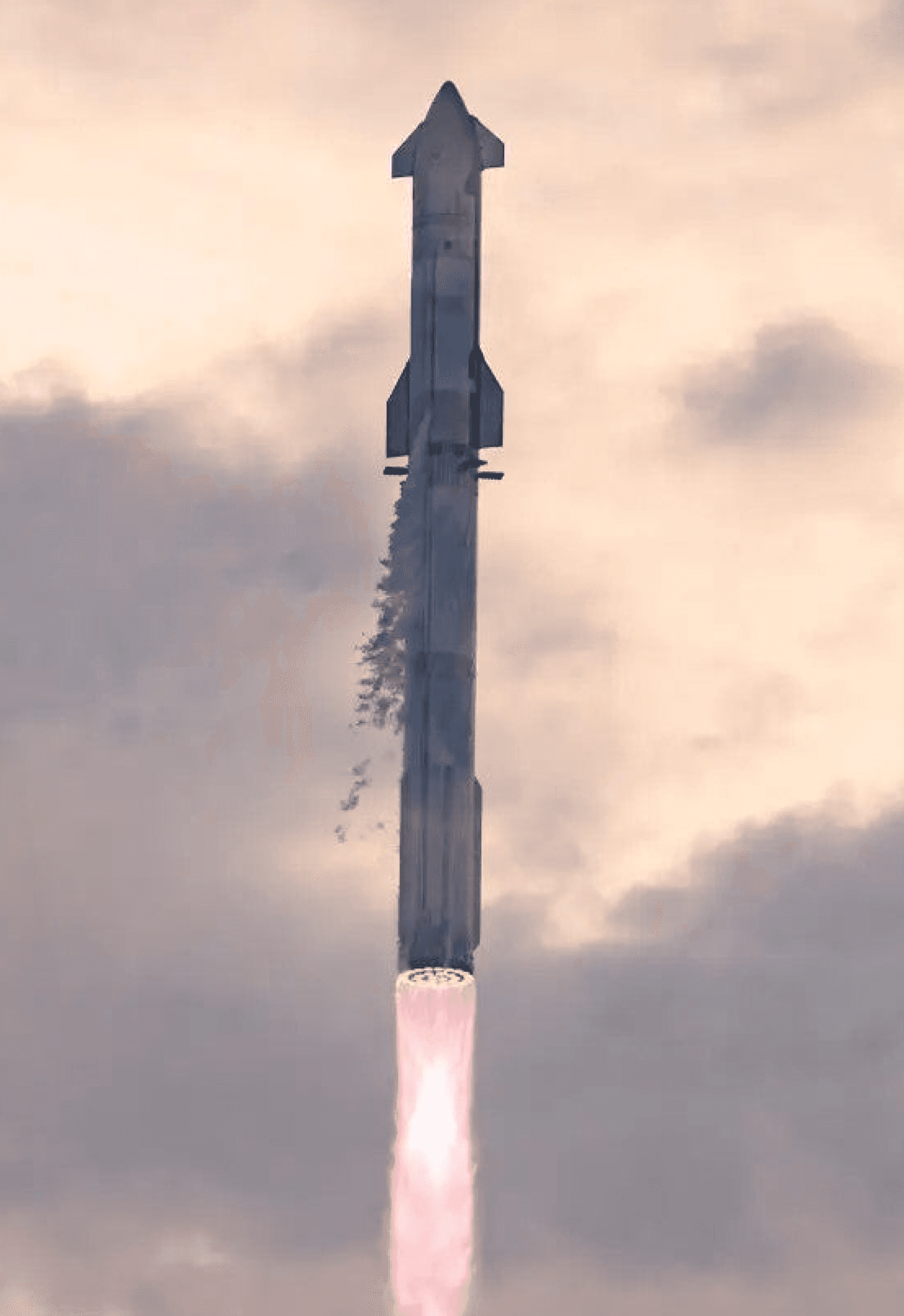
SpaceX has already mastered engineering, execution, and public attention. The launches work. The technology delivers. The audience shows up.
Yet, understanding what is happening still demands prior knowledge, second screens, or post-event explanations.
The gap wasn’t information.
It was orchestration.
Critical mission context, live telemetry, and narrative explanation exist, but rarely converge into a single experience.
The result is fragmented understanding, especially during off-nominal moments, when clarity matters most.
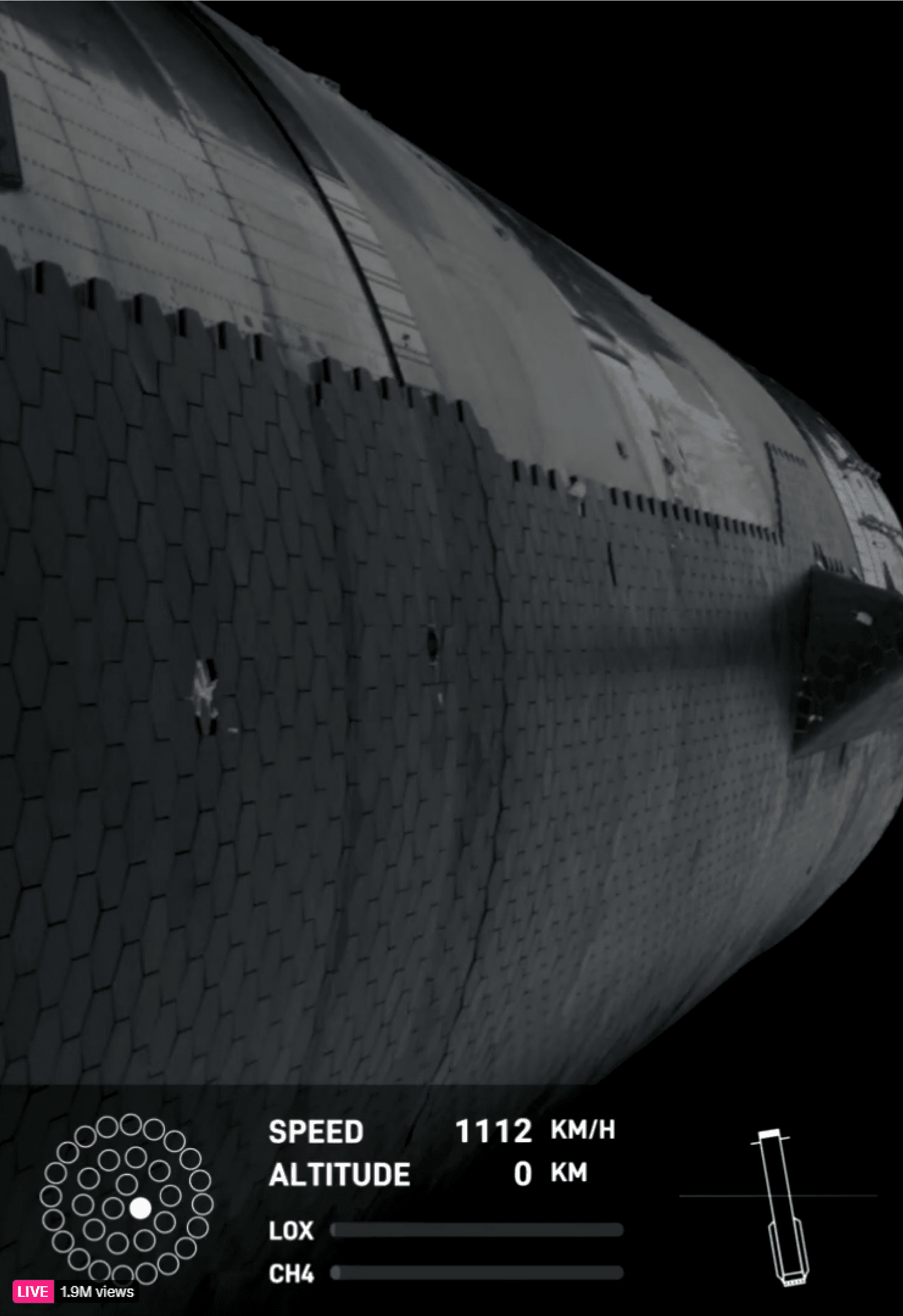
From a product perspective, this revealed a system problem.
Not a lack of content.
Not a lack of technology.
But the absence of a structure capable of translating extreme complexity into understanding, in real time.
Problem Framing
Defining the real challenge behind the experience
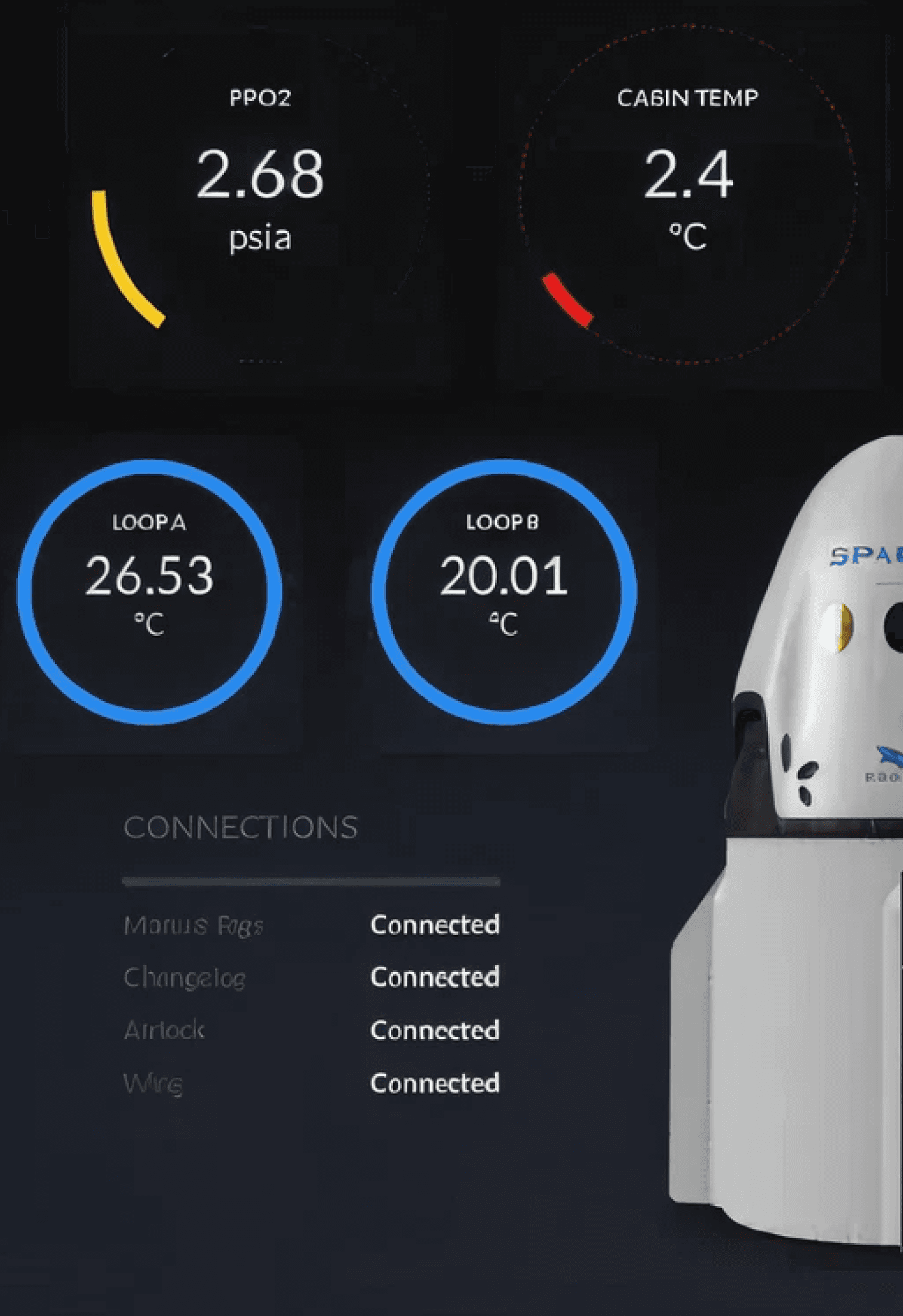
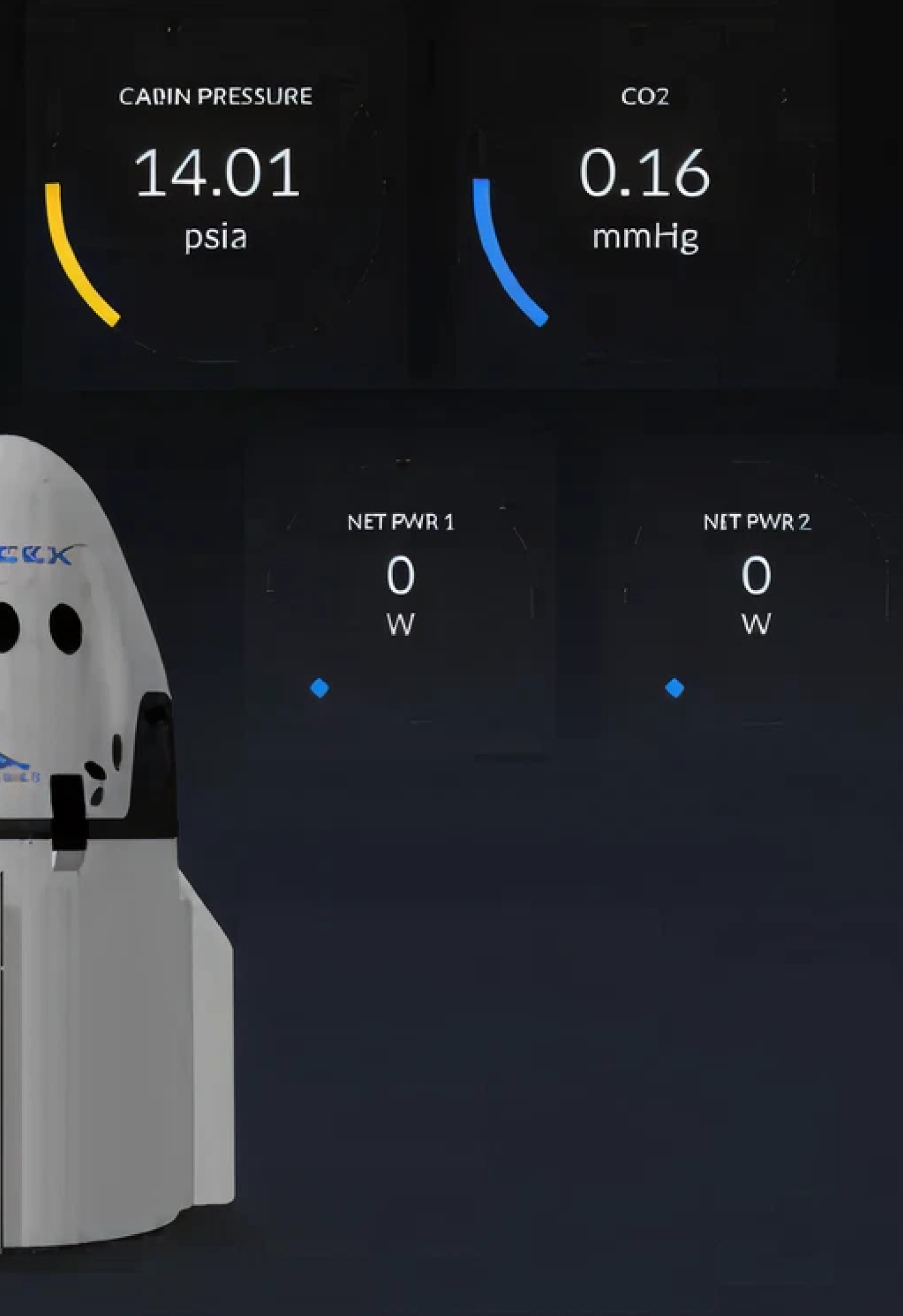
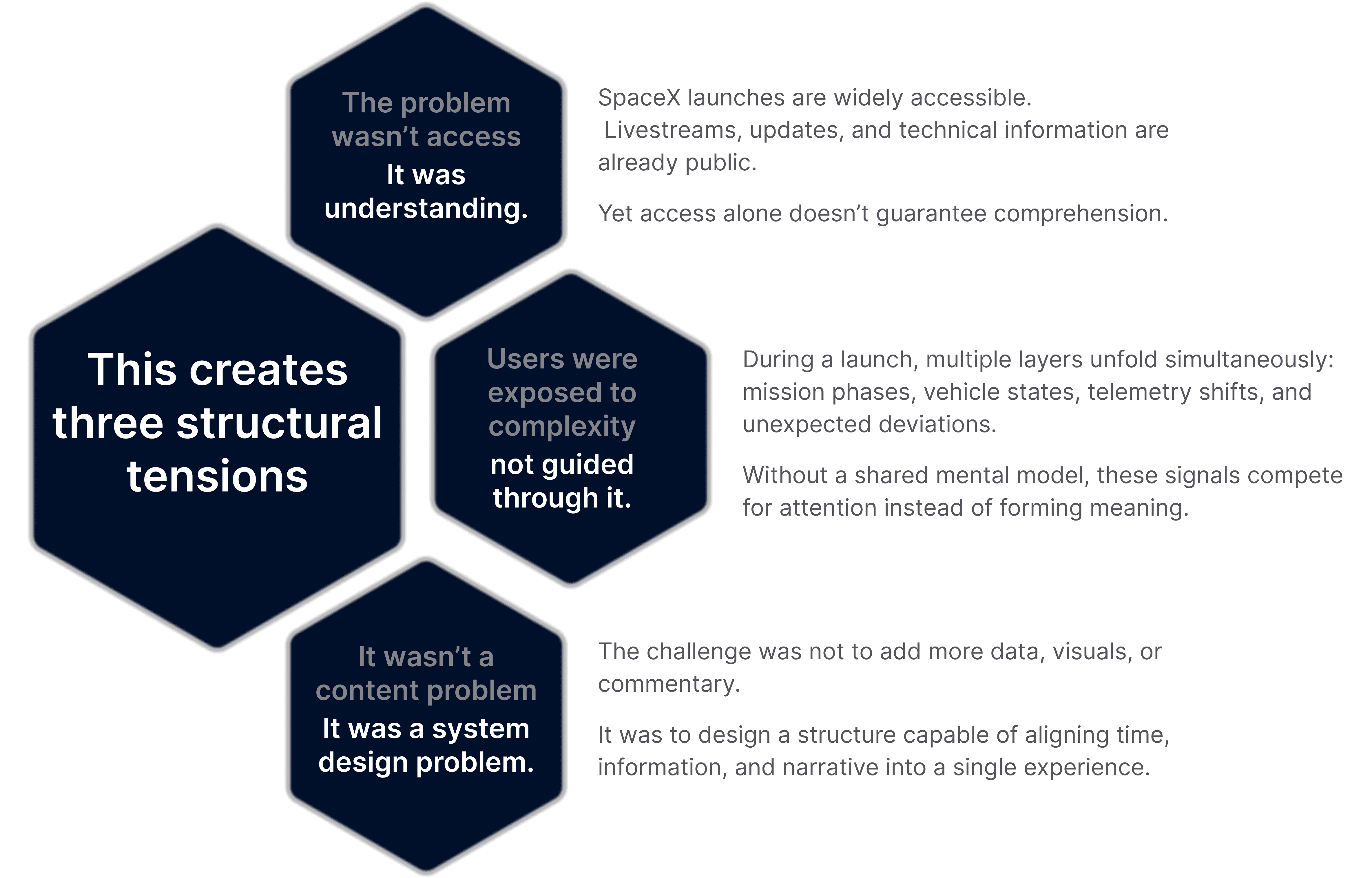
The problem wasn’t access It was understanding.
SpaceX launches are widely accessible. Livestreams, updates, and technical information are already public. Yet access alone doesn’t guarantee comprehension.
Users were exposed to complexity not guided through it.
During a launch, multiple layers unfold simultaneously:
mission phases, vehicle states, telemetry shifts, and unexpected deviations. Without a shared mental model, these signals compete for attention instead of forming meaning.
It wasn’t a content problem It was a system design problem.
The challenge was not to add more data, visuals, or commentary. It was to design a structure capable of aligning time, information, and narrative into a single experience.
System Strategy & Architecture
From design principles to a coherent ecosystem
Design Intent
Making extreme complexity readable
Preserve engineering rigor: the system respects SpaceX’s technical depth without oversimplifying it.
Design for understanding: information is public, but comprehension requires structure and guidance.
Prioritize clarity: the experience remains legible in real-time.
Shift from features to systems: every decision reinforces coherence, continuity, and trust at scale.
Guiding Principles
How the system behaves under pressure
The experience is shaped by four core principles.
Progressive disclosure: depth appears only when relevant
Temporal UX: before, during, and after the launch are equally designed
System legibility: information is readable at a glance
Meaningful participation: users understand, not just observe
System Architecture
A layered ecosystem, not a linear journey
The product is structured as four interconnected layers.
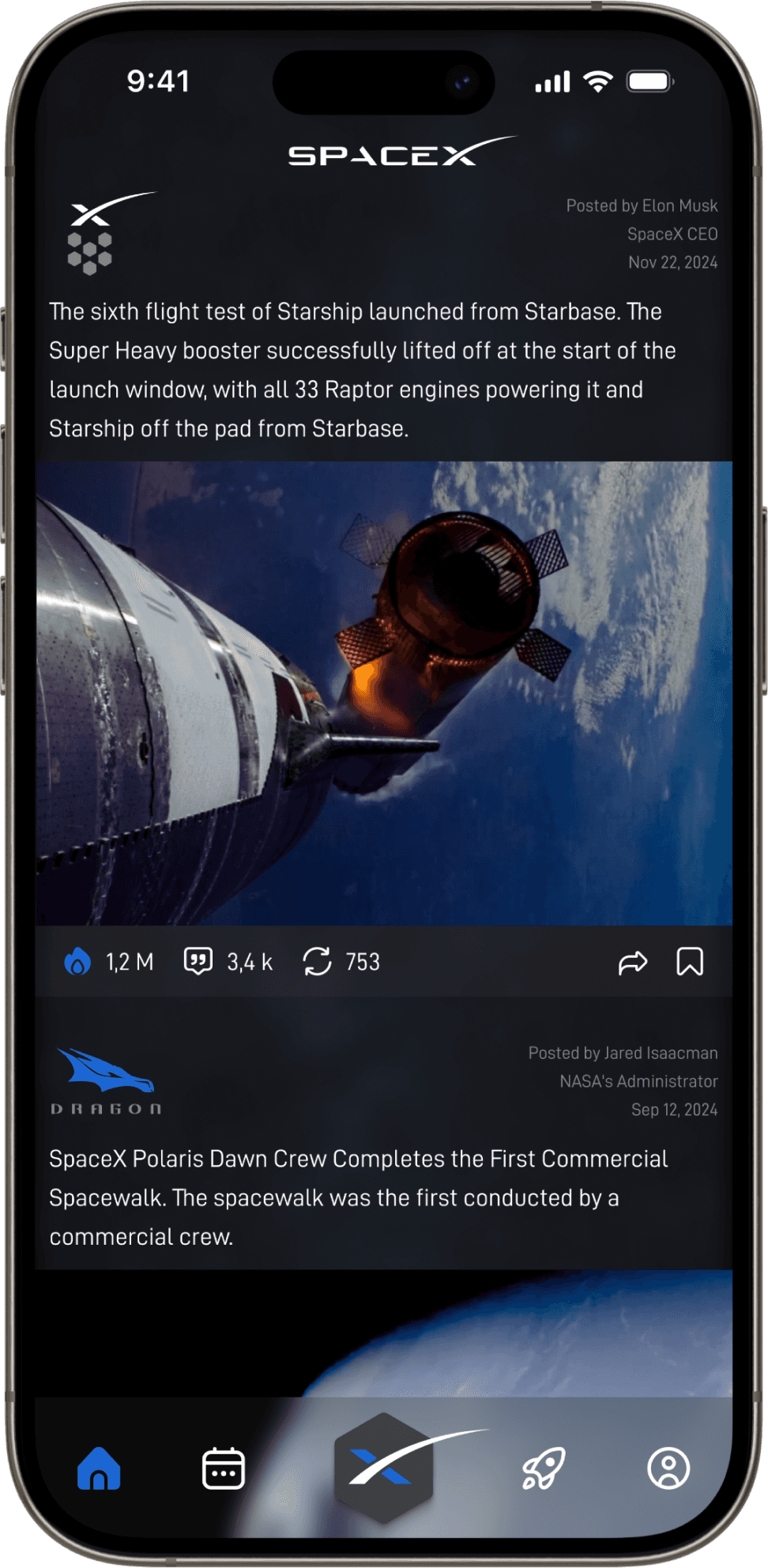
Information (Home Feed): credibility and context
Education (Mission Systems): shared mental models
Real-Time (Launch Control): live orchestration
Commercial (Store X): contextual monetization
Key Flows
Where system strategy and architecture become lived experience
Mission Entry
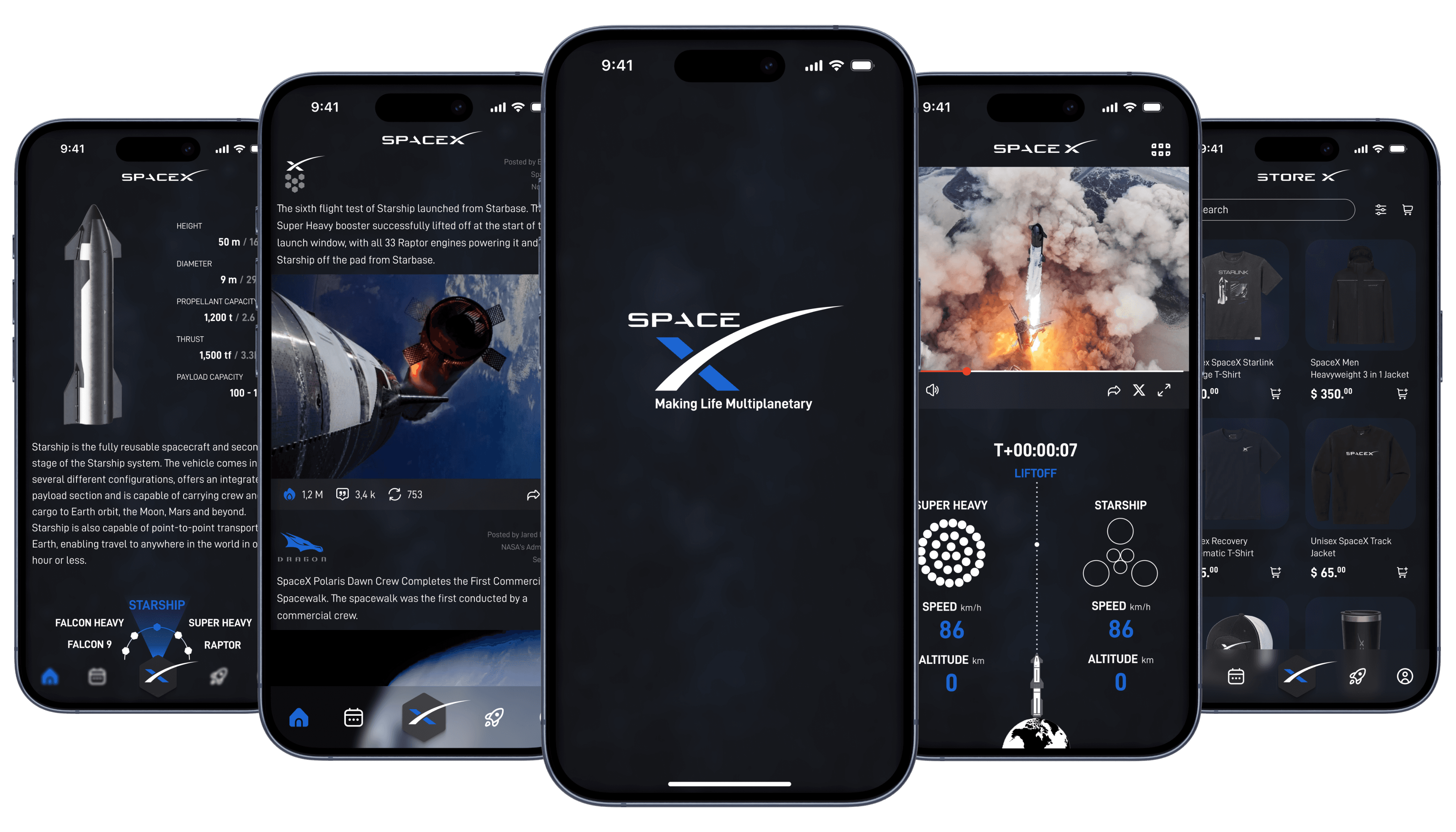
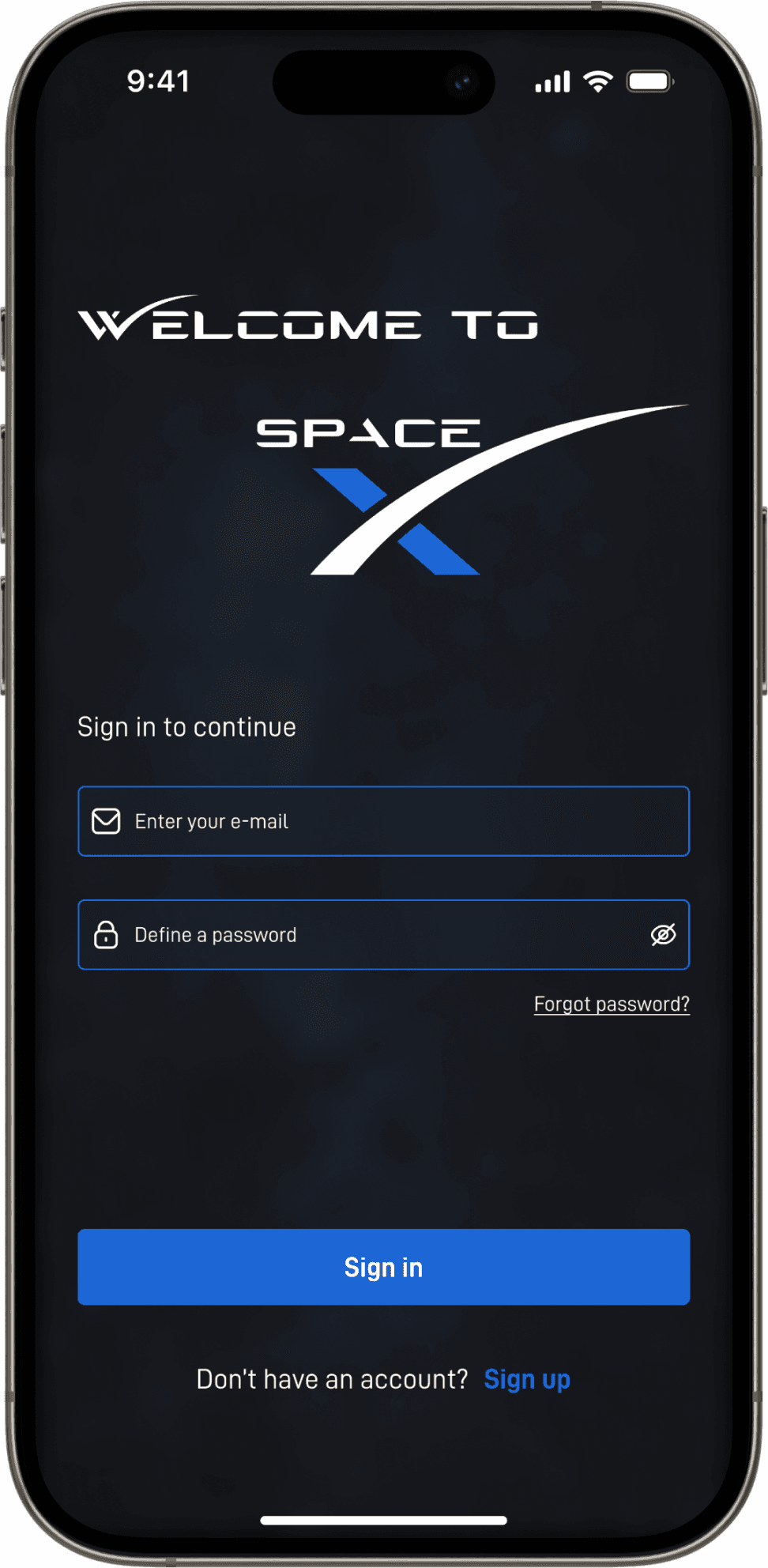
Defining SpaceX as a system, not as content, an intentional entry point that reframes the product from the first interaction as an operational, mission-driven environment where information, technology, and experience work together toward a single objective.
Establishes SpaceX as an operational ecosystem from the first interaction, avoiding feed-like mental models
Prioritizes mission and context before action, aligning users with purpose before engagement
Uses friction-light authentication to balance security, trust, and speed
Transitions users directly into situational awareness instead of exploration or browsing
Technical Ecosystem
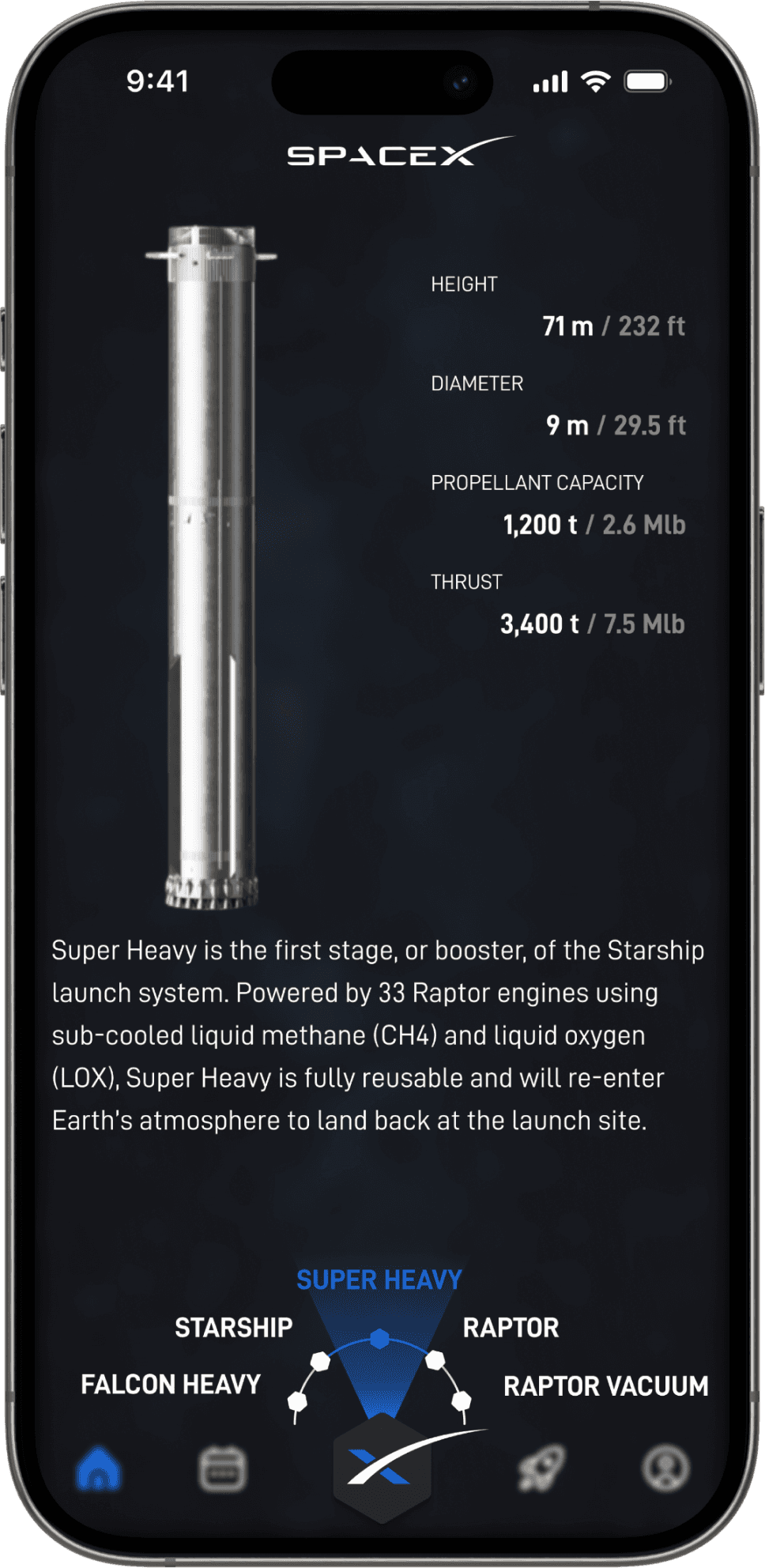
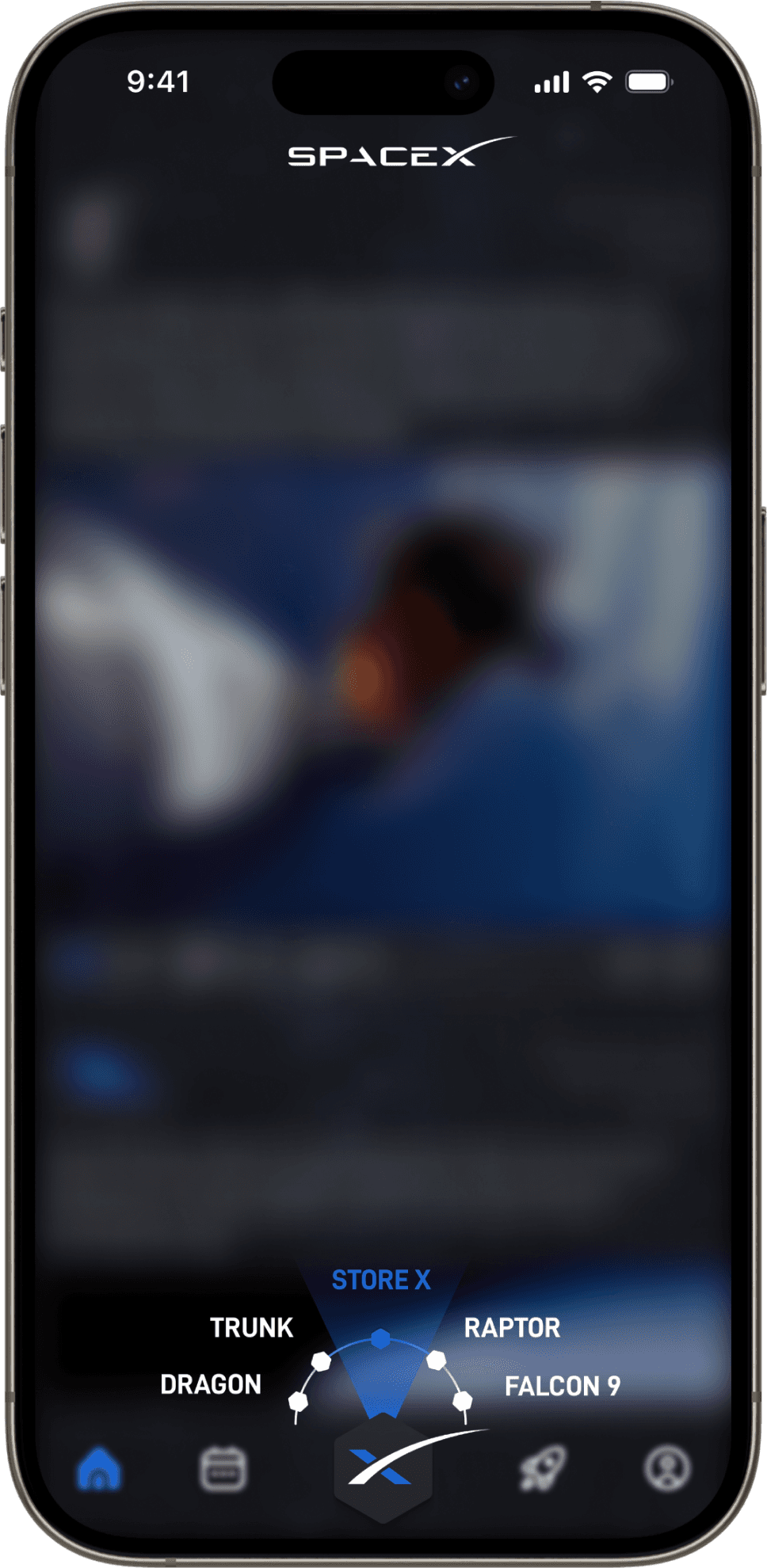
Navigation (I)
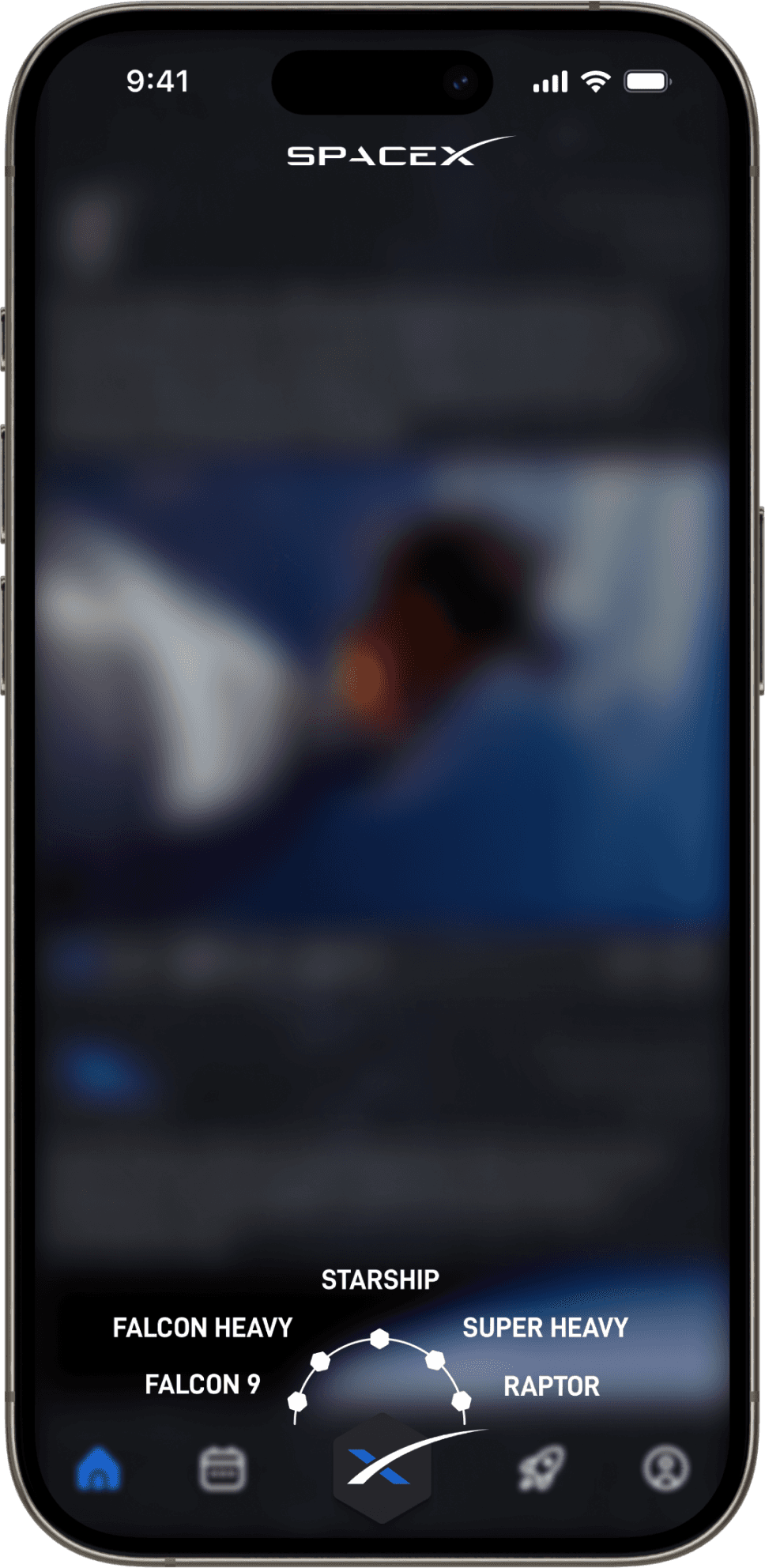
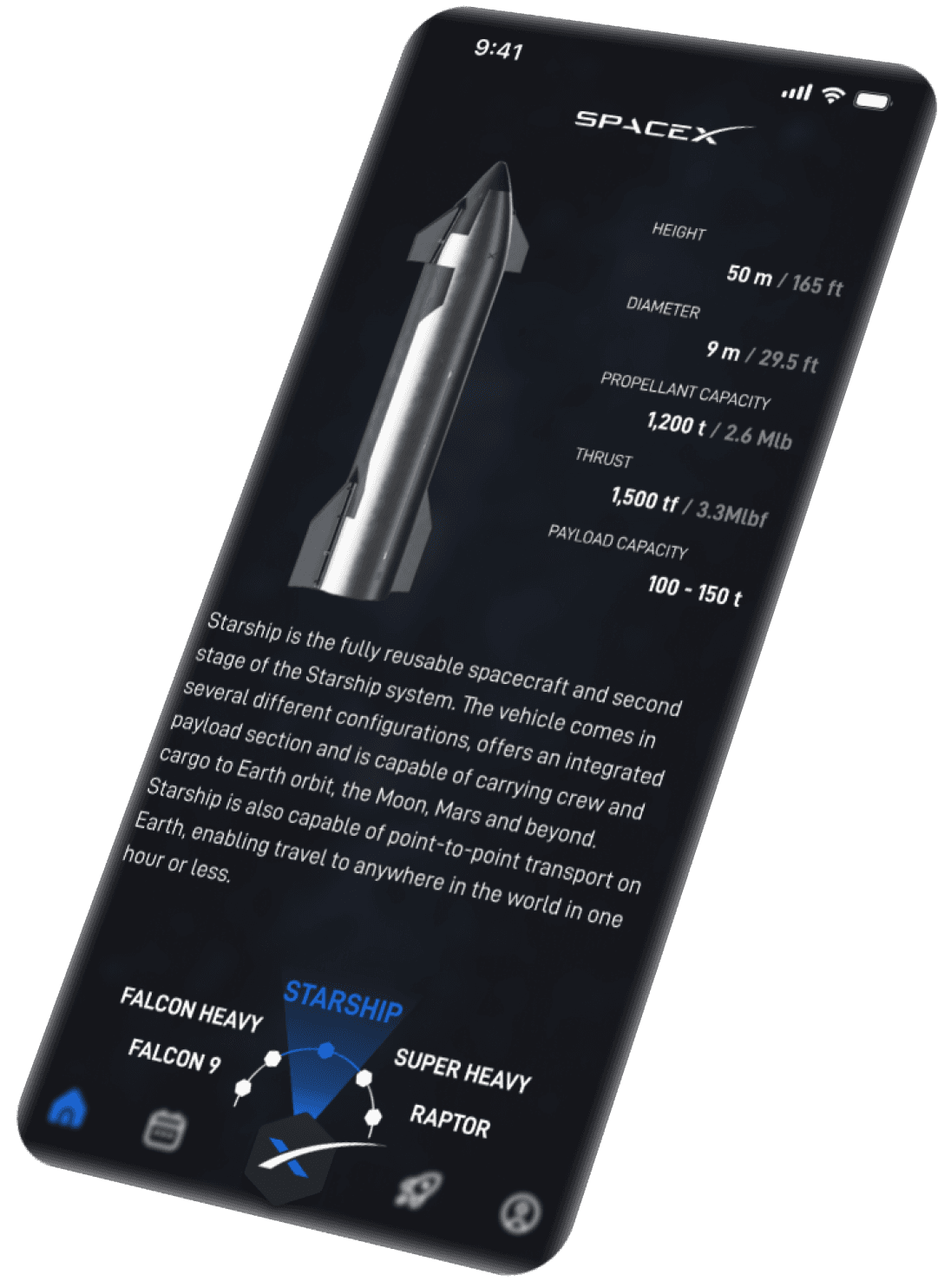
A structured way to explore SpaceX as an interconnected engineering system, not as isolated vehicles or specs.
System-first navigation:
Entry point prioritizes understanding the overall system before diving into individual components or specifications.
Component relationships over standalone data:
Dragon, Raptor, Starship, and Super Heavy are presented as interconnected elements within a single reusable and scalable ecosystem.
Technical Ecosystem
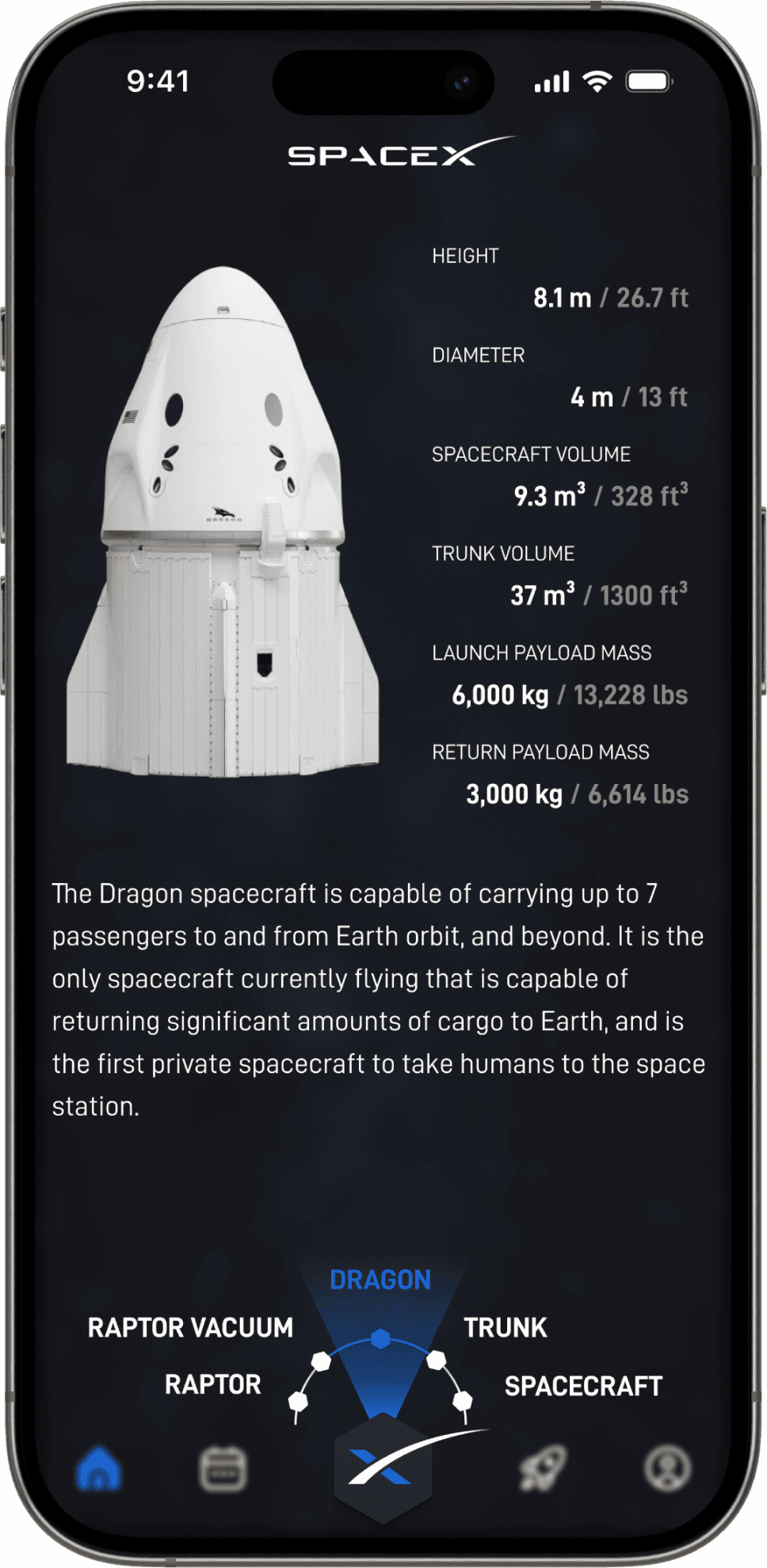
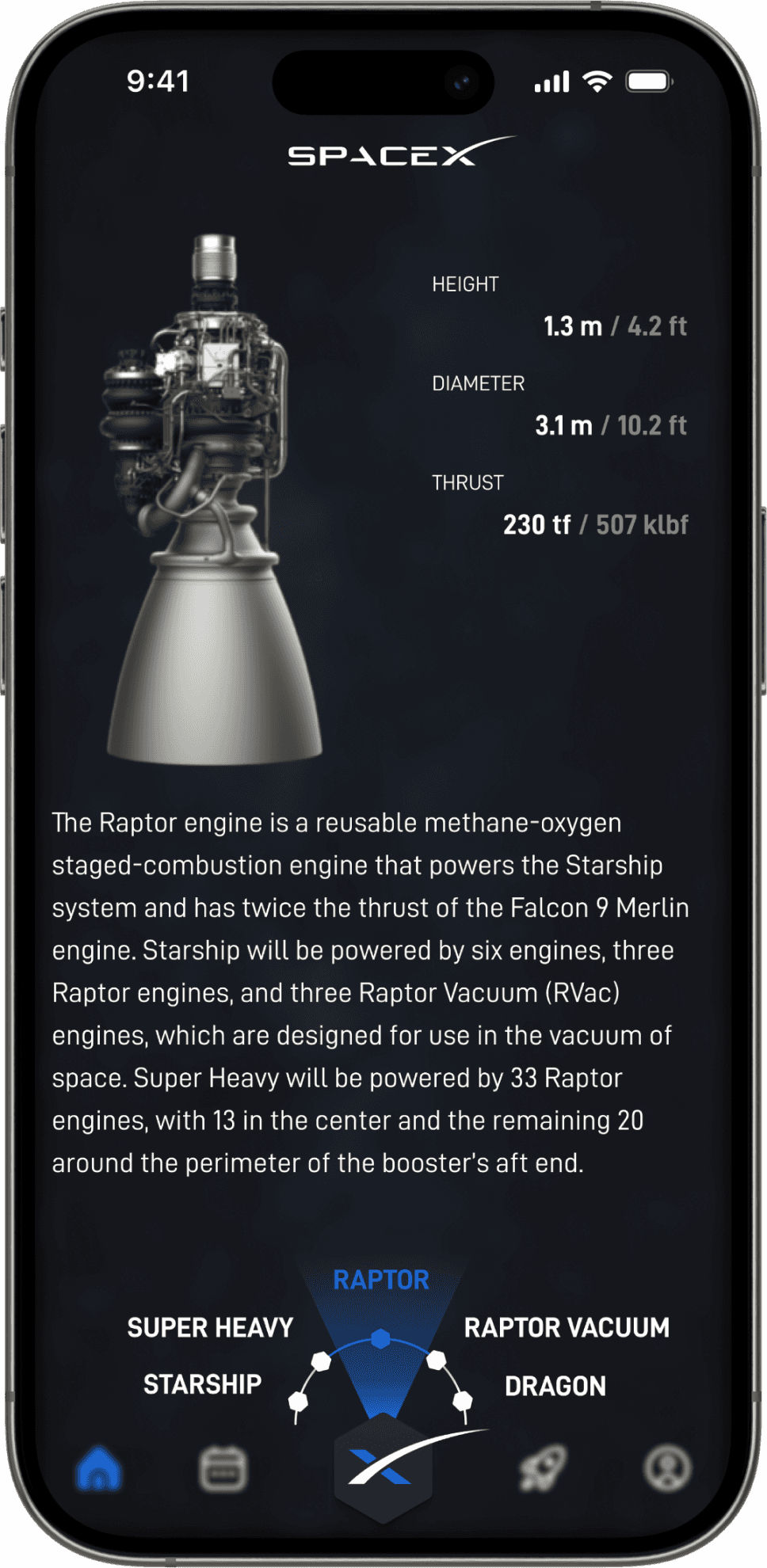
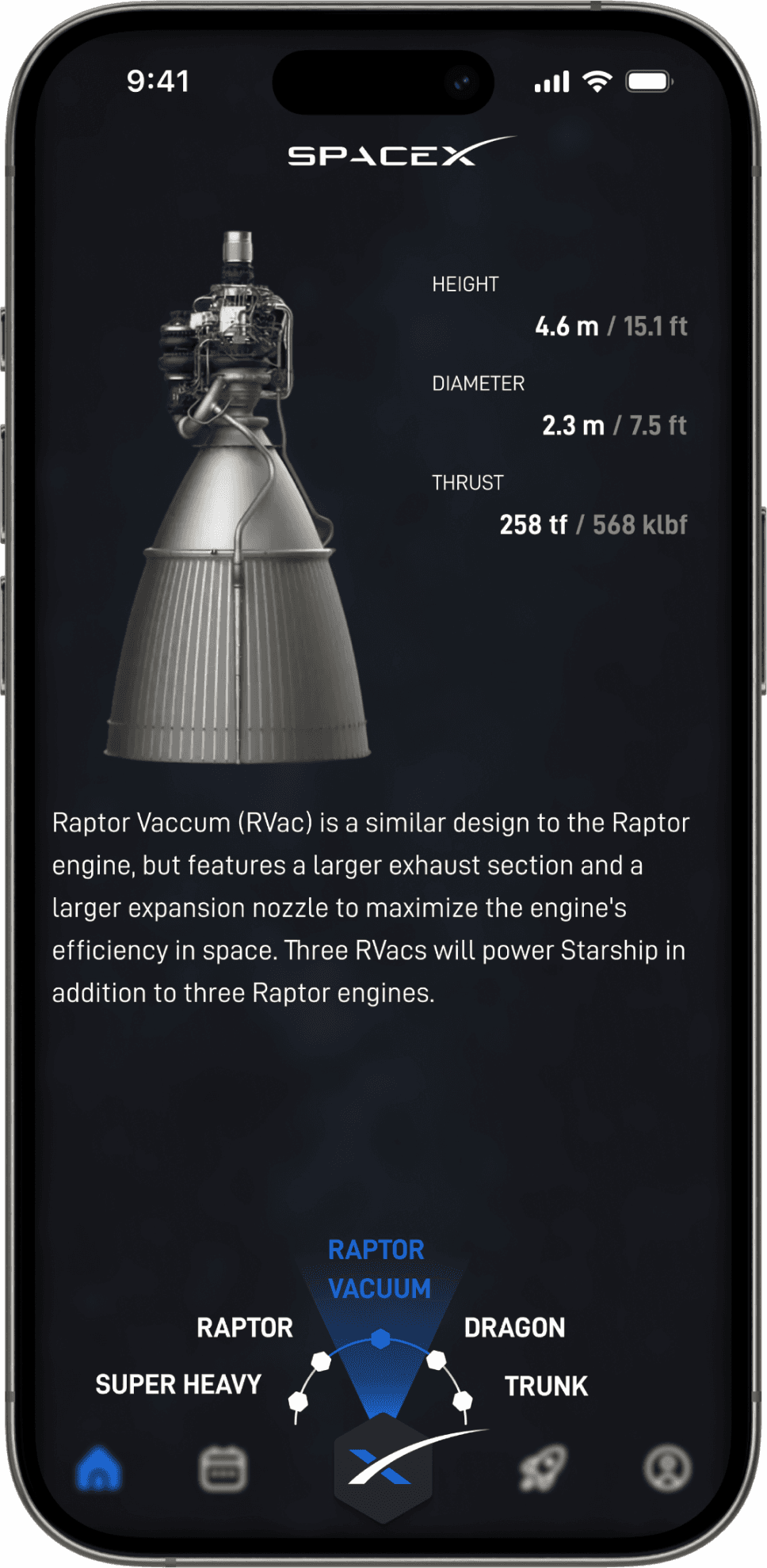
Navigation (II)
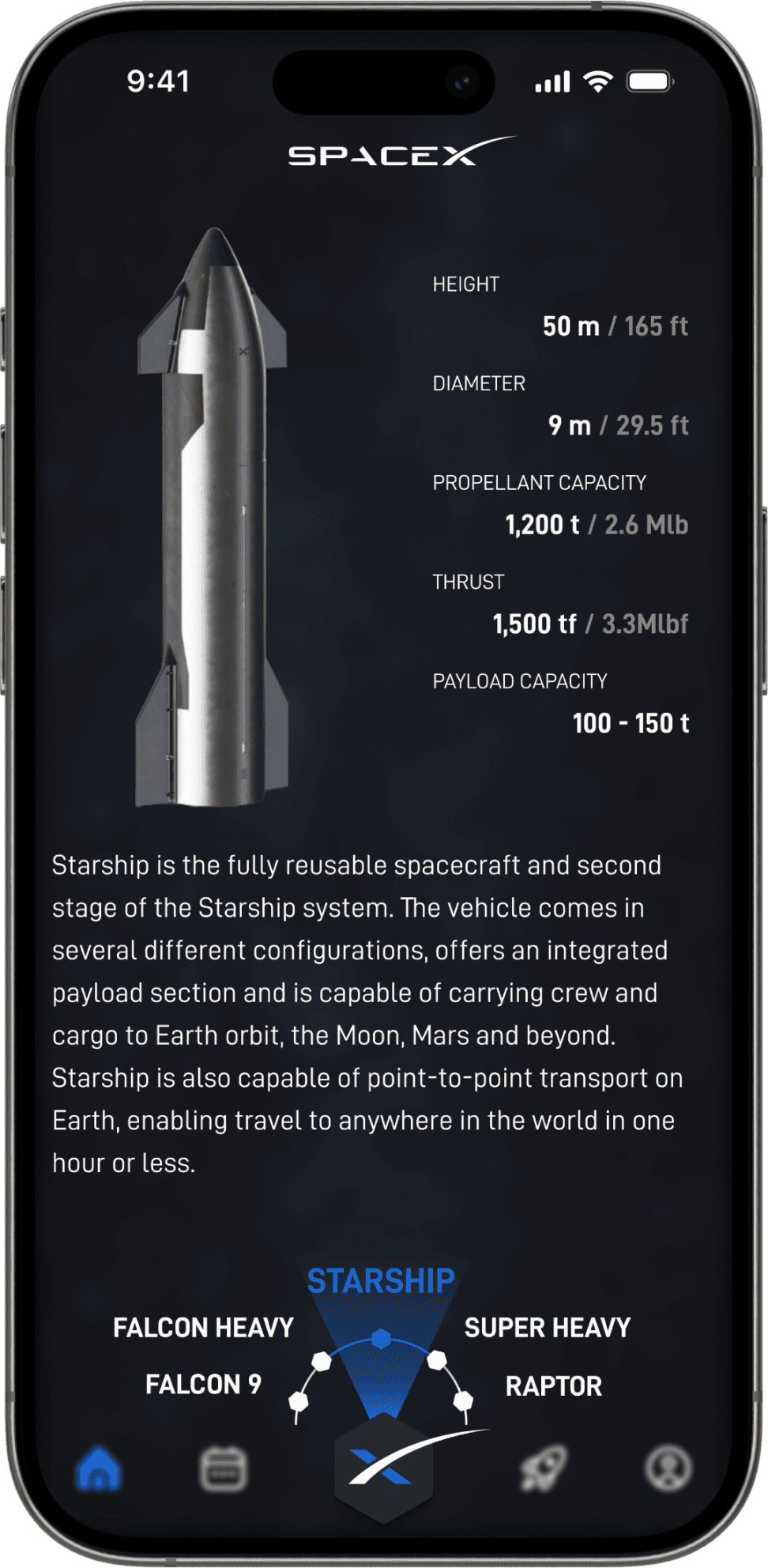
A structured way to explore SpaceX as an interconnected engineering system, not as isolated vehicles or specs.
Progressive technical depth:
The experience allows users to move from high-level understanding to deeper technical details without cognitive overload.
Educational without being academic:
Information is contextualized and informative, while remaining accessible, visual, and aligned with a modern digital product experience.
Mission Timeline
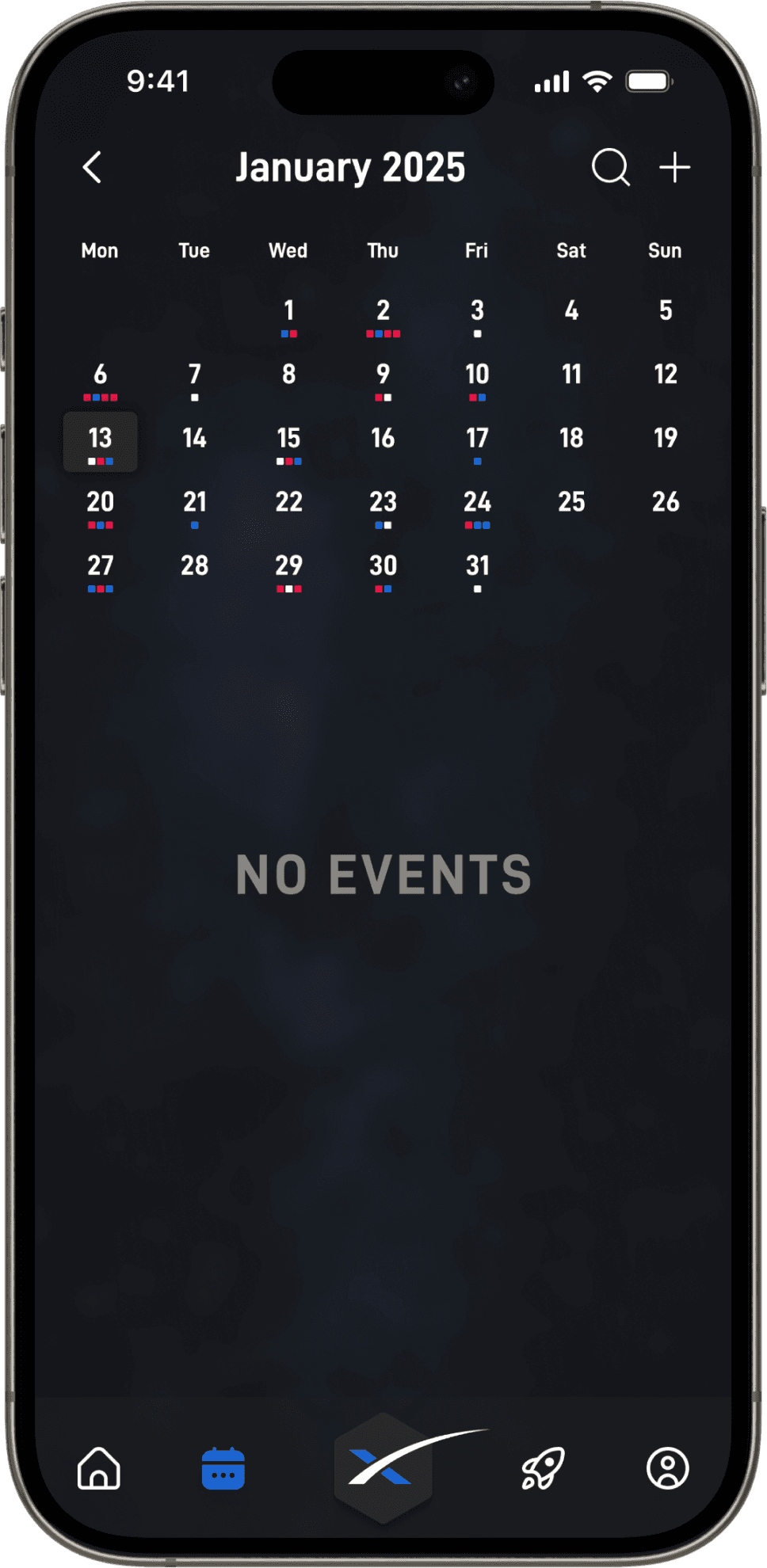
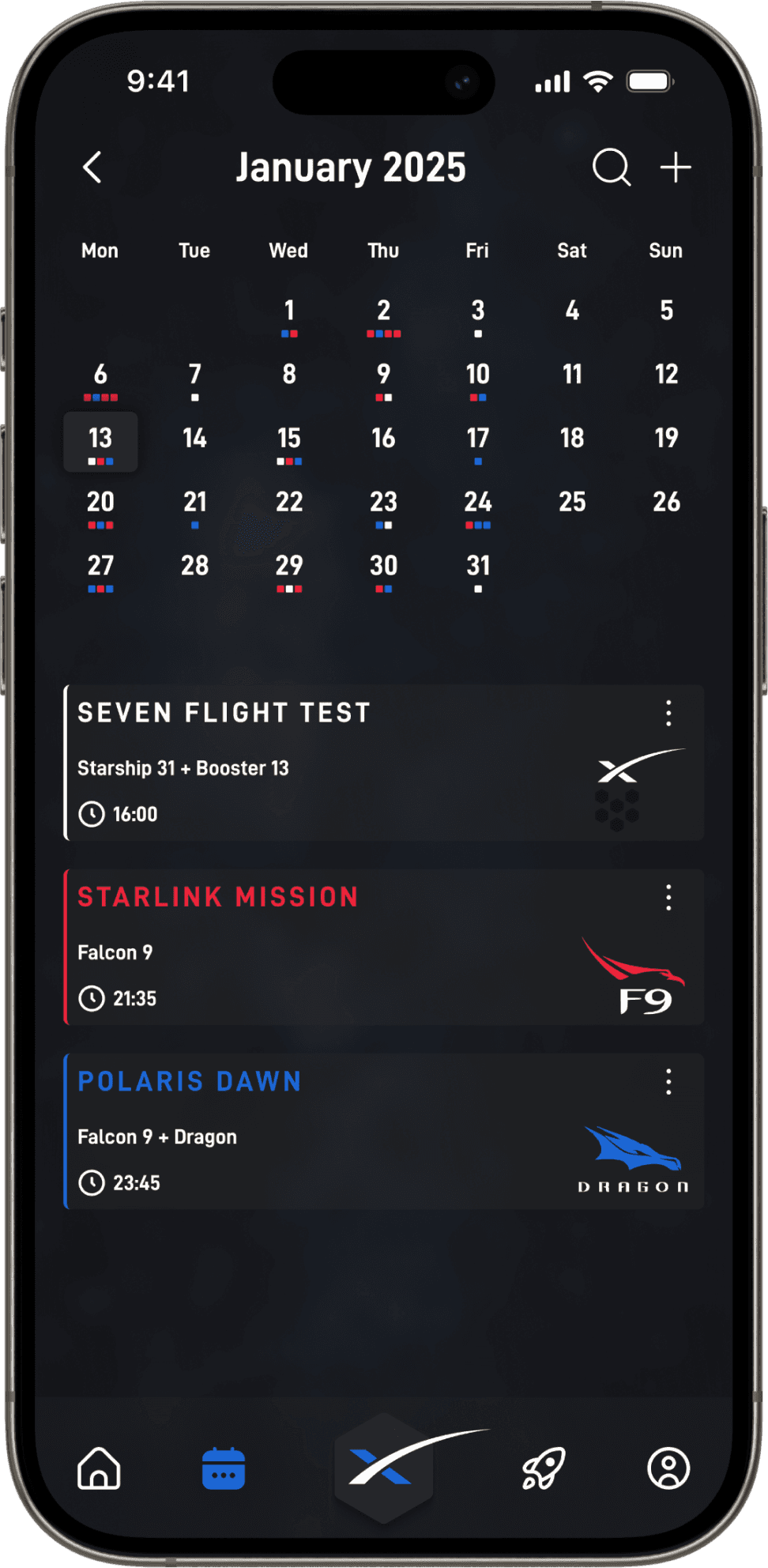
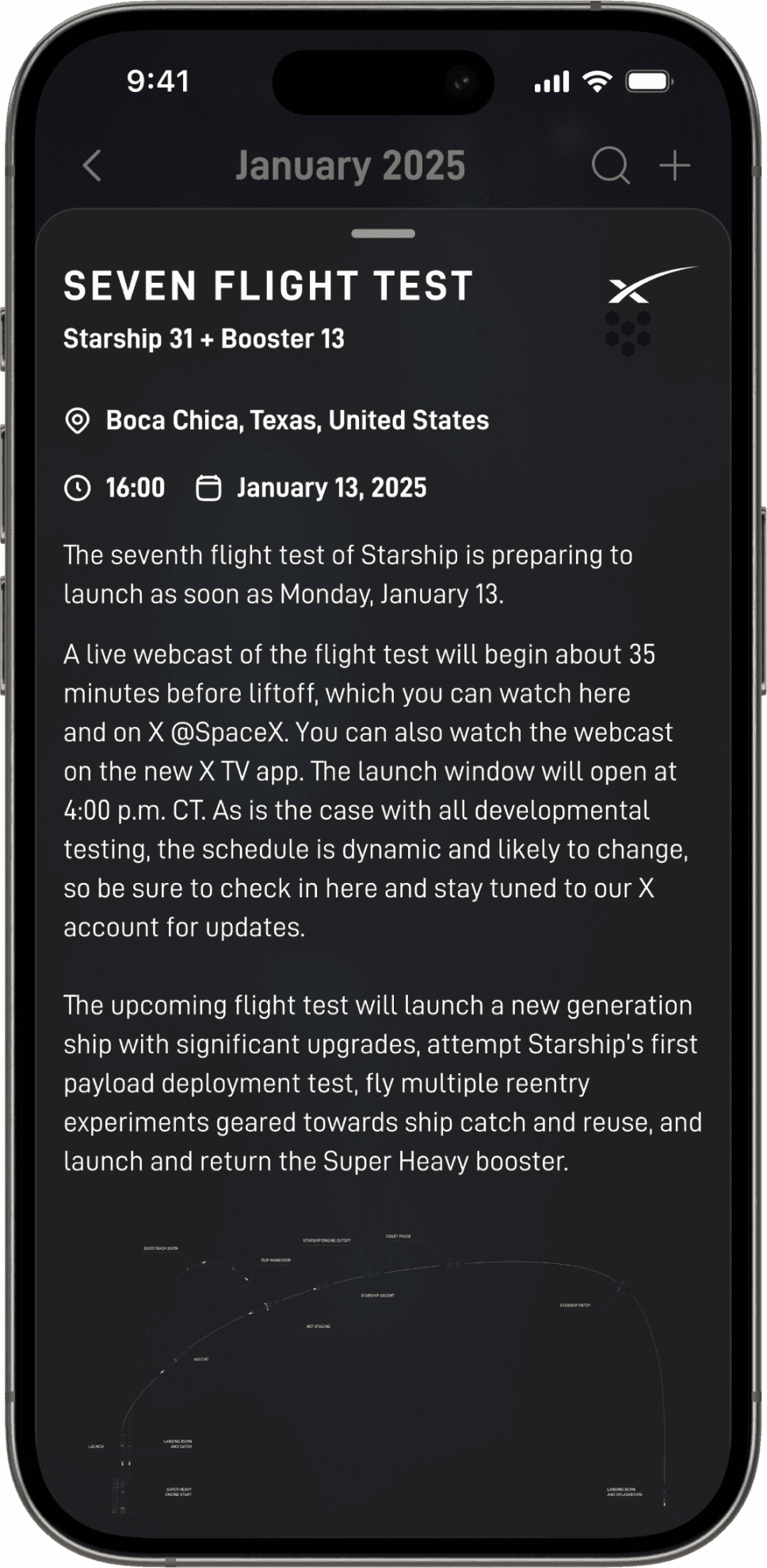
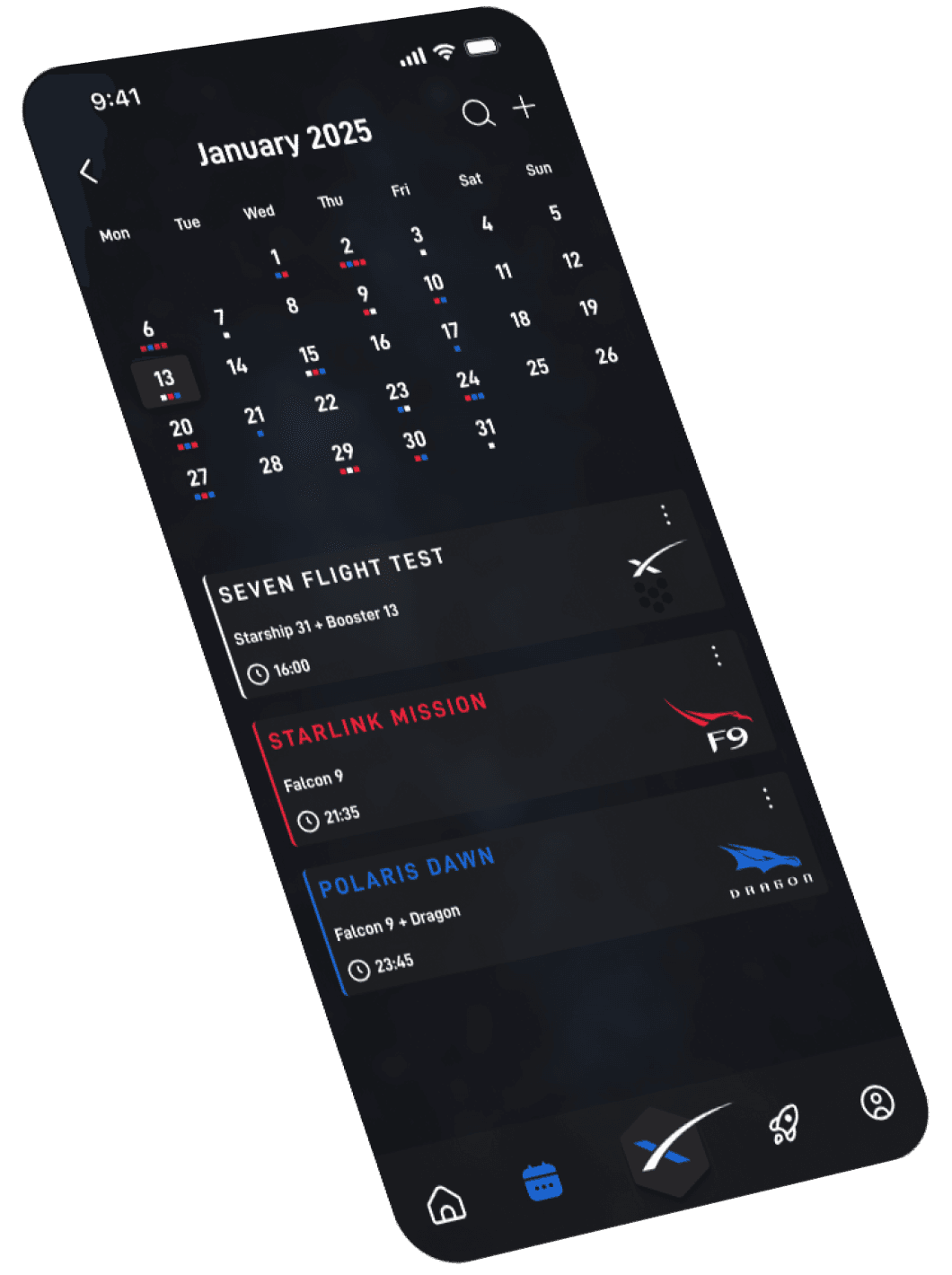
A centralized, real-time view of SpaceX activity that transforms launches into a living, navigable timeline designed for anticipation, clarity, and trust.
Time as a core product dimension:
Allow users to understand cadence, frequency, and operational rhythm at a glance, not just isolated missions.
Anticipation over notification:
Proactive exploration of upcoming launches, reinforcing emotional engagement and long-term interest.
Progressive disclosure of mission detail:
High-level monthly overview transitions seamlessly into mission-specific context, reducing noise and cognitive load.
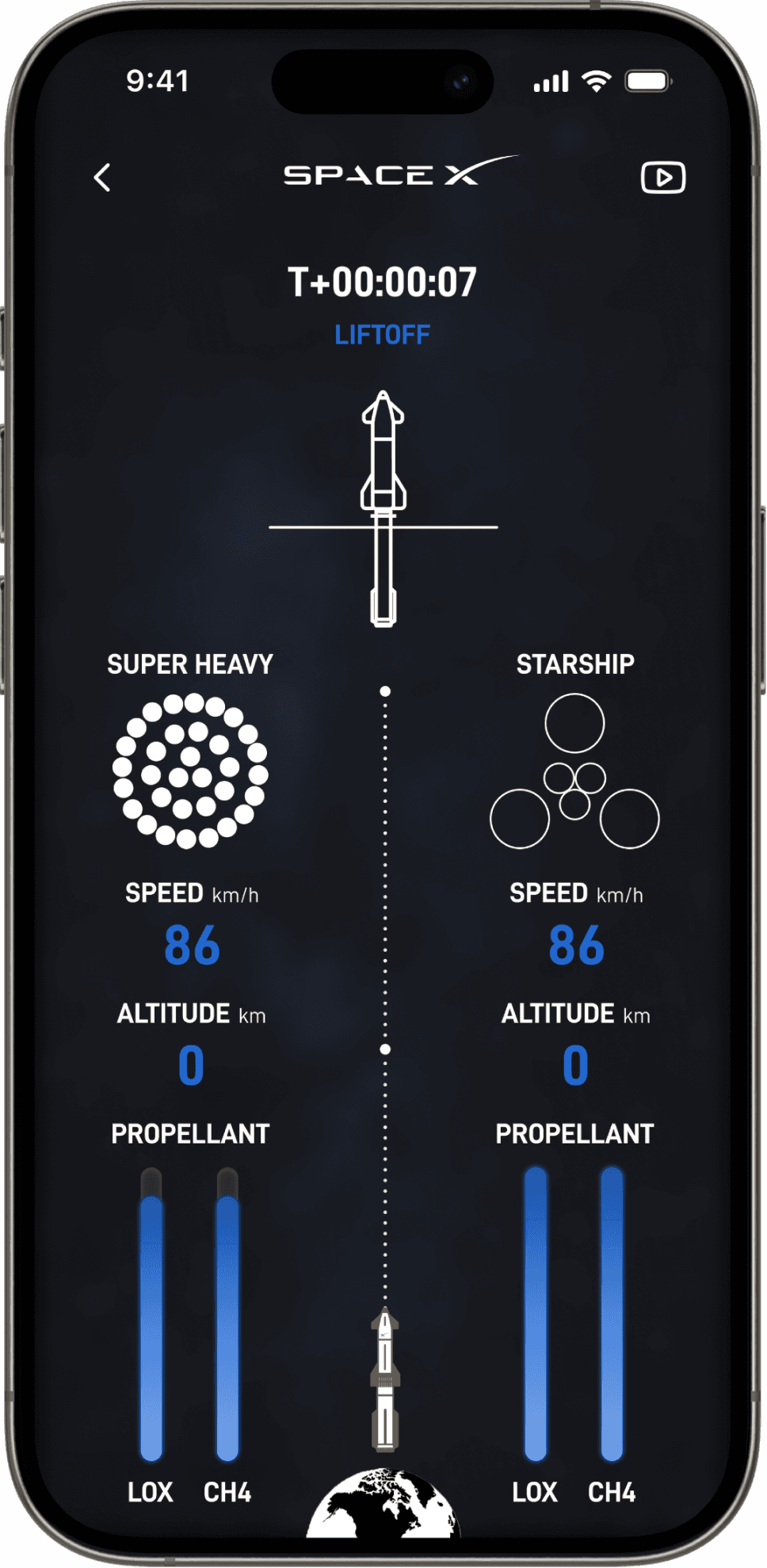
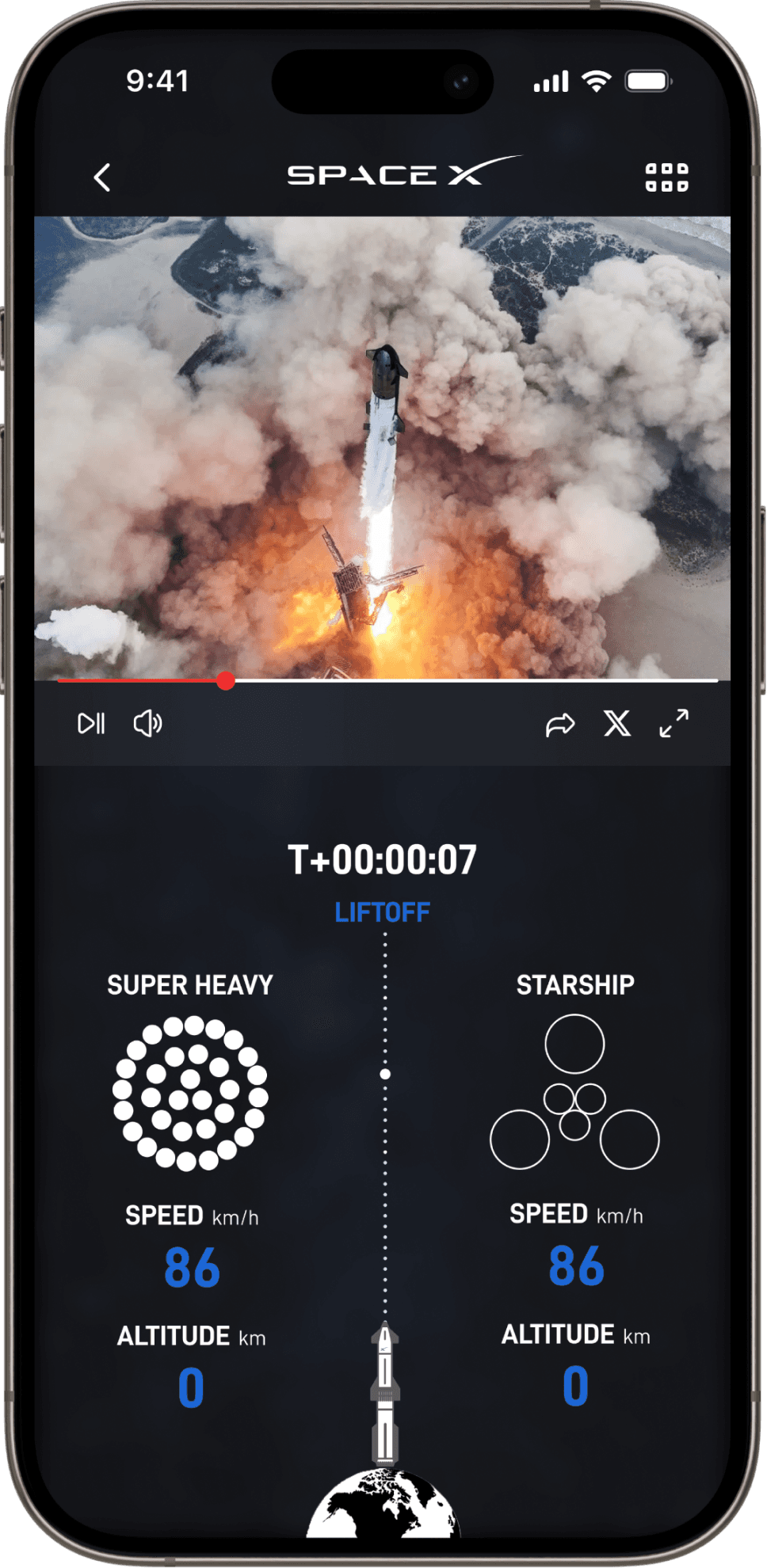
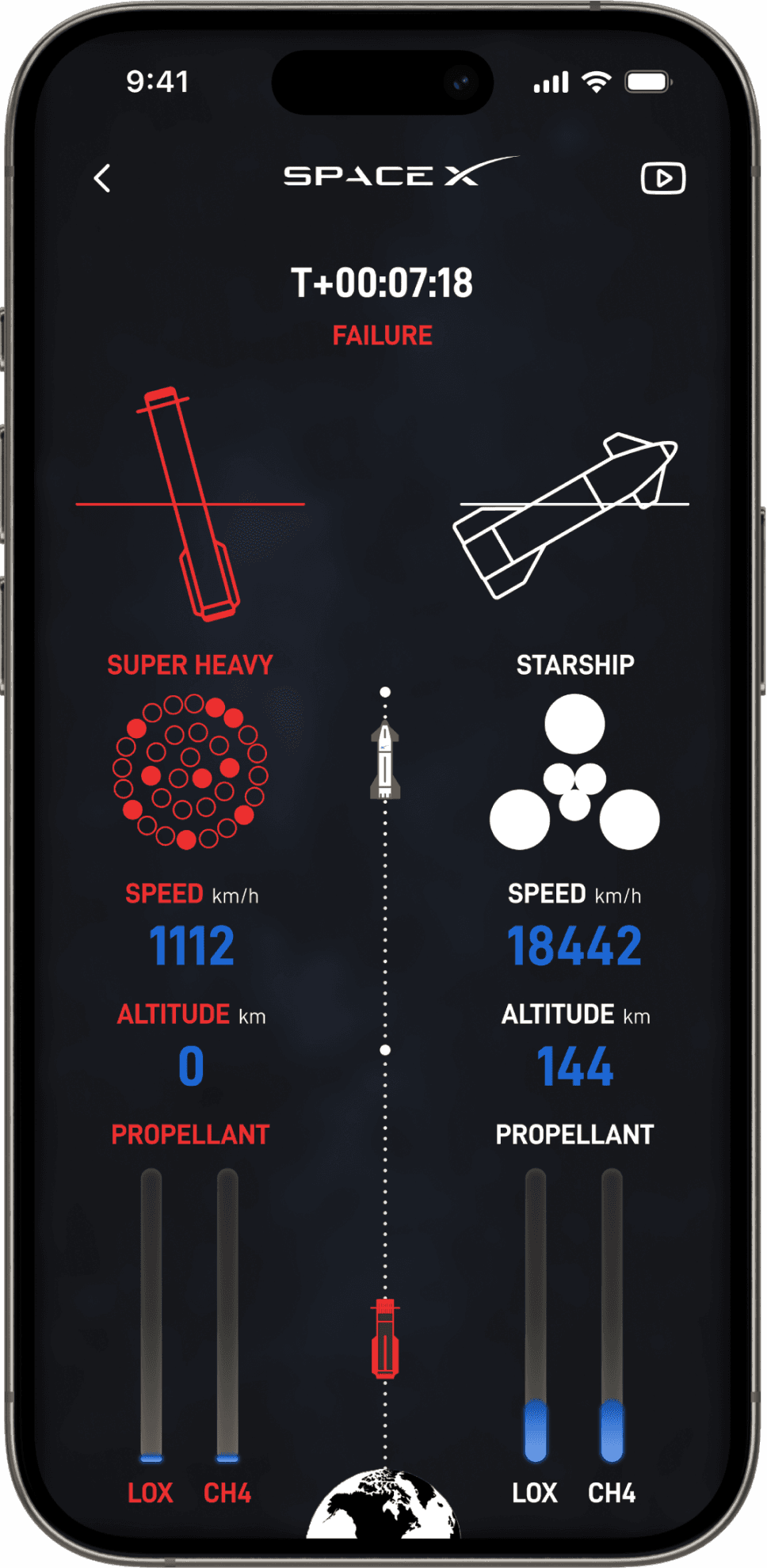
Live Mission Control (I)
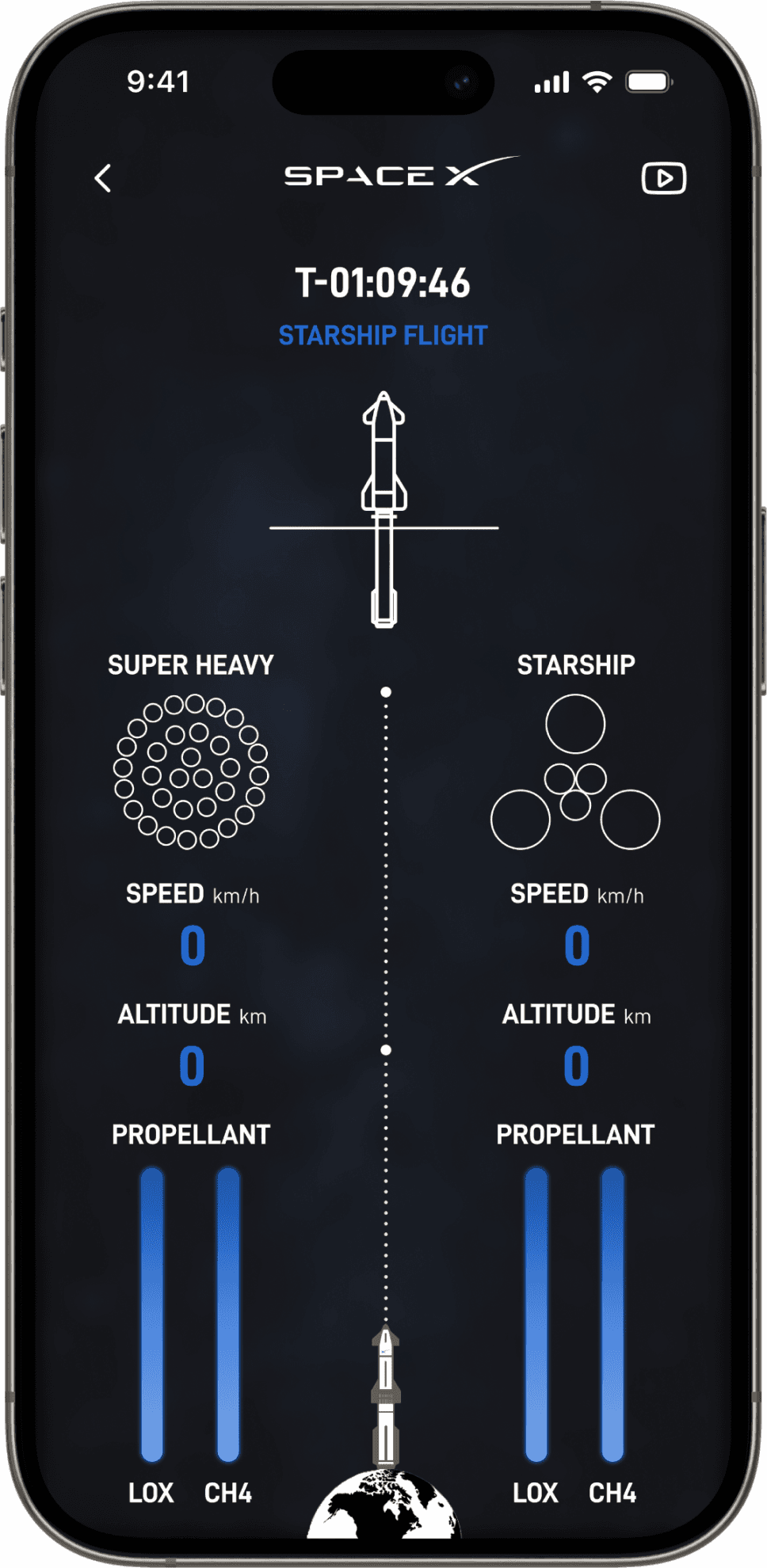
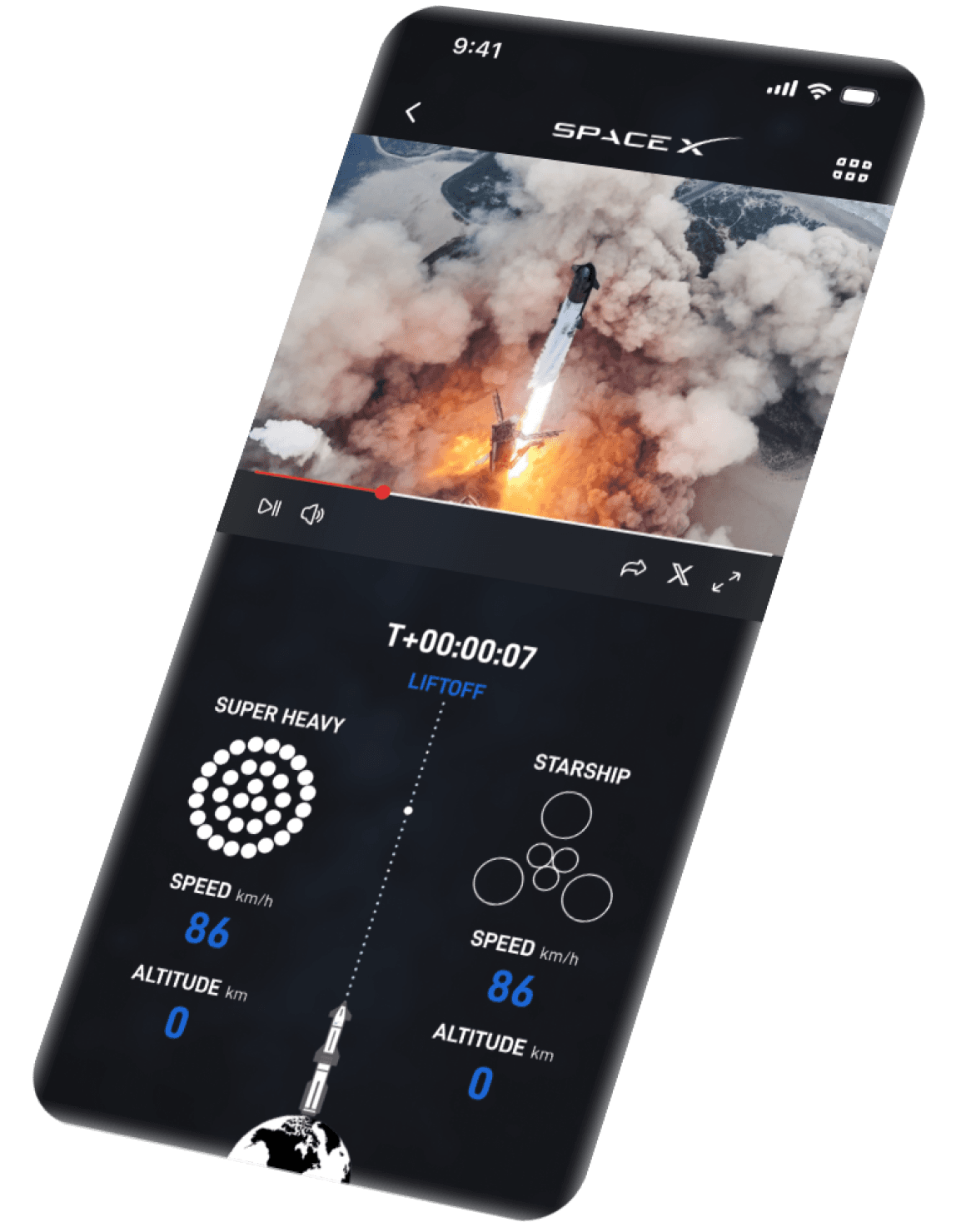
A real-time, data-driven flight experience that translates complex aerospace operations into an understandable, emotionally engaging interface without sacrificing technical credibility.
Real-time telemetry as narrative:
Speed, altitude, propellant levels, and stage status are not presented as raw data, but as a coherent story that evolves second by second during the mission.
Dual-vehicle awareness:
Super Heavy and Starship are visualized as independent yet synchronized entities, reinforcing the modular logic of SpaceX’s reusable launch architecture.
Media + telemetry convergence:
Live video is intentionally layered with mission data, allowing users to correlate physical events with system behavior in real time.
Live Mission Control (II)
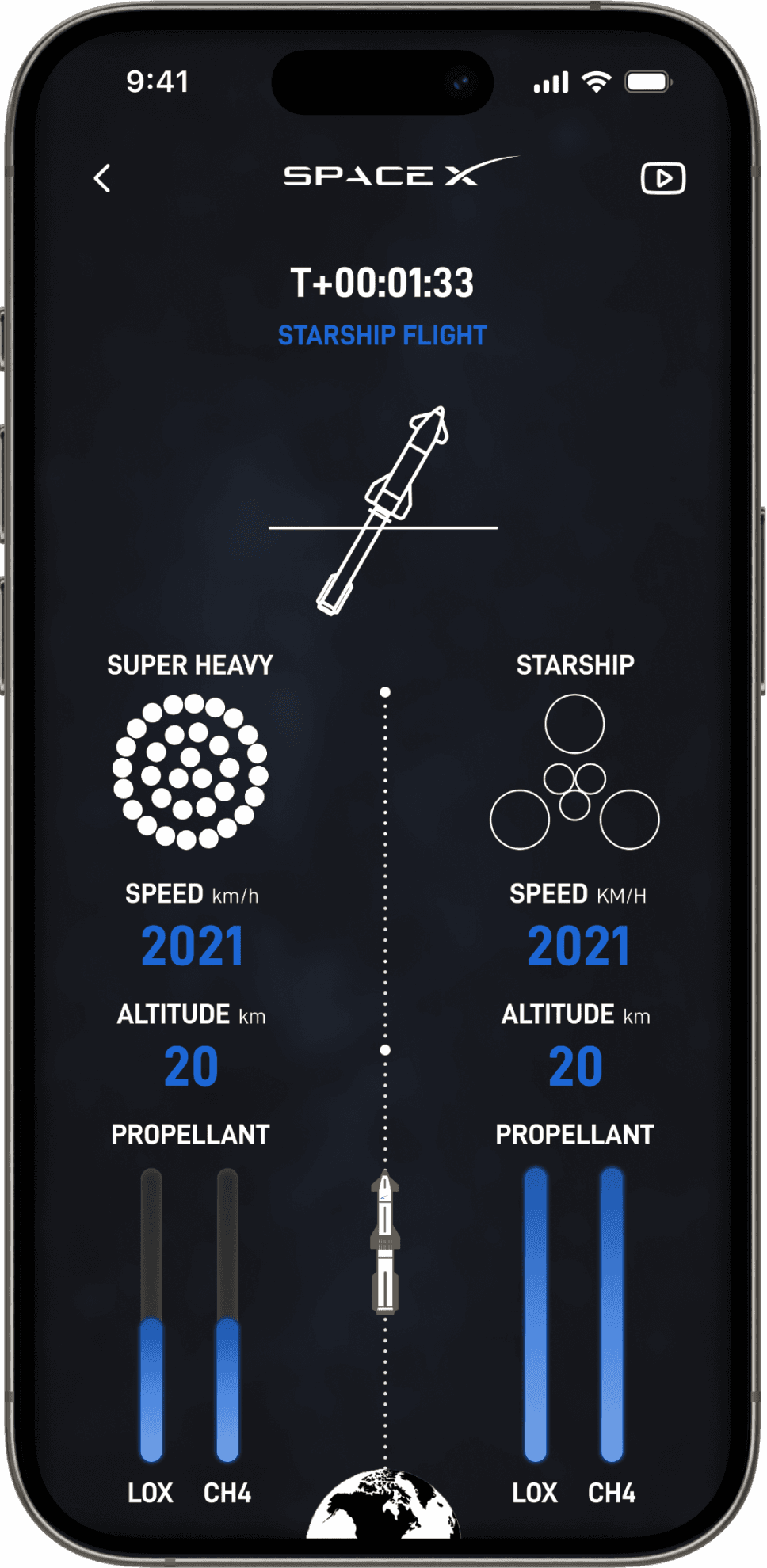
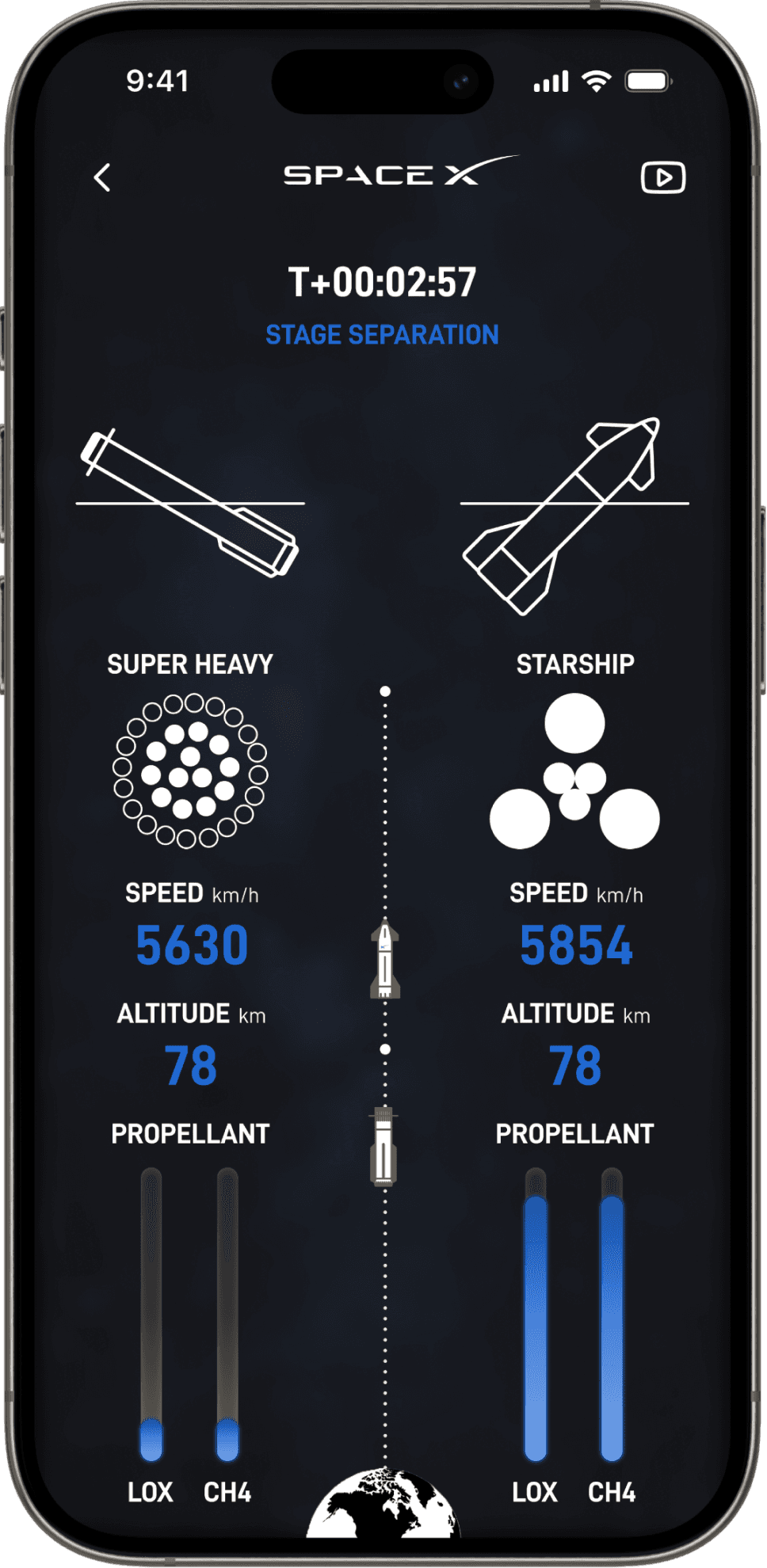
A real-time, data-driven flight experience that translates complex aerospace operations into an understandable, emotionally engaging interface without sacrificing technical credibility.
Critical moments, clearly surfaced:
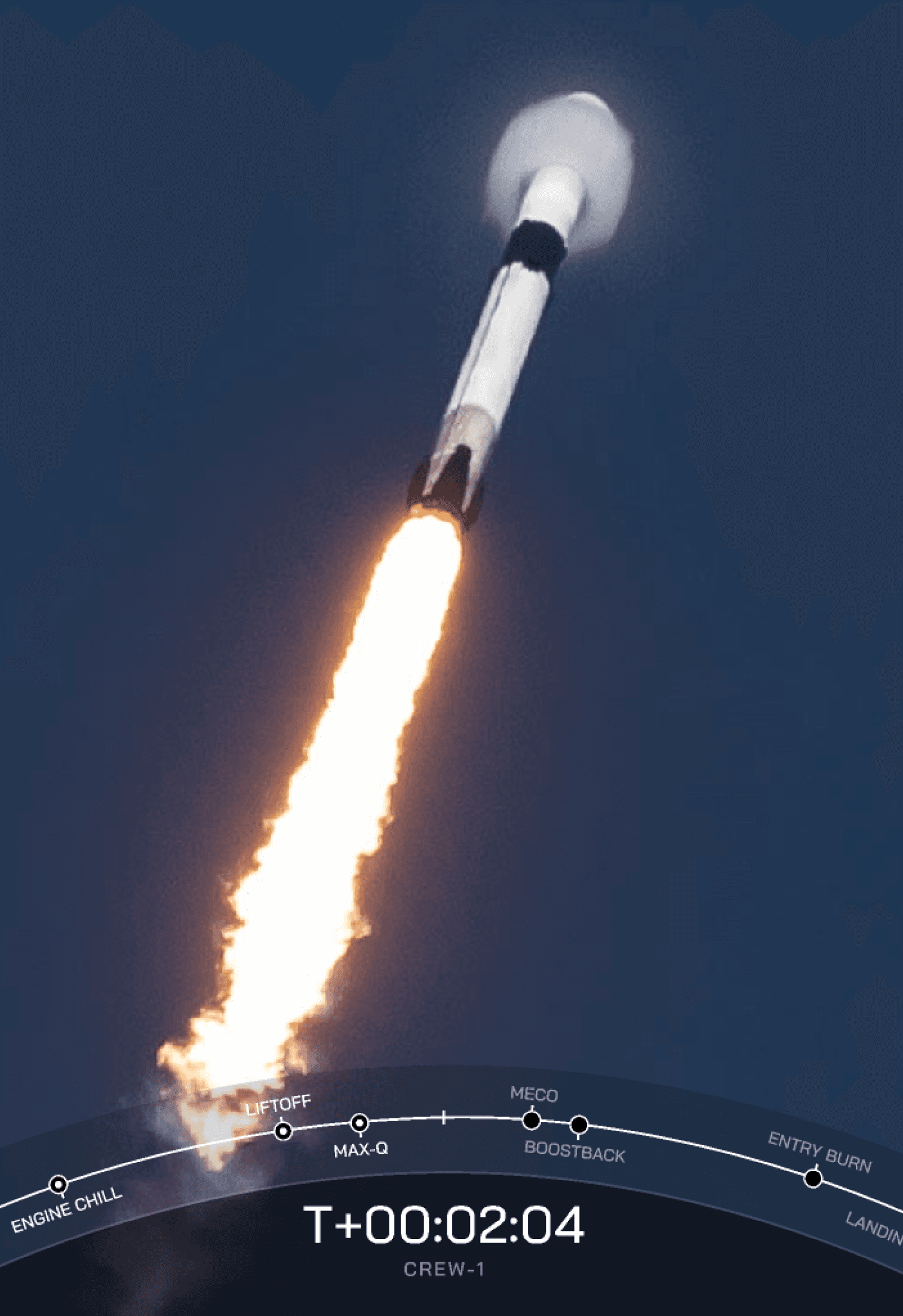
Liftoff, stage separation, flight anomalies, and failures are explicitly labeled, ensuring users understand what is happening and why it matters at each phase.
Failure treated as operational signal, not noise:
Anomalies are integrated into the experience with clarity and composure, reflecting SpaceX’s test-driven culture and reinforcing trust through transparency.
Designed for both experts and enthusiasts:
The interface balances aerospace rigor with visual simplicity, making the experience accessible without diluting its technical depth.
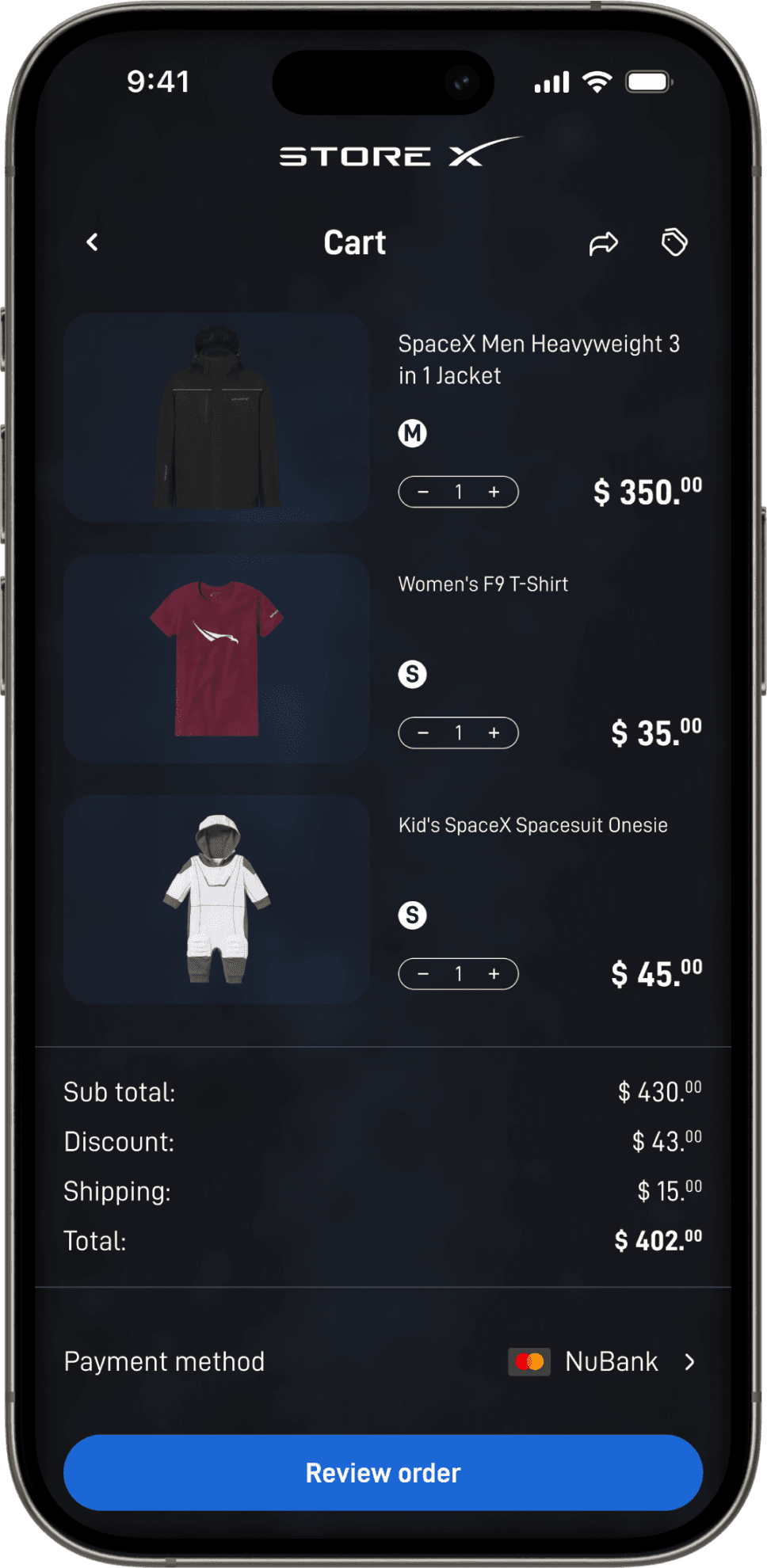
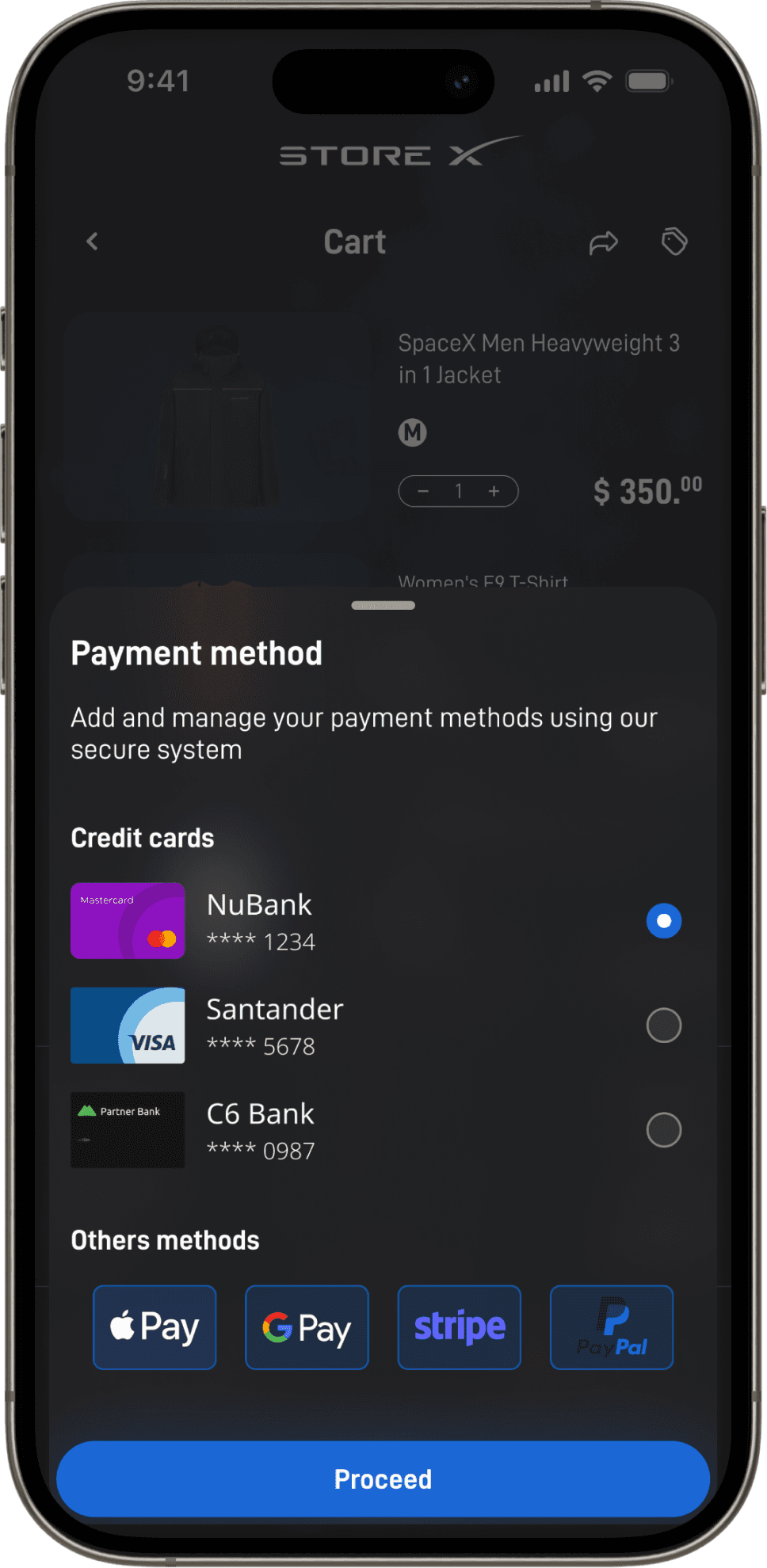
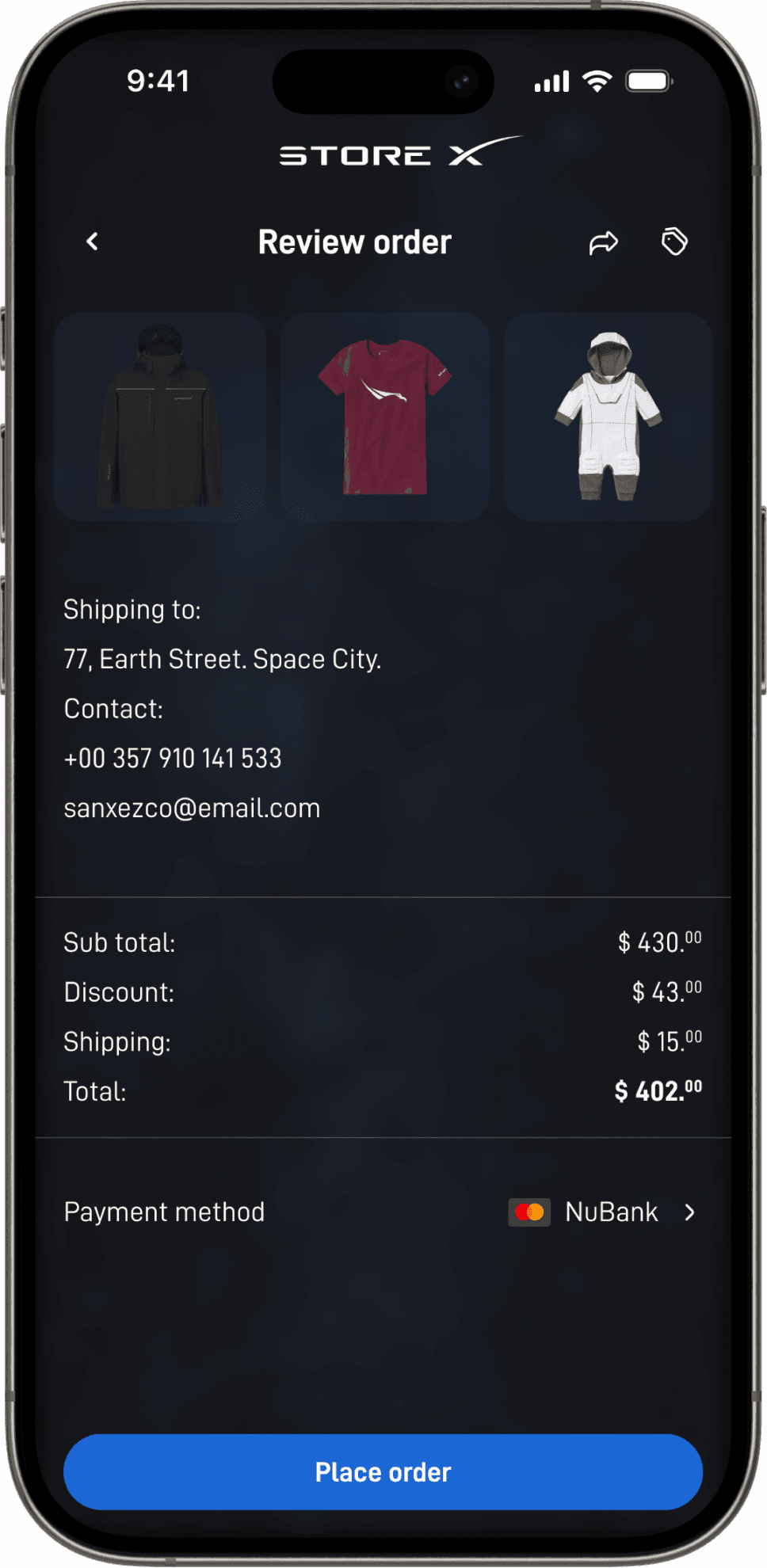
Mission-Driven Commerce (I)
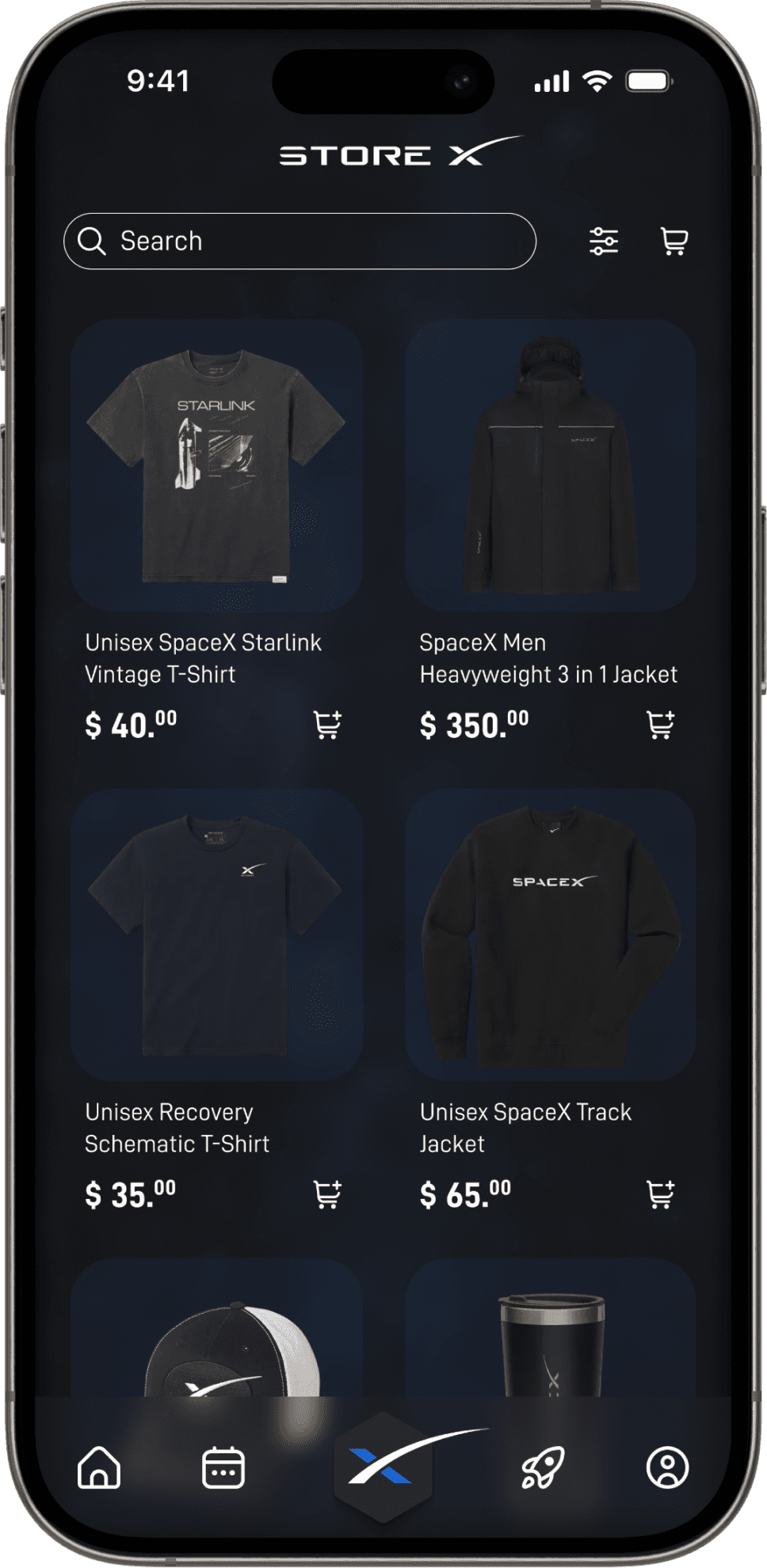
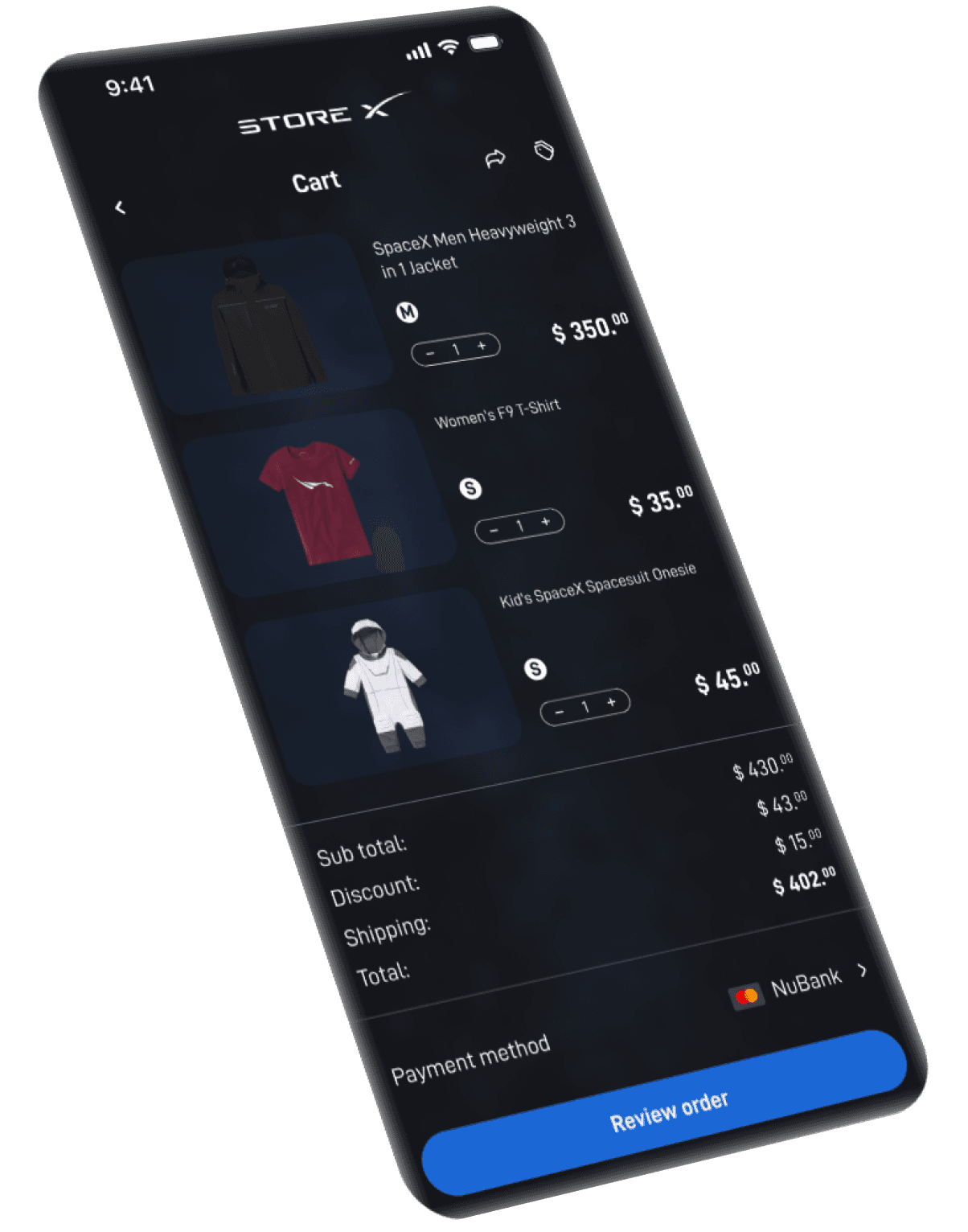
A commerce experience designed as a natural extension of the SpaceX ecosystem, where products function as cultural artifacts rather than transactional items.
Commerce as brand participation, not conversion:
The Store X flow is not optimized for impulse buying, but for identification. Products act as tangible extensions of SpaceX’s mission, allowing users to participate emotionally in the brand beyond launches and technology.
Low-friction purchasing inside a high-context environment:
By embedding the store within the same navigation system as missions and live operations, the purchase journey feels contextual, intentional, and aligned—never disruptive.
Mission-Driven Commerce (I)
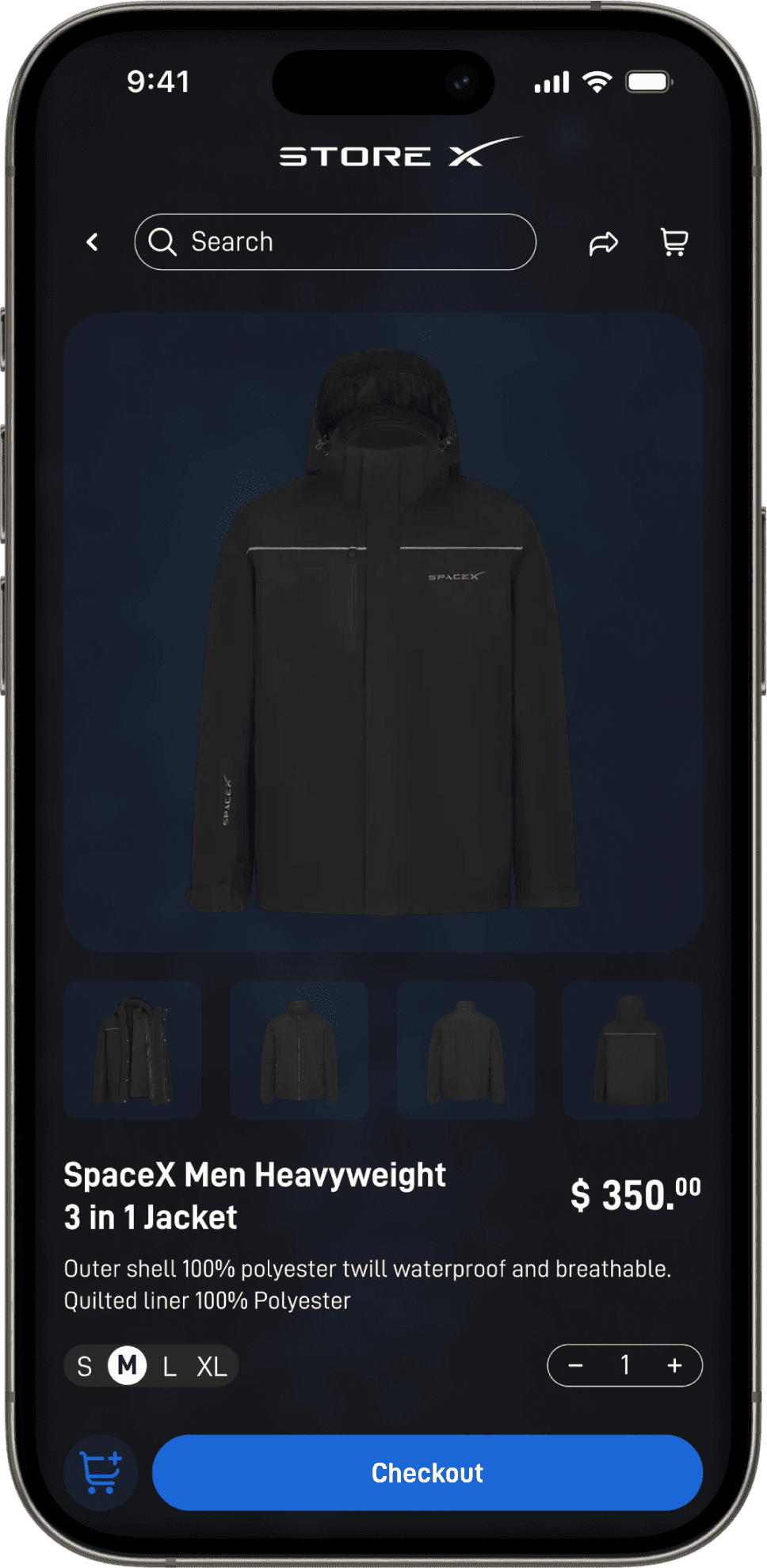
A commerce experience designed as a natural extension of the SpaceX ecosystem, where products function as cultural artifacts rather than transactional items.
Modular and scalable retail architecture:
The flow supports future expansion into limited editions, mission-specific merchandise, drops tied to launches, or regional availability without altering the core experience.
Consistent interaction language across the platform:
Cart, checkout, and payment behaviors mirror the app’s systemic logic, ensuring that commerce feels like part of the SpaceX system, not a detached marketplace.
Impact Snapshot
Outcomes before explanations
A conceptual product designed to translate SpaceX’s operational complexity into a coherent, engaging, and scalable digital system delivering clarity, trust, and participation at every touchpoint.

Sustained user engagement beyond live events
By combining mission timelines, real-time telemetry, and contextual content, the platform encourages recurrent usage not only during launches, but across the full mission lifecycle.

Monetization aligned with brand values
Commerce operates as an extension of identity and mission support, not as a standalone sales channel, preserving brand integrity while opening scalable revenue paths.

Reduced cognitive friction across complex information
A system-first architecture enables users with different knowledge levels to understand missions, vehicles, and stages without requiring prior aerospace expertise.
Missed live events due to lack of schedule awareness
A centralized mission timeline reduces the number of users who arrive late or miss live launches entirely. Centralizing past, present, and upcoming missions.

Key Takeaways
Designing for understanding before engagement

Rancés Sánchez
Founder at Prometeux &
Lead Product Designer
This project reinforced a core belief in my approach to product design: complexity is not the enemy, unstructured complexity is.
SpaceX operates in one of the most demanding environments imaginable, where information is dense, time is critical, and outcomes are not always predictable. Designing for this context required moving beyond interface decisions and focusing on system behavior under pressure.
Rather than optimizing individual features, the challenge was to design an ecosystem where context, timing, and meaning work together. Education needed to happen before emotion. Structure needed to exist before real-time execution. And failure needed to be treated as a first-class state, not as an exception.
This case also highlighted the importance of designing for reduction, not only for growth, reducing confusion, cognitive load, fragmentation, and misinterpretation. In high-stakes systems, what you remove or clarify often matters more than what you add.
spaceX aPP
Designing real-time complexity into coherent systems
Kickoff Thread
When growth exposed the cracks in the system

User Name
@user_name
I wish there was a way to interact live with the mission control team during launches for real-time insights.
142
54K
8.2k
10M

Devon Lane
@delane
I’d love a way to understand each phase of the mission while it’s happening, not only after reading explanations online.
623
14k
7.5k
2.9M
Felipe Brunheroto
@phel_brunherot
I follow every launch, but I still feel I’m missing part of the story behind what I’m watching.
872
9K
2.9M
1.1M

Darlene Robertson
@darobert
A structured view of telemetry alongside the stream would make the experience feel more complete.
321
54K
7.1M
96K
Darrell Steward
@steward
It would be amazing if the mission architecture was explained before the launch, not just during it.
321
54K
7.1M
96K

User Name
@user_name
Having a visual timeline of the mission's key milestones would greatly enhance user engagement.
321
54K
7.5M
99K
User Name
@user_name
Integrating interactive features for users to track mission milestones would be impressive.
321
54K
7.1M
96K

Eleanor Pena
@elena
It would be great to see mission phases and vehicle status explained in real time.
321
54K
7.1M
96K
Edwin Fields
@edufields
SpaceX missions are fascinating, having a clearer narrative during the launch would make them even more engaging.
321
54K
7.1M
96K

Jacob Jones
@jajo
Understanding what’s nominal versus experimental during a test flight would add a lot of clarity.
321
54K
7.1M
96K

Arlene McCoy
@arlecoy
“Launches already feel historic. Adding real-time context would make them unforgettable.”
321
54K
7.1M
96K
User Name
@user_name
Real-time telemetry data could greatly enhance the viewer experience during launches.
321
54K
7.1M
96K
User Name
@user_name
A dashboard that summarizes key insights in real-time would be a game changer for users.
321
54K
9.8M
112K

Guy Hawkins
@guyha
Having more context during launches would make the experience even more impressive.
723
54K
2.2k
1.3M
Damien Olazabal
@the_damien
All the technical depth is there, I just wish it were accessible in a single place.
524
54K
7.3k
3.2M
Alian Medina
@alian_amc
A single experience that connects mission goals, live data, and outcomes would be incredibly valuable.
842
37K
9.6K
7.1M

Ronald Richards
@ron_rich
I’d love to know what each milestone actually means as the mission progresses.
321
54K
7.1M
96K
Albert Flores
@alflowers
Integrating user feedback directly into the launch process could enhance overall satisfaction.
321
54K
5.3M
78K
Rancés Sánchez
@sanxezco
This wasn’t a UI problem. It was a fragmentation problem.
Critical mission context, real-time data, and narrative explanation exist, but never converge into a single experience. As a result, users oscillate between confusion and passive consumption, especially during moments of deviation, precisely when clarity matters most.
The opportunity wasn’t to simplify SpaceX’s engineering, but to design a system that translates complexity into understanding, in real time, without breaking immersion.
What This Really Meant
Translating signals into a system-level opportunity
This wasn’t dissatisfaction.
It was unfulfilled potential.
SpaceX has already mastered engineering, execution, and public attention. The launches work. The technology delivers. The audience shows up.
Yet, understanding what is happening still demands prior knowledge, second screens, or post-event explanations.
The gap wasn’t information.
It was orchestration.
Critical mission context, live telemetry, and narrative explanation exist, but rarely converge into a single experience.
The result is fragmented understanding, especially during off-nominal moments, when clarity matters most.
From a product perspective, this revealed a system problem.
Not a lack of content.
Not a lack of technology.
But the absence of a structure capable of translating extreme complexity into understanding, in real time.
Problem Framing
Defining the real challenge behind the experience
System Strategy & Architecture
From design principles to a coherent ecosystem
Design Intent
Making extreme complexity readable
Preserve engineering rigor: the system respects SpaceX’s technical depth without oversimplifying it.
Design for understanding: information is public, but comprehension requires structure and guidance.
Prioritize clarity: the experience remains legible in real-time.
Shift from features to systems: every decision reinforces coherence, continuity, and trust at scale.
Guiding Principles
How the system behaves under pressure
The experience is shaped by four core principles.
Progressive disclosure: depth appears only when relevant
Temporal UX: before, during, and after the launch are equally designed
System legibility: information is readable at a glance
Meaningful participation: users understand, not just observe
System Architecture
A layered ecosystem, not a linear journey
The product is structured as four interconnected layers.
Information (Home Feed): credibility and context
Education (Mission Systems): shared mental models
Real-Time (Launch Control): live orchestration
Commercial (Store X): contextual monetization
Key Flows
Where system strategy and architecture become lived experience
Mission Entry
Defining SpaceX as a system, not as content, an intentional entry point that reframes the product from the first interaction as an operational, mission-driven environment where information, technology, and experience work together toward a single objective.
Establishes SpaceX as an operational ecosystem from the first interaction, avoiding feed-like mental models
Prioritizes mission and context before action, aligning users with purpose before engagement
Uses friction-light authentication to balance security, trust, and speed
Transitions users directly into situational awareness instead of exploration or browsing
Technical Ecosystem
Navigation (I)
A structured way to explore SpaceX as an interconnected engineering system, not as isolated vehicles or specs.
System-first navigation:
Entry point prioritizes understanding the overall system before diving into individual components or specifications.
Component relationships over standalone data:
Dragon, Raptor, Starship, and Super Heavy are presented as interconnected elements within a single reusable and scalable ecosystem.
Technical Ecosystem
Navigation (II)
A structured way to explore SpaceX as an interconnected engineering system, not as isolated vehicles or specs.
Progressive technical depth:
The experience allows users to move from high-level understanding to deeper technical details without cognitive overload.
Educational without being academic:
Information is contextualized and informative, while remaining accessible, visual, and aligned with a modern digital product experience.
Mission Timeline
A centralized, real-time view of SpaceX activity that transforms launches into a living, navigable timeline designed for anticipation, clarity, and trust.
Time as a core product dimension:
Allow users to understand cadence, frequency, and operational rhythm at a glance, not just isolated missions.
Anticipation over notification:
Proactive exploration of upcoming launches, reinforcing emotional engagement and long-term interest.
Progressive disclosure of mission detail:
High-level monthly overview transitions seamlessly into mission-specific context, reducing noise and cognitive load.
Live Mission Control (I)
A real-time, data-driven flight experience that translates complex aerospace operations into an understandable, emotionally engaging interface without sacrificing technical credibility.
Real-time telemetry as narrative:
Speed, altitude, propellant levels, and stage status are not presented as raw data, but as a coherent story that evolves second by second during the mission.
Dual-vehicle awareness:
Super Heavy and Starship are visualized as independent yet synchronized entities, reinforcing the modular logic of SpaceX’s reusable launch architecture.
Media + telemetry convergence:
Live video is intentionally layered with mission data, allowing users to correlate physical events with system behavior in real time.
Live Mission Control (II)
A real-time, data-driven flight experience that translates complex aerospace operations into an understandable, emotionally engaging interface without sacrificing technical credibility.
Critical moments, clearly surfaced:
Liftoff, stage separation, flight anomalies, and failures are explicitly labeled, ensuring users understand what is happening and why it matters at each phase.
Failure treated as operational signal, not noise:
Anomalies are integrated into the experience with clarity and composure, reflecting SpaceX’s test-driven culture and reinforcing trust through transparency.
Designed for both experts and enthusiasts:
The interface balances aerospace rigor with visual simplicity, making the experience accessible without diluting its technical depth.
Mission-Driven Commerce (I)
A commerce experience designed as a natural extension of the SpaceX ecosystem, where products function as cultural artifacts rather than transactional items.
Commerce as brand participation, not conversion:
The Store X flow is not optimized for impulse buying, but for identification. Products act as tangible extensions of SpaceX’s mission, allowing users to participate emotionally in the brand beyond launches and technology.
Low-friction purchasing inside a high-context environment:
By embedding the store within the same navigation system as missions and live operations, the purchase journey feels contextual, intentional, and aligned—never disruptive.
Mission-Driven Commerce (I)
A commerce experience designed as a natural extension of the SpaceX ecosystem, where products function as cultural artifacts rather than transactional items.
Modular and scalable retail architecture:
The flow supports future expansion into limited editions, mission-specific merchandise, drops tied to launches, or regional availability without altering the core experience.
Consistent interaction language across the platform:
Cart, checkout, and payment behaviors mirror the app’s systemic logic, ensuring that commerce feels like part of the SpaceX system, not a detached marketplace.
Impact Snapshot
Outcomes before explanations
A conceptual product designed to translate SpaceX’s operational complexity into a coherent, engaging, and scalable digital system delivering clarity, trust, and participation at every touchpoint.
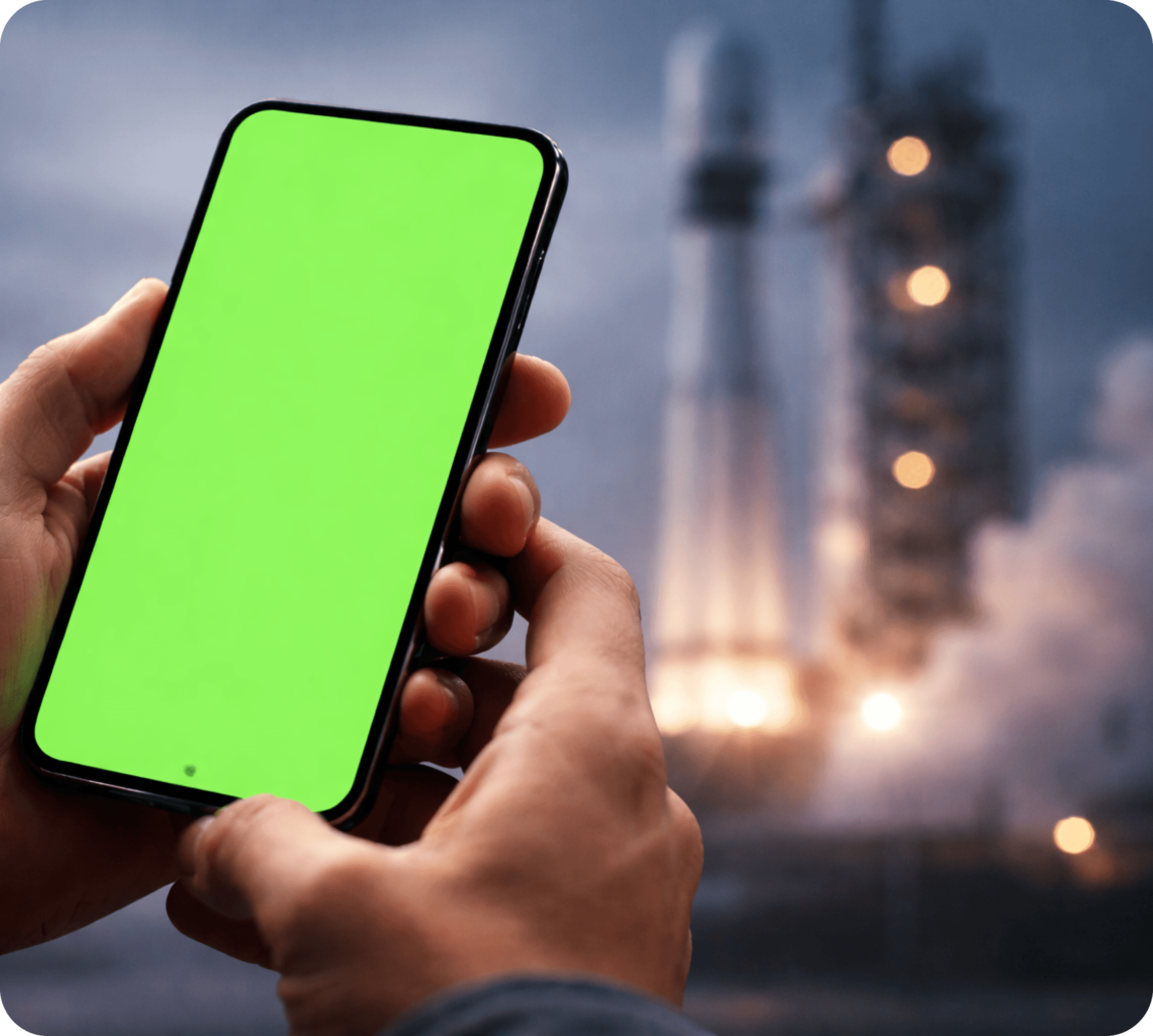
Sustained user engagement beyond live events
By combining mission timelines, real-time telemetry, and contextual content, the platform encourages recurrent usage not only during launches, but across the full mission lifecycle.

Monetization aligned with brand values
Commerce operates as an extension of identity and mission support, not as a standalone sales channel, preserving brand integrity while opening scalable revenue paths.

Reduced cognitive friction across complex information
A system-first architecture enables users with different knowledge levels to understand missions, vehicles, and stages without requiring prior aerospace expertise.
Missed live events due to lack of schedule awareness
A centralized mission timeline reduces the number of users who arrive late or miss live launches entirely. Centralizing past, present, and upcoming missions.
Key Takeaways
Designing for understanding before engagement
Rancés Sánchez
Founder at Prometeux &
Lead Product Designer
This project reinforced a core belief in my approach to product design: complexity is not the enemy, unstructured complexity is.
SpaceX operates in one of the most demanding environments imaginable, where information is dense, time is critical, and outcomes are not always predictable. Designing for this context required moving beyond interface decisions and focusing on system behavior under pressure.
Rather than optimizing individual features, the challenge was to design an ecosystem where context, timing, and meaning work together. Education needed to happen before emotion. Structure needed to exist before real-time execution. And failure needed to be treated as a first-class state, not as an exception.
This case also highlighted the importance of designing for reduction, not only for growth, reducing confusion, cognitive load, fragmentation, and misinterpretation. In high-stakes systems, what you remove or clarify often matters more than what you add.

Start a conversation
Let’s design what’s next with intention
Prometeux partners with ambitious teams to design digital products that scale, perform, and endure.

prometeux
Strategic Product Design
Designing clarity at the intersection of business, technology, and human experience.
Featured Projects
Insights & Updates
Occasional thoughts on product, design, and systems.
Enter your email...
Let’s build what truly deserves to exist
© 2026 Prometeux · Designed with intention
Start a conversation
Let’s design what’s next with intention
Prometeux partners with ambitious teams to design digital products that scale, perform, and endure.
prometeux
Strategic Product Design
Designing clarity at the intersection of business, technology, and human experience.
Featured Projects
Insights & Updates
Occasional thoughts on product, design, and systems.
Enter your email...
Let’s build what truly deserves to exist
Designed with intention
© 2026 Prometeux
Start a conversation
Let’s design what’s next with intention
Prometeux partners with ambitious teams to design digital products that scale, perform, and endure.
prometeux
Strategic Product Design
Designing clarity at the intersection of business, technology, and human experience.
Featured Projects
Insights & Updates
Occasional thoughts on product, design, and systems.
Enter your email...
Let’s build what truly deserves to exist
Designed with intention
© 2026 Prometeux